Sunday, 20 February 2022

Valentine's Day Abroad

After the deluge of emails regarding the last post (the dictionary does not specify quantity required to be a deluge, so one could well be a deluge) I decided to look at similar terms of endearment in other languages. Rarely do these colloquialisms and phrases translate as they are originally intended.

Tio (Spain) translates as 'uncle' but is also used in the same way as 'mate, buddy'.

Tia (Spain) translates as 'aunt' and, as with the previous term, also used to mean 'mate, buddy'.

ito (Spain) is used as a diminutive, so adding it is tantamount to using '-kins' on the end of a word.

ita (Spain) again used as a diminutive, the above is masculine and this feminine.

Carino (Spain) simply transaltes as 'darling'.

Bebe (Spain) means 'baby', not hard to see, but I've never understood why 'baby' is used as a term of endearment (began in the USA) when as an Englishman I always thought it was used as an insult.


Cielo (Spain) means 'sky', and why anyone would think referring to another by such is a term of endearment is beyond me. But then I never got the "My moon and stars" reference in Game of Thrones either, albeit Jason Momoa did seem a little out of it at times.


Dulzura (Spain) translates as 'sweetness', although more likely to be used to mean 'sweetheart'.

Corazon (Spain) means 'heart', never used to refer to the organ, only as a term of endearment.

Vato (Mexico) is a slang term used to mean 'guy' which, so I understand, is used rather more in fitting with the theme in Mexcio than it is in English-speaking nations. In Britain, of course, we burn our guys on November 5th.


Mijo (Central and South America) might mean 'my son' but is used more lovingly in the Americas - unless used as a noun when it describes 'millet'

Mija (Spain) is 'my daughter' and used as the above.

Mon coeur (France) is 'my heart', and not used to refer to the organ.

Mon bebe (France) as with the Spanish 'my baby' I have never understood this as a term of endearment, more likely to see it as being referred to as 'immature'.

-et (France) is used as a diminutive at the end of a word to suggest a term of endearment.

-ette (France) another diminutive, this the feminine version.

Mon chou (French) means 'my cabbage' which, apparently, the French do not see as calling someone a 'vegetable'.


Ma moitie (France) or 'my half' is seen as the same as 'my other half' in English, albeit it doesn't quite sound the same as seeing another as part of a pair.

Fragolina (Italy) is to call someone 'little strawberry', not what I'd call a plus but it takes all sorts, so the saying goes.


Stella (Italy) is the word for 'star' and if you see your lover as akin to trillions of exploding hydrogen nuclei, go for it.

Microbino mio (Italy) shows the Italians are really answering the call when it comes to non-translatable terms, for this means 'my little microbe'.

Schatz (Germany) doesn't come across well when vocalised by English-speakers. Neither does the story that Star Trek's William Shatner secretly married Stevie Nicks from Fleetwood Mac, and when the news broke Stevie announced she would henceforth be known as Stevie Shatner-Nicks (unless you say it aloud). For Germans Schatz simply means 'treasure'.


-chen or -lein (Germany) is the German diminutive turning the name or noun into a term of endearment.

Liebling (Germany) literally translates as 'favourite' but is used in the context of 'dear' or maybe 'darling'.

Susse (Germany) means 'sweet' and no explanation required.

Perle (Germany) or 'pearl' seems odd as it's a name in English, but is only like saying someone is a diamond.

Hase (Germany) means 'bunny', not exactly what I'd call a term of endearment, but each to their own.

Knuddlebarchen (Germany) is indeed a compound term and means 'cuddle bear'. And having said we won't have many there is also:

Mausebar (Germany) 'mouse bear', Also:

Mousezahnchen (Germany) 'little mouse tooth' and undoubtedly my favourite:

Honigkuchenpferd (Germany) 'honey-cake horse'.

Mo chuisle (Ireland) 'my pulse' hardly seems like a nice way to describe someone, but perhaps I'm not looking at it from the right angle.


Wee (Ireland) is not really Irish but a dialect word. However, considering it's also used as a synonym for 'urine', I do wonder if it began with someone taking the proverbial.

U-ri gang-a-ji (Korea) is 'my puppy', and one I wouldn't think would work in English.

Amigao (Portugal) means 'big friend' and even I would never have the nerve to woo someone by calling her my 'big friend'.

I'm not going to attempt to use the Chinese characters, but in China 'heart and liver' is considered fitting for this theme. And for the same reason I shall continue with simply quoting the country when different alphabets are used, or sometimes the language, and how they translate to English.

Russia uses 'baby sun', 'little fish', 'little paw', as compliments.

Po-po (Hungary) 'little bumlet', usually accompanied with a friendly pat on that area.

Einayim sheli (Hebrew) 'my eyes' and apparently suggesting the one addressed is precious.

Ya amar (Arabic) doesn't sound too complimentary to me for it translates as 'my moon'.

One Cantonese term suggests 'silly pig' is an acceptable compliment.

Puttemus (Denmark) translates as 'cuddlebug'.

Snoepje (Netherlands) and the meaning is 'little candy'.

Pudingeto is a word from Esperanto and, if we accept this as an official language (I can't see why not) then calling someone 'pudding' is a loving term.

Shagua is a Mandarin term meaning 'fool'. I don't think I'd ever attempt using this.

Taku kairangi is Maori for 'my finest greenstone', and I can't help thinking of copper piping.


Mahal is a Tagalog word and, when used as a term of endearment, still doesn't change the meaning of 'expensive'.

Nefesim (Turkey) is another translation which makes the idea of referring to someone as 'my breath' rather odd - especially if they haven't brushed their teeth.

Minh em (Vietnam) and it translates as 'myself' which surely speaks more of the speaker than anyone.

Nha em (Vietnam) and although this translates as 'my home' is said to be a reference to the spouse.

Anh em (Vietnam) and is used by a wife to her husband, to describe him as older - even if he isn't.

Anata (Japan) and this has to be my favourite of the lot, for this simply means 'you'.


Doubtless I shall get complaints regarding some of my spellings, and doubtless I shall ignore them.

Sunday, 13 February 2022

Valentine's Day

For Valentine's Day, I thought I would take a look at the many terms of endearment found in English. Of course, I will look at these through the eyes of the etymologist. I've only used single words, phrases and most compound terms are ignored - and, most importantly, I've quite obviously stuck with those which may convey a slightly different meaning.

Babe is actually an earlier word than 'baby', itself the diminutive of 'babe'. The word is first seen as baban in the early thirteenth century, which almost certainly began as being imitative of baby talk (just as the word 'babble' is).

Honey is an old word, originates in Proto-Germanic hunang with the same meaning. The root is Proto-Indo-European, although it is not clear what that root is. One suggestion is kenekos meaning 'golden, yellow' or even 'brownish', all of which could describe the colour of honey. Such simplicity is common in early forms of language, for example many animal names are derived from their colour: bear 'brown' and hare 'grey'.


Sweetie is a diminutive of 'sweet', itself from Old English swete which, rather than describing a taste, referred to a person's disposition as 'pleasant'. Hence, what is seen as the modern use of 'sweet' is actually the original.

Love has not changed in meaning since its earliest known form of Proto-Indo-European leubh, used to mean 'care, desire, love'.

Sunshine is related to an Old English word sunscin which meant 'mirror'. It is worth noting how in the times when Old English was spoken, a mirror was a valuable item.

Dear is, like the word 'love', unchanged in all its meanings throughout its use.

Darling is a diminutive of 'dear' above.

Cupcake is not known as a compliment until the 1930s. It seems improbable that it could ever have been intended to refer to someone as 'sweet and desirable' - always assuming you like cake, or course.

Muffin is a word which is common to Western European languages, be they in the Latin group (French, Spanish, Italian, Portuguese) or the Germanic arm (English, German, Dutch, Danish, Norwegian, Swedish), for both refer to a soft cake or bread roll.


Buttercup is a word unrecorded before 1777. Earlier the flower was known by two names, either a goldcup or a butterflower. Clearly all three names refer to the colour and shape of the flower, although why and when it was first used as a term of endearment is unclear.


Sugar is sweet, which is why it was used as a term of endearment, but the etymology of 'sugar' is not quite so complimentary, for we find words in Arabic, Persian, Latin, and Sanskrit all meaning 'grit, gravel' coming from the Greek for 'pebble'. Sugar originated in India (hence the Sanskrit link) and spread around the old world courtesy of the empire of Alexander the Great, who marvelled at this 'honey without bees'.

Beautiful is from 'beauty', itself traceable back to Proto-Indo-European dw-en-elo meaning 'to do, perform, show favour, revere' depending upon context.

Peach is from the soft fruit, itself named as it was referred to as 'the Persian apple'.


Gorgeous comes from 'gorge', a French word used rather differently to the English version in staing 'something adorning the throat', and derived from the Proto-Indo-European gwora 'food, devour'.

Doll is a pet form of the name Dorothy, although today it is most often used to describe the child's toy (as it has since 1700). Earlier, from 1610, it was used to mean 'mistress, paramour', by 1640 the term was a synonym for 'slattern', and from 1778 is also seen as meaning 'silly woman'.

Tiger goes back to Old Persian tigra meaning 'sharp, pointed'. Fitting for the large cat, but perhaps not for a man.

Handsome is a compound, where the two words first united in the late 14th century to describe something as 'appropriate', and not seen in the modern sense until 1580.

Stud can be traced to Proto-Indo-European sta when it meant 'to stand, make firm', which should be seen as a permanent settlement where horses were bred.

Casanova clearly comes from the man renowned for his promiscuity, the 19th century Giacomo Girolamo Casanova. To understand this more, perhaps we should Anglicise the rogue's name - in which case we would be referring to Jacob Jerome Newhouse. Try describing that ladies man as a 'Newhouse' and see where it gets you.


Dreamboat comes from a song released in 1936 entitled When My Dream Boat Comes Home, although some sources credit it to the book entitled Dream Boat, published in 1929.

Sexy is clearly derived from 'sex, the latter coming from Latin sexus 'male or female'. Earlier roots are unclear, although there is some thought of it being dervied from the same root as 'section' and thus meaning 'divide'.

Munchkin is first seen in L. Frank Baum's The Wonderful Wizard of Oz published in 1900. The author never explained how he came up with the word.

Precious is related to 'price', itself from Proto-Indo-European pret-yo meaning 'to sell'.

Poppet is an early form of 'puppet', and became a term of endearment in the later 18th century, about the same time as it came to be used as an expression of contempt.

Hen, a slang term for a woman initially but one which also came to be used as a term of fondness, comes from a root which meant 'to sing'. Now I have often heard hens clucking, and would never refer to it as singing - although the 'hen' here is used to refer to the female of all birds.

Pet clearly comes from the use of the word as a favourite domesticated animal, the verb 'to pet' derived from that. But the word isn't seen until the late 15th century, prior to that it has the same origin as 'petty', from the French petit 'small'.

Mate has all manner of meanings throughout history - friends as much as much as mating - and all derived from ga-matjon which meant 'one having food together'.

Duck, as a term of endearment, comes from around 1580, when it would have referred to a person who walked with a waddle - as pregnant women are apt to with their balance affected by the excess weight carried. The word for the bird describes its tendency to dip below the water.

Sunday, 6 February 2022

Ludicrous British Laws

As with last time, the following is the result of finding something while researching, something I was not looking for.

Walking home with something you have purchased made from wood, is against the law. Now, this is only against the law in London, and only if walking home. Thus if you live next door to the London retailer, make sure you go in your vehicle, or use a handcart, to avoid a potential £500 fine.


Another £500 fine awaits those who enjoy themselves in London. I often hear how the current crop of youngsters are glued to their devices, have no idea how to have fun and play out 'like we did when we were kids'. Londoners who play games, fly kites, or create slides on icy streets are falling foul of the law, and have done since 1839.

Ever been attired in fancy dress? What did you go as? A vicar, a tart, nurse, caveman? Hopefully you didn't go as a soldier or naval figure, for passing yourself as a member of the armed forces can land you with thirty days in a prison cell.


A £200 fine awaits anyone found to be drunk. Not drunk and disorderly, simply drunk. Almost a license to print money, one would think.

If you want to part with £500 in a fine, try indulging in one of the following: Belfast, Knicky Knocky Nine Door, Knock Down Ginger, Knock Out Ginger, Belletje trekken, Klingelstreich, Belleke trek, Knock and Nash, Chicky Melly, Chappies, Knick Knack, Cherry Knocking, Ding Dong Ditch, Sonne Decriss, Tok Tokkie, Rin-Rin-Raja, or Bel-Twi. Those are all the same game as it is known around the world, and simply knocking someone's door or ringing the doorbell and running away.

Don't make the mistake of having a pig sty at the front of your property if you're living in a town. Should the pig(s) escape, you could find yourself paying a fine of £1,000.


London householders beware, do not clean a mat or carpet in the street after eight o'clock in the morning. If you do, it's a fine of £500.

Vagrancy is also a crime, one which carries a month in a prison cell. But it covers any request for money. Ever asked for something for the parking meter?

Section 32 of the Salmon Act of 1986 points out that 'handling salmon in suspicious circumstances' is an offence. Unfortunately, it doesn't specify just what suspicious handling entails and thus perhaps you've been breaking this law for the last 36 years without even knowing it and could have spent two years in prison as a result.


The reason these seemingly ludicrous laws are still on the books? Because while it is difficult enough to get a new law passed or changed, it is nigh impossible to get laws removed as it is well-nigh impossible to foresee every possibility in the future. Rest assured you are never going to fall foul of these laws, as the powers that be are not going to enforce them - they have much more important jobs to do.

Sunday, 30 January 2022

Trees

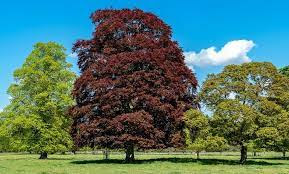
Normally I post observations on words and language, etymology being my fascination. Yet occasionally I add something a little different, invariably these snippets are uncovered while researching - many will tell you how often you find more interesting stuff when looking for something specific than you ever find for the subject in hand - and one example came when I was looking through old copies of the Derby Mercury. One copy of the Mercury from October 1837, claimed that beech trees are never struck by lightning and how Native Americans have always known this.


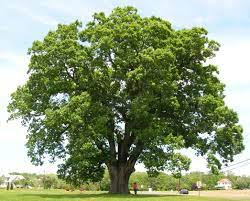
It nagged at me and so I chose to find out whether this was factual or not. I discovered the tree most likely to be hit by lightning is the oak. But this is not saying that oak trees will attract lightning more than any other, we also have to take into consideration the vast number of oaks and that oaks are likely the tallest of trees and contain more moisture than surrounding trees.


And the beech? Another sizable tree, but one which has a higher fat content than most woods, and therefore is a better conductor of electricity. This means the bolt of lightning is more likely to run to the ground. But does this make it safer? Absolutely not, leaning against any tree as it is hit by lightning is likely to mean you get a rather nasty shock (at best).


If any tree could be said to be less likely to be hit than any other, that might just be the birch. It has a high oil content and is a poor conductor of electricity. But any discussion regarding conductivity of the wood and its content is largely pointless, for lightning and thunder is invariably associated with something else - RAIN. Water is an excellent conductor, hence why you should not mix electrical appliances and the bath. If the tree is wet during the storm, any electrical discharge is likely going to run through the moisture rather than the wood. Furthermore, the person underneath the tree is likely wet through, too. Immaterial of the tree you're under, the likelihood of being hit is the same.

Sunday, 23 January 2022

Alphabetical order

For the last few weeks, I have posted a number of words which have changed in meaning and/or usage over the years. I do hope you enjoyed some of these and found something interesting.


When preparing those posts, I discovered something which for me was really weird. Alphabetical order, the way I used to post the words and the system of sorting which is common to most lists, has only been used since about 400BCE. How on earth did anything get sorted before then and what changed?

The obvious explanation as to other forms of ordering is down to the lack of an alphabet. There are plenty of other forms of writing which does not use an alphabet - think of cuneiform, hieroglyphs, the many Asian forms of writing - hence alphabetical order is simply not possible before the invention of the alphabet. Furthermore, until those first letters or characters were sorted into an accepted order, no alphabetical base existed and thus no alphabetical order.


The first evidence of alphabetical order comes from the famed Library of Alexandria around 2,300 years ago. It is reasonably safe to assume this can never have been used unless alphabetical order was already in use - otherwise how would any user of the library have known where to look to find what they were looking for? Even then the use of alphabetical order would have been mostly pointless for most of the next 1,500 plus years, as most libraries and records offices simply did not have enough books and documents to warrant its use.

Take the famous Domesday Book, for example. The original is based on a system where they were sorted initially by status and then geography. Luckily later publications have opted to go for counties and then alphabetical order, or it might take many hours sorting through the 13,418 places listed. Two centuries later and religious documents are still being ordered theologically. Hence, 'angel' did not come before 'God', the order more based on status and then order of creation. Even as recently as the early nineteenth century, alphabetical order was seen as tantamount to sorting a broken mirror by just gathering up the pieces. This was how poet Samuel Taylor Coleridge described encyclopaedias, he preferred things sorted by themes.


Before you laugh at the ridiculous ideas of how to sort items in a list or record, keep in mind it is not that long ago - before the days of the internet and the search engine - we often paused in looking up something, to wonder what will it be filed under? Remember looking up something only to find 'Look under ....."?

Sunday, 16 January 2022

That was not what I meant. (WXYZ)

I'm not commenting on the fourth word in today's list, I'm going for a walk instead.

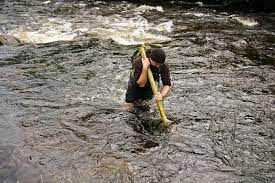
Wade is today specifically 'to walk through water', originally it just meant 'to progress'.


Wafts are only carried through the air, although in the original sense it described ships moving in convoy.

Waif or stray is an abandoned child or animal, but in the fourteenth century it was a piece of property without an owner.

Walk needs no explanation, except in the thirteenth century the word meant 'roll, toss'.

Watch, as in 'to be alert', was originally simply used to mean someone was awake.

Well as in 'healthy', began in English as meaning 'happy, fortunate'.

Wince is to 'shrink from pain', but in the thirteenth century meant 'to kick restlessly' and was used often when referring to horses.

With is 'accompanying' today, but in Old English it had entirely the opposite meaning of 'against'.

Wizard is a magician today, but if we look at it as 'wise-ard' we can see the original idea of a wise man.


Worry of 'fret' was used as recently as 1606 to mean 'strangle'.

Wrong didn't mean 'incorrect' until the fifteenth century, prior to that it was 'crooked, bent'.

Zoology refers to the study of animals, but originally referred to the study of animals in the pursuit of finding cures for human ailments.

Sunday, 9 January 2022

That's not what I meant (V)

Strange original meaning for 'verge'.

Vegetables are the fruits of plants grown for food, or sometimes the leaves, but once described something or someone seen as living the life of a plant.


Verge is a border or margin, today. It began as the Latin virga or 'rod', and was first used in English to mean 'penis'.

Vice, and we are talking about the device used to grip objects in DIY, originally referred to a 'winding staircase'.


Victim is today referring to one who suffers, originally it spoke of one about to suffer for it described a person or animal caught to be offered as a sacrifice.

Vulgar or 'crude' began in the fourteenth century meaning 'ordinary, common'.