Showing posts with label oak. Show all posts

Sunday, 24 May 2026

Forgotten Holidays

A few will be aware I have been known to speak on various subjects over the years. Fundamentally these all revolve around my favourite subject of etymology. Have always enjoyed bringing this fascinating subject to others. It’s not for me to say whether the audiences have, although many have asked me to return.

Thought it might be worthwhile sharing a snippet or two from these etymological presentations, continuing with Forgotten Holidays. Once upon a time the Christian calendar dominated the celebrations. Not that everyone had a day off work but you'll be amazed at the many days we no longer celebrate and the reasons they were created in the first place.

Examples include Royal Oak Day – May 29th - This is the date of birth of Charles II and chosen as a holiday to commemorate the Restoration of the Monarchy in 1660. Its name refers to the events of 1649, when Charles II escaped from the site of his defeat at the Battle of Worcester. He fled to Boscobel House at Shifnal in Shropshire where, aided by the Peverell brothers, he and his aide Colonel Carless hid in the branches of a huge oak tree – the famed Boscobel Oak – until the Parliamentarians had gone. This was the start of an arduous and circuitous six-month long trek around England disguised as a woodsman – his hair cut short and skin stained to appear as if he was used to working out of doors – until escaping to the Continent. This is the reason for the many public houses named the Royal Oak – indeed this is the second most common name in the country. Ten years later, at the restoration, he returned in triumph and thereafter the date of May 29th was Oak Apple Day and a national holiday until 1859. Those who would like to see this day reinstated may like to think again, especially if they are still at school. On this day children would be expected to adorn themselves with garlands of oak leaves. Not to do so was seen as being anti-Royalist (back to Cromwell again!) and these children would be thrashed by their peers, thrashed using bunches of nettles and/or pelted with birds eggs. Hence the alternative name of Oak and Nettle Day. Other names include Arbour Tree Day and Shick Shack Day or, in Sussex where the locals use any excuse to grope the neighbours, Pinch-bum Day and in Essex Bumping Day. Other celebrations are still staged annually, most of which use flowers to spruce things up a bit: Castleton, Derbyshire has the Garland King riding through the streets disguised by a huge garland of flowers later hung high on the church spire; other celebrations held at Upton-upon-Severn (Shropshire); Aston on Clun (Shropshire); Marsh Gibbon (Buckinghamshire); Great Wishford (Wiltshire); Membury (Devon); and Moseley Old Hall (West Midlands); Fownhope (Herefordshire); Northampton (Northamptonshire); Oxford (Oxfordshire); Cambridge (Cambridgeshire); St Neot (Cornwall) where the vicar leads a procession through the village to remove last year’s oak branch from the church tower and replaced by a new, this the job of the Tower Captain, and everyone heads off to the vicarage gardens for a barbecue – in the morning villagers wear a sprig of red oak and in the afternoon a sprig of Boys Love (Artemisia arbotanum).


February 29th - Celebrated every four years because this is Leap Year Day. Those born on this date generally celebrate their birth on February 28th slightly more often than March 1st, although the split is close to 50/50. However legally those in the UK have March 1st, whilst New Zealanders and Taiwanese can move it forward to February 28th. The only thing I knew about February 29th was it was when women can propose marriage to men, although I was not aware that a refusal means he is obliged to give her money or buy her a dress (but I shall never tell). In Europe the noble males, having spurned her advances, must purchase 12 pairs of gloves for her and thus hide the fact she isn’t wearing an engagement ring. In Aurora, Illinois single women are deputized for the day and allowed to arrest single men and levy a four-dollar fine. Oddly Greeks consider marriage on February 29th to be very unlucky (as unlucky as every other day some would think).


If you think you know someone who would like to hear me speak on this subject, drop me a line.

Sunday, 28 December 2025

Origins of Pub Names

A few will be aware I have been known to speak on various subjects over the years. Fundamentally these all revolve around my favourite subject of etymology. Have always enjoyed bringing this fascinating subject to others. It’s not for me to say whether the audiences have, although many have asked me to return.


Thought it might be worthwhile sharing a snippet or two from these etymological presentations, continuing with Origins of Pub Names

I once worked at a pub called the Ale Stake. It had the story of the origin of the name on the wall, saying it recalled Saxon to Medieval times, when travelers were alerted to a home brew available nearby with a tree where the lower branches had been removed and a sheaf of barley tied at eye level.

Pub names generally fall into a handful of categories: Heraldic, such as the Red lion; Royalist, the Royal Oak being one; the church, such as the Cross Keys; the product, the Three Tuns; and welcoming and humorous, such as the Dew Drop Inn.


If you think you know someone who would like to hear me speak on this subject, drop me a line.

Sunday, 30 January 2022

Trees

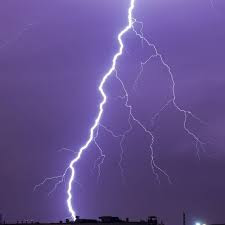
Normally I post observations on words and language, etymology being my fascination. Yet occasionally I add something a little different, invariably these snippets are uncovered while researching - many will tell you how often you find more interesting stuff when looking for something specific than you ever find for the subject in hand - and one example came when I was looking through old copies of the Derby Mercury. One copy of the Mercury from October 1837, claimed that beech trees are never struck by lightning and how Native Americans have always known this.


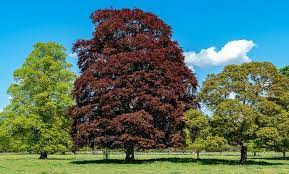
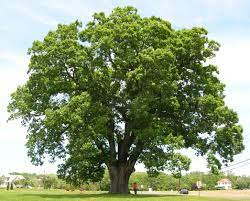
It nagged at me and so I chose to find out whether this was factual or not. I discovered the tree most likely to be hit by lightning is the oak. But this is not saying that oak trees will attract lightning more than any other, we also have to take into consideration the vast number of oaks and that oaks are likely the tallest of trees and contain more moisture than surrounding trees.


And the beech? Another sizable tree, but one which has a higher fat content than most woods, and therefore is a better conductor of electricity. This means the bolt of lightning is more likely to run to the ground. But does this make it safer? Absolutely not, leaning against any tree as it is hit by lightning is likely to mean you get a rather nasty shock (at best).


If any tree could be said to be less likely to be hit than any other, that might just be the birch. It has a high oil content and is a poor conductor of electricity. But any discussion regarding conductivity of the wood and its content is largely pointless, for lightning and thunder is invariably associated with something else - RAIN. Water is an excellent conductor, hence why you should not mix electrical appliances and the bath. If the tree is wet during the storm, any electrical discharge is likely going to run through the moisture rather than the wood. Furthermore, the person underneath the tree is likely wet through, too. Immaterial of the tree you're under, the likelihood of being hit is the same.

Sunday, 29 October 2017

Trees

Trees are comprised of wood, yet a wood is made up of trees. A linguistic quirk? No. If we go back far enough we find Proto-Germanic widu and Proto-Indo-European widhu, each used to refer to the both the 'timber' and also 'tree'. Hence the anomaly is the word 'tree', itself odly derived from the root (no pun intended) drew-o meaning 'be firm, solid' and for obvious reasons.

But what about the different names given to various kinds of trees? Where do these originate?

Oak - a name which is Germanic but that is where the trail ends and the etymology is a mystery. However the Indo-European root of deru, which is also the Greek and Celtic word for 'oak', is also the source of the English word 'tree'. And if that isn't confusing enough, when the Vikings arrived in Iceland and brought with them the Norse word eik or 'oak', they discovered no oaks whatsoever and thus used eik to mean simply 'tree'.

Broom - the tree gets its name from the Proto-Germanic braemaz 'thorny bush' and derived from Proto-Indo-European bherem 'to project, a point'. Such lumps and points characterise the broom tree, this also making them most suitable for being tied together to produce what we would call a besom but which is effectively still a broom for sweeping.

Elm - quite easy to trace this back to Proto-Indo-European el meaning 'red, brown'. It is also the origin of the word 'elk' and 'eland'.

Yew - a similar origin to that of the elm (see above), where Proto-Indo-European ei-wo also suggests 'reddish'.

Maple - a name of surprisingly recent origins, indeed it seems to have simply appeared in Germanic languages around 1,500 years ago. It is highly improbable to think all Germanci languages suddenly began using the name, hence there must be a common origin but that root is unknown.

Lime - or linden tree is derived from Proto-Indo-European lent-o meaning 'flexible', this a reference to the trees pliant bast, this the inner fibrous bark.

Beech - all forms across the Proto-Indo-European languages, these all from Proto-Indo-European bhago and all simply refer to the tree. The same word is also the source of the word 'book' and thus the smooth bark of the tree would be seen as being a black metaphorical page on which to make marks to send messages.

Pine - ultimately from Proto-Indo-European pi-nu and derived from peie 'be fat, to swell' and liely referring to the sap or resin pouring from the tree when it is damaged.

Alder - has exactly the same origins as the elm (see above) and simply means 'red, brown'.

Ash - a Germanic term and, while the origin is far from certain, seems to come from it being the preferred wood used in the making of spear shafts. Old English aesc plega may have been used to mean 'war' but it literally translates as 'spear play'.

Holly - easy to see why the Proto-Indo-European root here is kel meaning 'to prick'.

Willow - ultimately from Proto-Indo-European wel meaning 'to turn, revolve' and a reference to the young willow's usefulness as it is whippy and flexible.

Larch - thought to be a loanword from an Alpine Gaulish langauge which could be related to Old Celtic darik meaning 'oak' which may add to the information known for 'oak' (see above) to suggest the word 'oak' simply meant 'tree'.

Sunday, 21 February 2016

Croatia Place Names Explained

Having blogged samples of my books on English place names and also examined the etymologies of the nations of the world and their respective capitals I thought it time to cast my net a little wider. This time Croatia and a look at some of its largest settlements and most interesting names and starting with the capital.

Zagreb is also the largest city in Croatia. The name is first seen in a document dated 1134, however the origins of its name are disputed. Taking the Croatian word zagrabiti as the basis, this meaning 'to scoop', has seen a number of suggestions. Traditionally this is held to be from when a Croat viceroy leading his thirsty soldiers across a dry plain drove his sabre into the ground only to see water pour forth. He ordered his men to dig and thus created the first well. Archaeologists and geologists support the story from what is known of the area, yet balance that by pointing out no settlement would ever be founded without a reliable source of fresh water. A similar tale points to what is now the fountain in Ban Jelacic Square, also known as Mandusevac Well. It seems the city's governor ordered a girl named Manda to fetch him water from the well saying "Zagrabi, Mando" or 'scoop it up, Manda'. More plausible explanations include za bregom 'beyond the hill' and this the river bank on the River Sava, for an early use of breg was also 'bank' as well as 'hill'. Alternatively za gragom or 'beyond the moat' is equally possible, this place heavily fortified since early days.

Split is easier to understand, it coming from the local fauna and in particular calicotome spinosa, commonly known as the spiny broom. It was named as such by the Greeks who colonised the region as Spalathos. Later as a Roman possession this was corrupted to Spalatum and eventually the Italian version of Spalato. Over the years the Croatian version began to displace the Italian, with the modern form officially adopted by the Kingdom of Yugoslavia at the end of the First World War.

Rijeka is known by many different names depending upon the language used. Croatian Rijeka, Slovene Reka, Italian Flume, and historically as Tharsatica and Vitopolis, all sharing a single meaning of 'river'. This is correctly Kvarner Bay, an inlet of the Adriatic Sea.

Osijek gets its name from being on dry ground in a flood plain. It is derived from the Croatian word oseka meaning 'ebb tide' and should be seen as the logical place to settle for it provided a natural defensive feature.

Zadar is similar to Rijeka and Osijek in originating from water, although the name is so ancient the exact meaning will never be known. The earliest known forms are as Iadera and Iader, but is certainly older and thought to predate the Indo-European language, the mother of the majority of tongues across Europe, the Middle East and the Indian subcontinent. These early forms is later influenced by the early Dalmatian language as Jadra, Jadera and Jadertina, then by the pronunciation in the Croatian language as Zadra and Zadar, this seen as early as the 12th century.

Velika Gorica is from two words where velika, 'great', precedes the local Kajkavian dialect word gorica or 'vineyard'. The area has produced wine since before recorded history.

Slavonski Brod features the regional name of Slavonia, from the Slav people who settled here. Ther term brod may mean 'ship' in modern Croatian, however its earlier use was as 'water crossing' - not in terms of a ship but in the sense 'ford'.

Pula may have evidence of habitation dating back more than a million years, that is before the time of Homo sapiens, but the name dates back to the era of a Greek colony known as Polai meaning 'city of refuge'. Later forms, such as the Italian Pola and Croatian Pula are simply corruptions of the original.

Karlovac is a much more recent name than others, this from its founder Charles II, Archduke of Austria and thus is a Croatian version of 'Charles' town'.

Sisak can be traced to the Celtic and Illyrian ears when the place was known as Segestica. Later forms, including that of Sisak, are simply corruptions of the original referring to its location by water, there are three significant rivers here.

Dubrovnik was historically known as Ragusa, itself from the earlier Greek name Lausa meaning 'precipice'. The modern name was adopted officially in 1918 after the fall of the Austro-Hungarian Empire, although this name can be found as early as 1189. This comes from dubrava or 'grove of oak trees'.

Vukovar describes itself as 'the town on the Vuka'. While var is the Hungarian for 'fortress', the river gets its name from the Slavic vuk or 'wolf'.

Note the spellings of the places are English as the piece is written in English.