Showing posts with label thunder. Show all posts

Sunday, 20 October 2024

Storm Idioms

Several words have become part of the language in being used in phrases. Last time we looked at ‘rain’ and now look at ‘storm’.

Taking something by storm comes from military terminology, first seen around 1680.

Doing something up a storm dates from 1946.

Storm doors are not recorded before 1872.

Storm-tossed, a term normally only used by writers, is seen in print for the first time in 1610.

Storm-bird is seen from 1752, today we refer to it as a petrel.


Storm clouds are unrecorded before 1822.

Dust storms are not described as such until 1838.


Storm troopers are first recorded in 1933, however this had nothing to do with a galaxy far, far away, these were members of the Nazi Sturmabteiling or earlier the German military sturmtruppen during the First World War.


Barnstorming began in 1815, and referred specifically to short theatrical performances of a smutty or vulgar kind. So-called because they were performed in barns in upstate New York. By 1896 the term had started to be used to refer to electioneering tours; and in 1928 to pilots who performed stunts at fairs and during air races. Thunderstorms were not known until 1560.


Snowstorms have been known as such since 1771.

Hailstorms come between the above two, seen since 1690.

Rainstorms are, considering the previous three examples, quite recent in only appearing in writing since 1804.

Brainstorm is a term used since 1861, when it referred to a fit of delirious malaria or sudden loss of the ability to reason. Prior to that, and also as a noun, it was a symptom of a disease seen to be increasing in strength or repetitiveness. The modern use of ‘a concerted attack on a problem’ comes from 1947; while another sense of ‘a brilliant idea’ was around from 1934.


Firestorms have been around since the 1580.

Windstorms have been known since the late 14th century.

Sunday, 30 January 2022

Trees

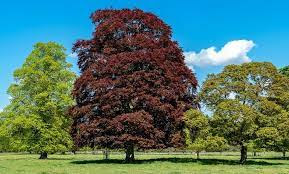
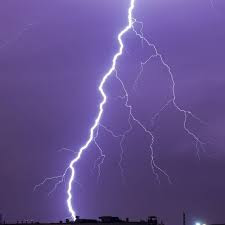
Normally I post observations on words and language, etymology being my fascination. Yet occasionally I add something a little different, invariably these snippets are uncovered while researching - many will tell you how often you find more interesting stuff when looking for something specific than you ever find for the subject in hand - and one example came when I was looking through old copies of the Derby Mercury. One copy of the Mercury from October 1837, claimed that beech trees are never struck by lightning and how Native Americans have always known this.


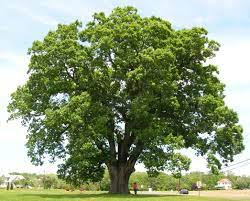
It nagged at me and so I chose to find out whether this was factual or not. I discovered the tree most likely to be hit by lightning is the oak. But this is not saying that oak trees will attract lightning more than any other, we also have to take into consideration the vast number of oaks and that oaks are likely the tallest of trees and contain more moisture than surrounding trees.


And the beech? Another sizable tree, but one which has a higher fat content than most woods, and therefore is a better conductor of electricity. This means the bolt of lightning is more likely to run to the ground. But does this make it safer? Absolutely not, leaning against any tree as it is hit by lightning is likely to mean you get a rather nasty shock (at best).


If any tree could be said to be less likely to be hit than any other, that might just be the birch. It has a high oil content and is a poor conductor of electricity. But any discussion regarding conductivity of the wood and its content is largely pointless, for lightning and thunder is invariably associated with something else - RAIN. Water is an excellent conductor, hence why you should not mix electrical appliances and the bath. If the tree is wet during the storm, any electrical discharge is likely going to run through the moisture rather than the wood. Furthermore, the person underneath the tree is likely wet through, too. Immaterial of the tree you're under, the likelihood of being hit is the same.

Sunday, 16 February 2020

Singapore Place Names Explained

Having blogged samples of my books on English place names and also examined the etymologies of the nations of the world and their respective capitals I thought it time I cast my net a little wider. As English place names share some links to other tongues it would be interesting to see if any of the elements contributing to our place names could be found elsewhere. Continuing an alphabetical tour of the world and a look at the Singapore's names.


Bishan gets its name from the Cantonese for 'large burial ground'. this established in 1870 by Cantonese and Hakka immigrants.


Marymount comes from a Mandarin pronunciation of MacRitchie, itself the name of the reservoir here.


Bukit Merah translates to 'red hill' from Malay, a reference to the red-colour of the soil on the hill. Traditionally the name is derived from a plague of swordfish, a wall of banana stems and blood - so no need to explain further.


Bukit Ho Swee is named from Tay Ho Swee (1834-1903), a Chinese opium and spirit farmer, timber merchant and ship owner. His infuence can still be seen today.


Tiong Bahru means 'new cemetery', from the Hokkien thiong and Malay bahru 'new'.


Bukit Timah is a Malay place name and translates as 'tin hill'. However, the hill has nothing to do with tin but was earlier known as Bukit Temak 'the hill of the temak trees', the poko temak was once abundant here.


Holland Road was named after early resident Hugh Holland, an architect.


Raffles Place is named after the founder of modern Singapore, Sir Stamford Raffles, who died in 1826 aged just 44.


Tanjong Pagar comes from the Malay for 'cape of stakes', this fishing village being on a promontory.


Geylang is from the Malay geylanggan meaning 'twist, crush', referring to the process of extracting meat and milk from coconuts.


Aljunied was named after former land owner Syed Sharif Oman bin Ali Al Junied who died in 1852.


McPherson was named after Lieutenant Colonel Ronald MacPherson, a soldier, architect and colonial administrator who died in 1869.


Kallang is an old Malay reference to the orang laut or 'people of the sea'.


Lavender took its name from Lavender Street, itself suggested by residents owing to the stench from the nearby gas works.


Katong is an extinct species of sea turtle.


Mountbatten is named after Lord Louis Mountbatten.


Dhobi Ghaut comes from the Hindi dhobi 'washerman' and ghat steps leading down to the water where the washing took place.


Istana means 'palace' in Malay.


Orchard Road took its name from the orchards where fruit, nutmeg and pepper grew.


Outram was named after the British general Sir James Outram, who died in 1863.


Pearl's Hill is named after Captain James Pearl, the captain of the Indiana who carried Sir Stamford Raffles to Singapore.


Pasir Panjang means 'long sand' and a reference to the beach here.


Sungei Road comes from the Malay sungei or 'river'.


Toa Payoh translates as 'big swamp'.


Siglap is said to come from when the first Dutch vessels appeared here. As the dark thunder clouds appeared overhead the Malay si-gelap was said to refer to 'darkness that conceals'.


Note the spellings of the places are English as the piece is written in English.

Sunday, 2 June 2019

Mexico Place Names Explained

Having blogged samples of my books on English place names and also examined the etymologies of the nations of the world and their respective capitals I thought it time I cast my net a little wider. As English place names share some links to other tongues it would be interesting to see if any of the elements contributing to our place names could be found elsewhere. Continuing an alphabetical tour of the world and a look at the largest Mexican cities.


Mexico takes its name from the lake which once occupied the same general area as the capital city. Known as Metzlianan by the Aztecs, this comes from netz-tli atl and gave the name of Metzxihco to the city, the latter meaning 'in the navel of the waters of the moon'.


Ecatepec is from the Nahuatl and means eithr 'windy hill' or perhaps 'hill devoted to Ehecatl', this the deity in Aztec mythology associated with the wind.


Guadalajara is a transferred name from Spain, that of the leader of the original settlers Nuno de Guzman. That name comes from the Arabic Wadi-al-Hajara 'valley of stones' and a likely translation of the earlier Iberian name of Arriaca or stony river'.


Puebla was founded in 1531 in an area then known as Cuetlaxcoapan or 'where serpents change their skin', a much more interesting definition than the current name which is simply the Spanish for 'village'.


Juarez was known as Paso del Norte or 'pass of the north' until it served as a temporary stop for Benito Juarez's republican forces when they were fighting the French.


Tijuana was first named as such when the rancho was establsihed here by Santiago Arguello Moraga in 1829. He took the name of Rancho Tia Juana from the local Kumeyaay language where Tiwan means 'by the sea'.


Leon is simply the Spanish 'lion'.


Zapopan is the Spanish form of the Nahuatl tzapotl with pan giving 'among the sapote trees'. This does not refer to a specific tree but is a general term for the many trees bearing soft edible fruits.


Monterrey was named after the wife of Gaspar de Zuniga, 5th Count of Monterrey and ninth Viceroy of New Spain.


Nezahualcoyotl comes from the Nahuatl or Aztec for 'fasting coyote', the animal featured on the city's seal.


Culiacan is a Spanish version of the original and could either refer to Colhuacan 'the place of those who adore the crooked god Coltzin' or coahuacan 'palace of snakes'. Neither of which are particularly pleasant and yet another indication that places were named by the neighbours more often than the inhabitants, who simply called it 'home'.


Chihuahua is not named after the breed of dog but comes from the Nahuatl for 'between the waters', or 'place of the holed rock', or dry and sandy place', depending upon which era the name developed.


Naucalpan is another of Nahuatl origin, either referring to 'place of the four neighbourhoods' or 'four houses'.


Merida is taken from its Spanish namesake itself once Emerita Augusta and a reference to this being where the discharged soldiers of Emperor Augustus settled - it means 'the veterans'. Earlier the Mayans referred to this as Ichkanzihoo or 'city of the five hills' - a much nicer origin than the current name.


San Luis Potosi City is named after Louis IX of France, who is the city's patron saint. Potosi is a nod to the role played by the mines of Potosi in Bolivia, on which the wealth and growth of this place was founded. The origin of Potosi is uncertain, but may come from the Aymaran root meaning 'thunderous noise'.


Aguascalientes originates in the Spanish aguas calientes or 'hot waters', thermal springs still a feature of this area.


Hermosillo was named after Jose Maria Gonzalez Hermosillo, a 19th century hero whose surname loosely translates as 'beautiful ones'.


Mexicali is a modern name, a portmanteau composed of Mexico and California.


Guadalupe is another transferred from a Spanish namesake, here the Arabic wadi and Latin lupus combine to mean 'valley or river of the wolf'.


Acapulco is from the Nahuatl aca pol co or where the reeds were destroyed'.


Tlalnepantla resulted in a dispute between the towns of Tenayuca and Teocalheuyacan as to where the Franciscan monastery should be located. The decision to place it beween resulted in this sense of 'middle place'.


Cancun is a Spanish translation of the Mayan kaan kun 'place of snakes'.


Queretaro comes from the Purepecha language where they refer to Crettaro 'place of crags'. It was also referred to as Maxei or Ndamaxei in the Otomi language, this meaning 'ball game' oand 'grand pool game' respectively.


Chimalhuacan is from the Nahuatl for 'place of those who have shields'.


Torreon comes from the Spanish for 'big tower' these built to monitor the regular flooding of the area.


Note the spellings of the places are English as the piece is written in English.