Many words have two meanings, sometimes more, which are often very different. Such words have identical spelling and pronunciation, they are known as homonyms. Here I continue an A to Z list of such words and look at how that word came to have two different meanings.
X is for x ..... well it isn't for anything as there isn't a single homonym beginning with that letter. So let's have some fun with etymologies of words beginning with X and we will begin with....
Xenon, a gas named in 1898 by Scottish chemist Sir William Ramsay from the Greek word xenon meaning 'foreign, strange' and coming from the Proto-Indo-European root ghos-ti 'stranger, guest, host'.
Xylem is named from the German xylem and the Greek xylon 'wood'. It is the woody tissue found in the most evolved of plant life.
Xerox, the trademark name of a copying device, it held by Haloid Co, of Rochester, New York State. It comes from xerography, defined as 'photographic reproduction without liquid developers'. In 1965 the word became listed in the dictionary as a verb meaning 'to produce using a copier', and while the company strongly objected to inclusion in the dictionary, thus making it acceptable, they were ultimately unsuccessful.
Showing posts with label plant. Show all posts
Sunday, 23 April 2023
Sunday, 9 January 2022
That's not what I meant (V)
Strange original meaning for 'verge'.
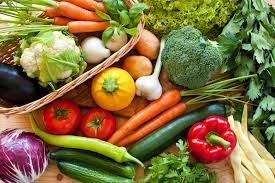
Vegetables are the fruits of plants grown for food, or sometimes the leaves, but once described something or someone seen as living the life of a plant.
Verge is a border or margin, today. It began as the Latin virga or 'rod', and was first used in English to mean 'penis'.
Vice, and we are talking about the device used to grip objects in DIY, originally referred to a 'winding staircase'.
Victim is today referring to one who suffers, originally it spoke of one about to suffer for it described a person or animal caught to be offered as a sacrifice.
Vulgar or 'crude' began in the fourteenth century meaning 'ordinary, common'.
Vegetables are the fruits of plants grown for food, or sometimes the leaves, but once described something or someone seen as living the life of a plant.
Verge is a border or margin, today. It began as the Latin virga or 'rod', and was first used in English to mean 'penis'.
Vice, and we are talking about the device used to grip objects in DIY, originally referred to a 'winding staircase'.
Victim is today referring to one who suffers, originally it spoke of one about to suffer for it described a person or animal caught to be offered as a sacrifice.
Vulgar or 'crude' began in the fourteenth century meaning 'ordinary, common'.
Sunday, 24 November 2019
Russia Place Names Explained
Having blogged samples of my books on English place names and also examined the etymologies of the nations of the world and their respective capitals I thought it time I cast my net a little wider. As English place names share some links to other tongues it would be interesting to see if any of the elements contributing to our place names could be found elsewhere. Continuing an alphabetical tour of the world and a look at the largest Russian cities.
Moscow is likely from the name of the Moskva River, although the origins of the river name are far from certain. Perhaps the best option of them all is the Proto-Balto-Slavic root muzg-imuzg, itself from Proto-Indo-European meu 'wet' and describing a wetland, or possibly a marsh.
Saint Petersburg refers to Peter the Great, tsar of Russia from 1682 to 1725.
Yekaterinburg is named after the wife of Peter the Great who succeeded him as Catherine I. Her reign lasted from 1724, when she co-reigned until his death the following year, until her death in 1727.
Kazan's origins are uncertain but may come from the Tatar word qazan meaning 'boiler' or 'cauldron'. This is either named from a legend or, more likely, a topographical feature.
Samara is named after the river, itself likely referring to 'summer water' and suggesting it is completely frozen in winter.
Krasnoyarsk was originally given as Krasny Yar or 'red steep riverbank'.
Perm comes from a Finno-Ugric root meaning 'far away land'.
Voronezh is first recorded in 1177, it is probably from the personal name Voroneg, although this is by no means certain.
Volgograd was originally known as Sary Su which, in the Tatar language, means 'yellow water' and a reference to the silt carried by the river. Later it became Stalingrad, to honour Joseph Stalin, and in 1961 Volgograd after the river. The Volga River is the longest in Europe and is named after the Proto-Slavic for 'wetness' or 'moisture'.
Saratov also comes from the Tatar language, where Sary Tau describes 'the yellow mountain'.
Krasnodar was named as such in 1920 and means 'gift of the reds'. Earlier it was Yekaterinodar or 'Catherine's gift'.
Tolyatti took the name of the longest-serving secretary of the Italian Communist Party, Palmiro Togliatti.
Tyumen comes from the Turkish and Mongol word tumen meaning 'ten thousand' and a reference to an earlier conflict.
Izhevsk had been named Ustinov after Dmitri Ustinov, former Soviet Minister of Defence, but was changed in 1987 to the modern name 'plant on the Izh' and a reference to ironworks here.
Irkutsk takes its name from the Irkut river, named from the Buryat word for 'spinning'.
Ulyanovsk was the birth place of Vladimir Lenin and named after the man born Ulyanov.
Khabarovsk was named after the 17th century leader Yerofey Khabarov.
Vladivostok was a name first applied to the bay in 1859, the following year also taken by the settlement and meaning 'the small seaside village'.
Note the spellings of the places are English as the piece is written in English.
Moscow is likely from the name of the Moskva River, although the origins of the river name are far from certain. Perhaps the best option of them all is the Proto-Balto-Slavic root muzg-imuzg, itself from Proto-Indo-European meu 'wet' and describing a wetland, or possibly a marsh.
Saint Petersburg refers to Peter the Great, tsar of Russia from 1682 to 1725.
Yekaterinburg is named after the wife of Peter the Great who succeeded him as Catherine I. Her reign lasted from 1724, when she co-reigned until his death the following year, until her death in 1727.
Kazan's origins are uncertain but may come from the Tatar word qazan meaning 'boiler' or 'cauldron'. This is either named from a legend or, more likely, a topographical feature.
Samara is named after the river, itself likely referring to 'summer water' and suggesting it is completely frozen in winter.
Krasnoyarsk was originally given as Krasny Yar or 'red steep riverbank'.
Perm comes from a Finno-Ugric root meaning 'far away land'.
Voronezh is first recorded in 1177, it is probably from the personal name Voroneg, although this is by no means certain.
Volgograd was originally known as Sary Su which, in the Tatar language, means 'yellow water' and a reference to the silt carried by the river. Later it became Stalingrad, to honour Joseph Stalin, and in 1961 Volgograd after the river. The Volga River is the longest in Europe and is named after the Proto-Slavic for 'wetness' or 'moisture'.
Saratov also comes from the Tatar language, where Sary Tau describes 'the yellow mountain'.
Krasnodar was named as such in 1920 and means 'gift of the reds'. Earlier it was Yekaterinodar or 'Catherine's gift'.
Tolyatti took the name of the longest-serving secretary of the Italian Communist Party, Palmiro Togliatti.
Tyumen comes from the Turkish and Mongol word tumen meaning 'ten thousand' and a reference to an earlier conflict.
Izhevsk had been named Ustinov after Dmitri Ustinov, former Soviet Minister of Defence, but was changed in 1987 to the modern name 'plant on the Izh' and a reference to ironworks here.
Irkutsk takes its name from the Irkut river, named from the Buryat word for 'spinning'.
Ulyanovsk was the birth place of Vladimir Lenin and named after the man born Ulyanov.
Khabarovsk was named after the 17th century leader Yerofey Khabarov.
Vladivostok was a name first applied to the bay in 1859, the following year also taken by the settlement and meaning 'the small seaside village'.
Note the spellings of the places are English as the piece is written in English.
Sunday, 10 November 2019
Qatar Place Names Explained
Having blogged samples of my books on English place names and also examined the etymologies of the nations of the world and their respective capitals I thought it time I cast my net a little wider. As English place names share some links to other tongues it would be interesting to see if any of the elements contributing to our place names could be found elsewhere. Continuing an alphabetical tour of the world and a look at the largest Qatar cities.
Doha, the capital city, either comes from the Arabic Ad-Dawha or ‘the big tree’, a marker for the original fishing village and possibly used as a marker by the fishermen, or from dohat the Arabic word for ‘bay’ where the fisherman cast their nets.
Al Wakrah comes from the Arabic wakar which translates as 'bird's nest' and probably refers to the colonies of birds in the nearby hills.
Al-Shahaniya is named from the local flora, specifically the plant known here as sheeh, used as it is an anti-inflammatory. Known to science as Artemesia inculta, it can be found across the Middle East and North Africa but is quite rare in Qatar as the soils are largely unsuitable.
Mesaieed is another named from the local flora. Known as sead it is difficult to know what that plant was, and therefore its use, as it no longer grows here.
Madinat Khalifa, both North and South, refer to the Arabic madinal or 'city' with former emir of Qatar from 1972 to 1995, Khalifa bin Hamad Al Thani.
Nuaija comes from the Arabic word naaja meaning 'ewe' or 'female sheep'. This is nothing to do with the mammal but eludes to the water from the well hereabouts being as sweet as sheep's milk.
Umm Ghuwailina is from Arabic umm meaning 'mother' but used here in a geographical sense, together with ghuwailina, referring to a local tree, speaks of 'the mother of ghulan'. The tree is used as fodder for camels.
Al Thumama is another derived from the local flora. Known to science as Panicum turgidum (literally 'swollen foxtail'), it is welcomed in the desert as this perennial grass encourages soil formation.
As Salatah al Jadidah means 'New Salata', named after the Al-Sulaiti tribe and founded as recently as the 1970s.
Al Sadd is also named from a local plant. Sadd is the local name for a plant abundant in this region of the coast.
The Pearl is built on a man-made island begun in 2004 and an on-going project. It is named because it occupies one of Qatar's former pearl diving sites.
Dukhan translates as 'smoky mountain', for clouds are seen to gather around the summit of Jebel Dukhan.
Mebaireek takes its name from an Arabic personal name Mubarak, although just who that seemingly important individual may have been is unknown.
Fereej Abdel Aziz comes from fereej or 'district' of Abdel Aziz, he a former sheikh who governed in this area.
Umm Lekhba shares a first element with Umm Ghuwailina above, also sharing the geographical context. Here the second element is Arabic khabaa 'to hide' and a reference to the location being in a depression.
Duhail comes from dahal, the Arabic word for 'cavern' and a large cavern can be found here.
Umm Bab uses the 'mother' prefix again in a geographical sense, with the second element a reference to a passage between two hills and thus 'mother of the gateway'.
Rawdat Rashed is from the Arabic rawdat and a personal name and refers to its low-lying position where water tends to accumulate after rainfall in 'low wetland of Rashed'.
Hazm Al Markhiya takes the Arabic hazm or 'hill' and adds the tree known locally as markh. This tree, known officially as Leptadenia pyrotechnica. This 'tree' is actually a drought-resistant desert herb used for thatching huts, the plant fibre is useful in making ropes, makes a good fodder for camels, and the ripe pods used as vegetables and are said to possess some medicinal properties.
Al Ghuwariyah comes from ghar or 'cave' and not, as so often stated, a plant known as alghar as that is simply not found in the region.
Al Jemailiya comes from the Arabic jamila 'beauty' and thought to refer to the abundant vegetation in an area otherwise largely desert.
Al Karaana comes from karaa or 'fresh water' and refers to a well providing water of particularly excellent quality.
Al Bidda comes from the Arabic badaa 'to invent'. Not a technological invention but the creation of the settlement in what had been a area devoid of any true features.
Abu Samra takes the name of the Samr tree, used as fodder for camels.
Al Utouriya comes from Arabic atar meaning 'perfume, aroma'. This area lies in a rawdat or depression where the collected rainwater means aromatic herbs grow freely.
Al Nasraniya takes its name from a time when the local well, dug through particularly hard rock, became usable. Their efforts were referred to as Nasraniya or 'Christinaity' and a reminder of the victory by the Muslims over the Christians.
Note the spellings of the places are English as the piece is written in English.
Doha, the capital city, either comes from the Arabic Ad-Dawha or ‘the big tree’, a marker for the original fishing village and possibly used as a marker by the fishermen, or from dohat the Arabic word for ‘bay’ where the fisherman cast their nets.
Al Wakrah comes from the Arabic wakar which translates as 'bird's nest' and probably refers to the colonies of birds in the nearby hills.
Al-Shahaniya is named from the local flora, specifically the plant known here as sheeh, used as it is an anti-inflammatory. Known to science as Artemesia inculta, it can be found across the Middle East and North Africa but is quite rare in Qatar as the soils are largely unsuitable.
Mesaieed is another named from the local flora. Known as sead it is difficult to know what that plant was, and therefore its use, as it no longer grows here.
Madinat Khalifa, both North and South, refer to the Arabic madinal or 'city' with former emir of Qatar from 1972 to 1995, Khalifa bin Hamad Al Thani.
Nuaija comes from the Arabic word naaja meaning 'ewe' or 'female sheep'. This is nothing to do with the mammal but eludes to the water from the well hereabouts being as sweet as sheep's milk.
Umm Ghuwailina is from Arabic umm meaning 'mother' but used here in a geographical sense, together with ghuwailina, referring to a local tree, speaks of 'the mother of ghulan'. The tree is used as fodder for camels.
Al Thumama is another derived from the local flora. Known to science as Panicum turgidum (literally 'swollen foxtail'), it is welcomed in the desert as this perennial grass encourages soil formation.
As Salatah al Jadidah means 'New Salata', named after the Al-Sulaiti tribe and founded as recently as the 1970s.
Al Sadd is also named from a local plant. Sadd is the local name for a plant abundant in this region of the coast.
The Pearl is built on a man-made island begun in 2004 and an on-going project. It is named because it occupies one of Qatar's former pearl diving sites.
Dukhan translates as 'smoky mountain', for clouds are seen to gather around the summit of Jebel Dukhan.
Mebaireek takes its name from an Arabic personal name Mubarak, although just who that seemingly important individual may have been is unknown.
Fereej Abdel Aziz comes from fereej or 'district' of Abdel Aziz, he a former sheikh who governed in this area.
Umm Lekhba shares a first element with Umm Ghuwailina above, also sharing the geographical context. Here the second element is Arabic khabaa 'to hide' and a reference to the location being in a depression.
Duhail comes from dahal, the Arabic word for 'cavern' and a large cavern can be found here.
Umm Bab uses the 'mother' prefix again in a geographical sense, with the second element a reference to a passage between two hills and thus 'mother of the gateway'.
Rawdat Rashed is from the Arabic rawdat and a personal name and refers to its low-lying position where water tends to accumulate after rainfall in 'low wetland of Rashed'.
Hazm Al Markhiya takes the Arabic hazm or 'hill' and adds the tree known locally as markh. This tree, known officially as Leptadenia pyrotechnica. This 'tree' is actually a drought-resistant desert herb used for thatching huts, the plant fibre is useful in making ropes, makes a good fodder for camels, and the ripe pods used as vegetables and are said to possess some medicinal properties.
Al Ghuwariyah comes from ghar or 'cave' and not, as so often stated, a plant known as alghar as that is simply not found in the region.
Al Jemailiya comes from the Arabic jamila 'beauty' and thought to refer to the abundant vegetation in an area otherwise largely desert.
Al Karaana comes from karaa or 'fresh water' and refers to a well providing water of particularly excellent quality.
Al Bidda comes from the Arabic badaa 'to invent'. Not a technological invention but the creation of the settlement in what had been a area devoid of any true features.
Abu Samra takes the name of the Samr tree, used as fodder for camels.
Al Utouriya comes from Arabic atar meaning 'perfume, aroma'. This area lies in a rawdat or depression where the collected rainwater means aromatic herbs grow freely.
Al Nasraniya takes its name from a time when the local well, dug through particularly hard rock, became usable. Their efforts were referred to as Nasraniya or 'Christinaity' and a reminder of the victory by the Muslims over the Christians.
Note the spellings of the places are English as the piece is written in English.
Subscribe to:
Posts (Atom)