Circular is clearly from 'circle', which is another from the Latin group of languages and where Latin circulus 'small ring, hoop'.
Bulbous is derived from bulb, itself from the French bulbe meaning 'onion'. This can be traced to the Greek bolbos 'plant with round swelling on an underground stem'.
Curved, from curve, can be traced to Latin curvus 'crooked, bent' and ultimately Proto-Indo-European sker 'to turn, bend'.
Elliptical is derived from ellipse, and the first of two words which are not strictly 'round' in the correct sense. Ellipse comes from the Old French ellipse and further back to Latin ellipsis which not only meant 'ellipse' but also 'a falling short, a deficit' and clearly as in the sense of 'not a circle'. These both come from the Greek elleipsis and first coined by Apollonius of Pergia in the 3rd century BCE, to describe the section of the acute-angled cone which is smaller at the base than the side.

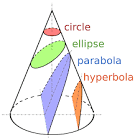
Oval is another 'not round' words, comes from Latin ovalis or 'egg-shaped'. Note the term 'Oval Office' to refer to the Presidency of the USA is first seen in 1942.
Spherical is the first of two words which are three dimensional and thus not 'round' in the usual sense. Derived from 'sphere', the word comes from Old French espereand Latin sphaera 'globe, ball, celestial sphere'.
Cylindrical, from cylinder, came to English from Old French cylindre and Latin cylindrus 'roller, cylinder, roll'.

Around has been increasingly ignored in favour of round and, unsurprisingly, shares the same root.
Round is also used in a number of phrases: round the clock is first recorded in 1715; round the world appears in 1600; round the corner in 1743; nobody took a round trip until 1844; a round number (multiples of ten, hundred, thousand, etc) from 1640; to make the rounds as recently as 1967; and nobody bought a round of drinks until 1880 and interestingly it was banned from July 1916 until June 1919.