A few will be aware I have been known to speak on various subjects over the years. Fundamentally these all revolve around my favourite subject of etymology. Have always enjoyed bringing this fascinating subject to others. It’s not for me to say whether the audiences have, although many have asked me to return.
Thought it might be worthwhile sharing a snippet or two from these etymological presentations, continuing with Etymology for the Writer or Artist. Every artist knows the names of the techniques and methods used to produce that painting, sculpture, or moulding, while writers are well-acquainted with parts of speech, tenses and grammar. But how many artists really know how a technique, style, or even a colour got its name? Are writers aware of why a noun, verb, or adjective is known as such? And very few will understand just why tenses are known as they are - I mean who ever though the 'pluperfect' sounded remotely useful as a term? Not simply a lesson in etymology this is a very different way of looking at history and how the English language developed over several centuries.
Created for the many writing groups I have spoke to, it made a change for them from the usual guests who either tell them about themselves or attempt to inspire their writing. A couple of examples from the origins of our alphabet.
A – derived from the Greek alpha. Used in the modern sense to mean ‘the first’ dates from the 17th century. The Greeks got it from the Hebrew and/or Phoenician aleph (greek not permitting the use of consonants at the end of words so they added the ‘a’) and this, in turn, from the Semitic group of languages where eleph literally meant ‘ox’. It is thought the character represents the head of an ox.
O – from the Greek omicron and a meaning of ‘small o’, this from the Proto-Indo-European word smik or ‘small’ as this is a notably small vowel. As a letter it is derived from the Phoenician ayn or ‘eye’, itself taken from the Egyptian hieroglyph of an eye. O is also represented by omega, a comparatively late addition to the Greek alphabet and not seen until around 2,800 years ago. It is related to omicron and means ‘great o’ as in literally ‘o - mega’. If you want to know the diffidence between omicron and omega simply look at the word ‘lotto’, where the short version is near the beginning and the longer at the end.
P – comes from the Greek pi and itself from the Phoenician pe which, in turn, comes from the pictogram of a mouth.
Z – comes from the sixth letter of the Greek alphabet zeta and it is also the basis for our modern letter Z. Derived from the Hebrew zayin, literally meaning ‘weapon’ and likely a reference to its shape resembling a jagged edge.
G – if you’ve ever wondered why we have two pronunciations for the letter G – as in Gary and George – it is purely down to source. The hard G in Gary is Germanic, the softer G in George is from Latin and prior to that Greek. In fact the latter G did exist in the Latin alphabet but was written as a Z (try saying George with a Greek accent but spelling it with a Z, it works).
If you think you know someone who would like to hear me speak on this subject, drop me a line.
Showing posts with label alphabet. Show all posts
Sunday, 9 August 2026
Sunday, 23 January 2022
Alphabetical order
For the last few weeks, I have posted a number of words which have changed in meaning and/or usage over the years. I do hope you enjoyed some of these and found something interesting.
When preparing those posts, I discovered something which for me was really weird. Alphabetical order, the way I used to post the words and the system of sorting which is common to most lists, has only been used since about 400BCE. How on earth did anything get sorted before then and what changed?
The obvious explanation as to other forms of ordering is down to the lack of an alphabet. There are plenty of other forms of writing which does not use an alphabet - think of cuneiform, hieroglyphs, the many Asian forms of writing - hence alphabetical order is simply not possible before the invention of the alphabet. Furthermore, until those first letters or characters were sorted into an accepted order, no alphabetical base existed and thus no alphabetical order.
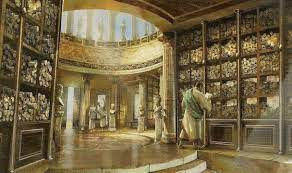
The first evidence of alphabetical order comes from the famed Library of Alexandria around 2,300 years ago. It is reasonably safe to assume this can never have been used unless alphabetical order was already in use - otherwise how would any user of the library have known where to look to find what they were looking for? Even then the use of alphabetical order would have been mostly pointless for most of the next 1,500 plus years, as most libraries and records offices simply did not have enough books and documents to warrant its use.
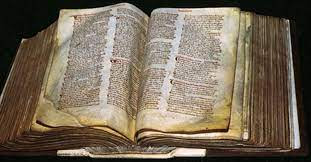
Take the famous Domesday Book, for example. The original is based on a system where they were sorted initially by status and then geography. Luckily later publications have opted to go for counties and then alphabetical order, or it might take many hours sorting through the 13,418 places listed. Two centuries later and religious documents are still being ordered theologically. Hence, 'angel' did not come before 'God', the order more based on status and then order of creation. Even as recently as the early nineteenth century, alphabetical order was seen as tantamount to sorting a broken mirror by just gathering up the pieces. This was how poet Samuel Taylor Coleridge described encyclopaedias, he preferred things sorted by themes.
Before you laugh at the ridiculous ideas of how to sort items in a list or record, keep in mind it is not that long ago - before the days of the internet and the search engine - we often paused in looking up something, to wonder what will it be filed under? Remember looking up something only to find 'Look under ....."?
When preparing those posts, I discovered something which for me was really weird. Alphabetical order, the way I used to post the words and the system of sorting which is common to most lists, has only been used since about 400BCE. How on earth did anything get sorted before then and what changed?
The obvious explanation as to other forms of ordering is down to the lack of an alphabet. There are plenty of other forms of writing which does not use an alphabet - think of cuneiform, hieroglyphs, the many Asian forms of writing - hence alphabetical order is simply not possible before the invention of the alphabet. Furthermore, until those first letters or characters were sorted into an accepted order, no alphabetical base existed and thus no alphabetical order.
The first evidence of alphabetical order comes from the famed Library of Alexandria around 2,300 years ago. It is reasonably safe to assume this can never have been used unless alphabetical order was already in use - otherwise how would any user of the library have known where to look to find what they were looking for? Even then the use of alphabetical order would have been mostly pointless for most of the next 1,500 plus years, as most libraries and records offices simply did not have enough books and documents to warrant its use.
Take the famous Domesday Book, for example. The original is based on a system where they were sorted initially by status and then geography. Luckily later publications have opted to go for counties and then alphabetical order, or it might take many hours sorting through the 13,418 places listed. Two centuries later and religious documents are still being ordered theologically. Hence, 'angel' did not come before 'God', the order more based on status and then order of creation. Even as recently as the early nineteenth century, alphabetical order was seen as tantamount to sorting a broken mirror by just gathering up the pieces. This was how poet Samuel Taylor Coleridge described encyclopaedias, he preferred things sorted by themes.
Before you laugh at the ridiculous ideas of how to sort items in a list or record, keep in mind it is not that long ago - before the days of the internet and the search engine - we often paused in looking up something, to wonder what will it be filed under? Remember looking up something only to find 'Look under ....."?
Sunday, 4 December 2016
All Greek
I find it fascinating how letters from the Greek alphabet have become a part of everyday English. Regularly we hear about the 'alpha male', 'gamma rays', how we don't care 'one iota', and the last or ultimate having the added 'omega'. As ever I began wondering just how these names developed and why. Hence what follows is twenty-four explanations for the twenty-four letters of the Greek alphabet.
Alpha, in its modern sense of 'the first', dates from the early 17th century. It is taken directly from the Hebrew and/or Phoenician aleph (Greek does not permit the use of certain consonants at the end of words so they added the final 'a') and, in turn, from the Semitic group of languages where eleph literally meant 'ox'. It is thought this is due to the character representing the head of an ox.
Beta is another ultimately from the Hebrew/Phoenician where bayt meant 'house'. Just why the 'house' is seen in the letter is difficult to understand as a 'B' is possibly the most diverse of all letters and represented in very differing forms in a variety of scripts. Note the word has also found its way into Hindi and Urdu where it means 'royal son'.
Gamma comes from the Phoenician gimel meaning 'camel', as it is said to resemble some part of the animal, most likely the curve of the neck when at rest. However this is possibly quite fanciful and may represent the Egyptian hieroglyph depicting a club or throwing stick similar to a boomerang.
Delta is from the Phoenician daleth meaning 'tent door' and describing the triangular shape of the letter.
Epsilon represents the Greek e psilon, literally '-e and nothing else'. This unusual meaning is to distinguish this letter with the diphthong 'ai', both having come to be pronounced the same. The Greek word psilon was used to mean both 'smooth' and 'simple', the former originating in the Proto-Indo-European root bhes 'to rub'.
Zeta may be the sixth letter of the Greek alphabet but it is the basis for our modern Z. It is derived from the Hebrew zayin, literally meaning 'weapon' and likely a reference to its shape resembling a jagged edge.
Eta is derived from the Phoenician letter heth, itself ultimately from the hieroglyph for 'thread'.
Theta comes from the Hebrew teth, and used as Greek shorthand for thanatos on ballots to suggest a sentence of 'death'. It was pronounced as the modern 'th' and only being pronounced as the 'th' in 'Thomas' or 'thyme' when influenced by Latin and is derived from a Proto-Indo-European or Germanic rune. Just what that rune represented is unknown, although note this is the first letter originating in a sound rather than an image, this due to the comparatively late development.
Iota is used to mean 'a very small amount' and was indeed the smallest of the Greek letters. It may correspond to our ninth letter of the alphabet but written without the dot or 'tittle' - the latter from the Greek keraia or 'little horn'. The letter comes from the Semitic languages and the Proto-Semitic yad, itself from the Egyptian hieroglyph of an arm.
Kappa is from the Herbrew qoph and Phoenician qaph and originally described 'the hollow of the hand'.
Lambda comes from the Hebrew lamed and Arabic lam, in both cases appears as a prefix and used as a preposition meaning 'to' or 'for', depending on the context.
Mu is from the Semitic mem and ultimately from the Egyptian hieroglyph for 'water'.
Nu is from the Phoenician nun and ultimately from the Egyptian hieroglyph of a snake.
Xi is another from the Phoenician, here samekh's origins are unclear. Likely dating from the Middle Bronze Age and thus originally a hieroglyph, it could represent a tent peg or similar as the modern Hebrew equivalent means 'to support'.
Omicron comes from the Greek meaning 'small o' and derived from the Proto-Indo-European word smik or 'small' as this is a notably short vowel. As a letter it is derived from the Phoenician ayn or 'eye', itself taken from the Egyptian hieroglyph of an eye.
Pi is another of Phoenician origins, here Pe and comes from the pictogram of a mouth.
Rho is from the Phoenician resh, the pictogram of a head and related to Proto-Semitic ra and the Sumerian cuneiform sign for 'head'.
Sigma may be from an obsolete letter san, yet the most popular explanation is this is a Greek creation and simply means 'hissing'.
Tau is from the Phoenician taw and is from the Egyptian hieroglyph meaning 'mark'.
Upsilon is from the Phoenician waw and described its shape when meaning 'hook'.
Phi represents the sound as in 'ph', an aspirated 'p' and as the sound made by blowing through the lips is officially referred to as a 'bilabial spirant'.
Chi represents the sound 'ch' although is shaped like the letter 'x' which explains why this comes from the Greek khiastos or 'two things placed crosswise'. As among the simplest of symbols it is common to many ancient languages and although the origin is comparatively late here, should be expected in any or even every form of writing.
Psi is the penultimate letter of the Greek alphabet and has somewhat uncertain origins. It likely comes from a rune as it has been adopted in several different written forms including Cyrillic where psy means 'dogs'.
Omega was a late addition to the Greek alphabet, not seen until around 2,800 years ago. It is related to omicron and means 'great o' - literally 'o - mega'. Much as the 'x' symbol would be common to many languages so would the circle which is 'o'. The difference is in the short form of 'o' being used in the first part of 'lotto' while the longer version is found at the end.
Hence the Greek alphabet could be said to be: ox, house, camel, tent door, simple, weapon, thread, death, arm, hollow of the hand, for, water, snake, tent peg, eye, mouth, head, hissing, mark, hook, blowing through the lips, two things placed crosswise, dogs, circle.
Alpha, in its modern sense of 'the first', dates from the early 17th century. It is taken directly from the Hebrew and/or Phoenician aleph (Greek does not permit the use of certain consonants at the end of words so they added the final 'a') and, in turn, from the Semitic group of languages where eleph literally meant 'ox'. It is thought this is due to the character representing the head of an ox.
Beta is another ultimately from the Hebrew/Phoenician where bayt meant 'house'. Just why the 'house' is seen in the letter is difficult to understand as a 'B' is possibly the most diverse of all letters and represented in very differing forms in a variety of scripts. Note the word has also found its way into Hindi and Urdu where it means 'royal son'.
Gamma comes from the Phoenician gimel meaning 'camel', as it is said to resemble some part of the animal, most likely the curve of the neck when at rest. However this is possibly quite fanciful and may represent the Egyptian hieroglyph depicting a club or throwing stick similar to a boomerang.
Delta is from the Phoenician daleth meaning 'tent door' and describing the triangular shape of the letter.
Epsilon represents the Greek e psilon, literally '-e and nothing else'. This unusual meaning is to distinguish this letter with the diphthong 'ai', both having come to be pronounced the same. The Greek word psilon was used to mean both 'smooth' and 'simple', the former originating in the Proto-Indo-European root bhes 'to rub'.
Zeta may be the sixth letter of the Greek alphabet but it is the basis for our modern Z. It is derived from the Hebrew zayin, literally meaning 'weapon' and likely a reference to its shape resembling a jagged edge.
Eta is derived from the Phoenician letter heth, itself ultimately from the hieroglyph for 'thread'.
Theta comes from the Hebrew teth, and used as Greek shorthand for thanatos on ballots to suggest a sentence of 'death'. It was pronounced as the modern 'th' and only being pronounced as the 'th' in 'Thomas' or 'thyme' when influenced by Latin and is derived from a Proto-Indo-European or Germanic rune. Just what that rune represented is unknown, although note this is the first letter originating in a sound rather than an image, this due to the comparatively late development.
Iota is used to mean 'a very small amount' and was indeed the smallest of the Greek letters. It may correspond to our ninth letter of the alphabet but written without the dot or 'tittle' - the latter from the Greek keraia or 'little horn'. The letter comes from the Semitic languages and the Proto-Semitic yad, itself from the Egyptian hieroglyph of an arm.
Kappa is from the Herbrew qoph and Phoenician qaph and originally described 'the hollow of the hand'.
Lambda comes from the Hebrew lamed and Arabic lam, in both cases appears as a prefix and used as a preposition meaning 'to' or 'for', depending on the context.
Mu is from the Semitic mem and ultimately from the Egyptian hieroglyph for 'water'.
Nu is from the Phoenician nun and ultimately from the Egyptian hieroglyph of a snake.
Xi is another from the Phoenician, here samekh's origins are unclear. Likely dating from the Middle Bronze Age and thus originally a hieroglyph, it could represent a tent peg or similar as the modern Hebrew equivalent means 'to support'.
Omicron comes from the Greek meaning 'small o' and derived from the Proto-Indo-European word smik or 'small' as this is a notably short vowel. As a letter it is derived from the Phoenician ayn or 'eye', itself taken from the Egyptian hieroglyph of an eye.
Pi is another of Phoenician origins, here Pe and comes from the pictogram of a mouth.
Rho is from the Phoenician resh, the pictogram of a head and related to Proto-Semitic ra and the Sumerian cuneiform sign for 'head'.
Sigma may be from an obsolete letter san, yet the most popular explanation is this is a Greek creation and simply means 'hissing'.
Tau is from the Phoenician taw and is from the Egyptian hieroglyph meaning 'mark'.
Upsilon is from the Phoenician waw and described its shape when meaning 'hook'.
Phi represents the sound as in 'ph', an aspirated 'p' and as the sound made by blowing through the lips is officially referred to as a 'bilabial spirant'.
Chi represents the sound 'ch' although is shaped like the letter 'x' which explains why this comes from the Greek khiastos or 'two things placed crosswise'. As among the simplest of symbols it is common to many ancient languages and although the origin is comparatively late here, should be expected in any or even every form of writing.
Psi is the penultimate letter of the Greek alphabet and has somewhat uncertain origins. It likely comes from a rune as it has been adopted in several different written forms including Cyrillic where psy means 'dogs'.
Omega was a late addition to the Greek alphabet, not seen until around 2,800 years ago. It is related to omicron and means 'great o' - literally 'o - mega'. Much as the 'x' symbol would be common to many languages so would the circle which is 'o'. The difference is in the short form of 'o' being used in the first part of 'lotto' while the longer version is found at the end.
Hence the Greek alphabet could be said to be: ox, house, camel, tent door, simple, weapon, thread, death, arm, hollow of the hand, for, water, snake, tent peg, eye, mouth, head, hissing, mark, hook, blowing through the lips, two things placed crosswise, dogs, circle.
Sunday, 8 May 2016
Lost Letters of the English Alphabet
I spend a lot of time reading old documents. As anyone who has done such will tell you, this is not something which comes easily. Not only is the handwriting often abysmal but these also contain letters we have long since abandoned. This turned my thoughts to wondering where these letters originated and why they fell by the wayside leaving just the 26 letters of the alphabet taught from our very first day in school (and often before).
Our modern alphabet uses the symbols, for that what letters really are, used in Latin. Yet the English language came from the Germanic group, Old English brought here by the Saxons after the Roman Empire abandoned our islands. This early tongue used a runic alphabet, as did the closely related Old Scandinavian who knew the variants as futhark, with the latter name coming from the first six letters of their alphabet.
I have attempted to put these in alphabetical order, using the modern equivalents as a guide. However this proved difficult with several as there are no comparable equivalents, hence this is an approximation of alphabetical order.
Ash is probably familiar to many, it is still pronounced as 'eye'.
Tironian ond is named after the Roman Tiro who invented a shorthand system where 'ond' represented 'and'.
Yogh hardly has a modern equivalent, although perhaps the best way to hear it is in the 'ch' pronunciation as in the name of composer Bach.
Insular G may not be the catchiest of names for a letter, hence perhaps the reason it is sometimes called 'Irish G', it was used as well as yogh until eventually replaced by same.
Eng was invented in 1619 by scribe Alexander Gill and intended to replace the 'ng' at the end of words.
Ethel was a letter, one which should be seen as the 'oe' equal of ash.
Long s will be familiar to us all as the 's' in the middle of words, rarely found at the beginning or end of words. In truth it is not strictly a different letter but simply a different way of writing 's'.
Thorn was replaced by the sound 'th' and pronounced exactly the same. It fell out of use due to its similarity to the 'y'. It is the harder pronunciation of 'th', as in 'this', 'that', 'the' and 'other'.
That is not a word here but a letter. Once used much less than thorn it outlived same and can still be found in churches and religious texts.
Eth is the softer pronunciation of 'th', such as in 'thick' and 'thin'. It fell out of use quite early, replaced by thorn.
Wynn was the equalivalent of the modern 'w'. The 'w' is an odd letter because the way we say the letter is actually wrong - it should be 'double v' and not 'double u'. Even stranger the Latin, from where we get the letter, did not have a 'u' but a 'v', albeit the latter being used as the vowel.
Ampersand is still in use, indeed text messaging has increased its popularity to a point where it is undoubtedly used more often and by more people than ever before. While today we use it as an abbreviation, it was once considered a letter in its own right and even placed at position 27 in the alphabet as recently as the 19th century.
It does strike me that many of these letters would come in extremely useful if they were included in the piles of letters dished out by Rachel Riley on Coundown. It might have helped the chap on the right to win more games.
Our modern alphabet uses the symbols, for that what letters really are, used in Latin. Yet the English language came from the Germanic group, Old English brought here by the Saxons after the Roman Empire abandoned our islands. This early tongue used a runic alphabet, as did the closely related Old Scandinavian who knew the variants as futhark, with the latter name coming from the first six letters of their alphabet.
I have attempted to put these in alphabetical order, using the modern equivalents as a guide. However this proved difficult with several as there are no comparable equivalents, hence this is an approximation of alphabetical order.
Ash is probably familiar to many, it is still pronounced as 'eye'.
Tironian ond is named after the Roman Tiro who invented a shorthand system where 'ond' represented 'and'.
Yogh hardly has a modern equivalent, although perhaps the best way to hear it is in the 'ch' pronunciation as in the name of composer Bach.
Insular G may not be the catchiest of names for a letter, hence perhaps the reason it is sometimes called 'Irish G', it was used as well as yogh until eventually replaced by same.
Eng was invented in 1619 by scribe Alexander Gill and intended to replace the 'ng' at the end of words.
Ethel was a letter, one which should be seen as the 'oe' equal of ash.
Long s will be familiar to us all as the 's' in the middle of words, rarely found at the beginning or end of words. In truth it is not strictly a different letter but simply a different way of writing 's'.
Thorn was replaced by the sound 'th' and pronounced exactly the same. It fell out of use due to its similarity to the 'y'. It is the harder pronunciation of 'th', as in 'this', 'that', 'the' and 'other'.
That is not a word here but a letter. Once used much less than thorn it outlived same and can still be found in churches and religious texts.
Eth is the softer pronunciation of 'th', such as in 'thick' and 'thin'. It fell out of use quite early, replaced by thorn.
Wynn was the equalivalent of the modern 'w'. The 'w' is an odd letter because the way we say the letter is actually wrong - it should be 'double v' and not 'double u'. Even stranger the Latin, from where we get the letter, did not have a 'u' but a 'v', albeit the latter being used as the vowel.
Ampersand is still in use, indeed text messaging has increased its popularity to a point where it is undoubtedly used more often and by more people than ever before. While today we use it as an abbreviation, it was once considered a letter in its own right and even placed at position 27 in the alphabet as recently as the 19th century.
It does strike me that many of these letters would come in extremely useful if they were included in the piles of letters dished out by Rachel Riley on Coundown. It might have helped the chap on the right to win more games.
Sunday, 5 April 2015
The Phoenicians
Last time I highlighted the influential Greek tongue in the development of Indo-European languages. The biggest influence on ancient Greek had been the earlier Phoenician tongue. It is quite surprising to discover just how much influence the Phoenicians have had and continue to have on our modern world.
The Phoenicians are probably best remembered as navigators. Dominating the Mediterranean for more than five centuries, their initial wealth came from salt. Every Phoenician city stood on the coast and allowed the sea to flood the marshland by means of a series of man-made channels. Subsequently dammed, these were dried by the reliable Mediterranean sun. Compared to processes this was almost labour-free. This salt enabled them to cast their fishing nets much further from shore and keep the catch fresh for much longer.
The Phoenicians would never have referred to themselves as such, for this is a Greek term used to describe the Canaanite towns and comes from the Greek for ‘land of purple’. This is a reminder of the murex-shell dye exported from the region. As with Greece each city state was an independent unit. With little arable land they were forced to trade and built a great number of vessels from the one natural resource they did have – wood.
Not only did the Phoenicians leave us salt and sailing, their writing proved the basis for almost every modern alphabet – the language is held to have been very closely related to Hebrew but whether one is a dialect of the other or the two have an unknown common ancestor is disputed.
A culture with a wealth built on salt enabled their vessels to travel great distances and bring back wonderful and rare spices, the most valuable of which was pepper. The two are inseparable on 21st century tables and yet ironically it was pepper which devalued salt. Another link between the Phoenicians and the modern era is that of climate change. A few years of extreme weather destroyed half the salt marshes and abnormally heavy rains ruined the cycle of evaporation. They never recovered and eventually even the most famous of them all, Carthage, was no more.
The Phoenicians are probably best remembered as navigators. Dominating the Mediterranean for more than five centuries, their initial wealth came from salt. Every Phoenician city stood on the coast and allowed the sea to flood the marshland by means of a series of man-made channels. Subsequently dammed, these were dried by the reliable Mediterranean sun. Compared to processes this was almost labour-free. This salt enabled them to cast their fishing nets much further from shore and keep the catch fresh for much longer.
The Phoenicians would never have referred to themselves as such, for this is a Greek term used to describe the Canaanite towns and comes from the Greek for ‘land of purple’. This is a reminder of the murex-shell dye exported from the region. As with Greece each city state was an independent unit. With little arable land they were forced to trade and built a great number of vessels from the one natural resource they did have – wood.
Not only did the Phoenicians leave us salt and sailing, their writing proved the basis for almost every modern alphabet – the language is held to have been very closely related to Hebrew but whether one is a dialect of the other or the two have an unknown common ancestor is disputed.
A culture with a wealth built on salt enabled their vessels to travel great distances and bring back wonderful and rare spices, the most valuable of which was pepper. The two are inseparable on 21st century tables and yet ironically it was pepper which devalued salt. Another link between the Phoenicians and the modern era is that of climate change. A few years of extreme weather destroyed half the salt marshes and abnormally heavy rains ruined the cycle of evaporation. They never recovered and eventually even the most famous of them all, Carthage, was no more.
Labels:
alphabet,
Canaan,
Carthage,
dye,
Greek,
navigation,
pepper,
Phoenician,
purple,
Salt
Subscribe to:
Posts (Atom)