Several words have become part of the language in being used in phrases. Last time we looked at ‘wall’ and now look at ‘book’.
Book is also used to refer to a record of bets made, this is first seen in 1812. Although ‘bookmaker’ is seen as early as 1862.
Book of life dates from the middle of the 14th century.
Nobody had the book thrown at them (in a legal sense) before 1932.
Nobody did anything ‘by the book’ until the 1590s.
Book-burning used to be a fairly common phrase, this from a time when it would have limited access to what some might consider inappropriate material, and first seen in 1850.
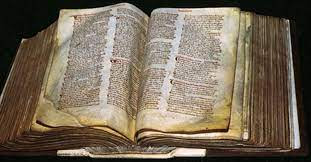
Domesday Book, a record dated 1086, but the first time anyone used the phrase was in 1178.
The red book, a list of peerages, is seen in 1788; but the more famous Little Red Book (Chairman Mao) comes from 1967.
The term schoolbook first appears in 1709.
Copybooks made their debut in the 1580s.
Fieldbooks, used by naturalists, is seen from 1848.
Bookplates have been written about since 1791.
Nobody used a cheque book until 1872.
Scrap books have been known since 1821.
Matchbook, which contains matches, is seen from 1913.
We have seen songbooks since the late 15th century.
Storybooks have been seen since 1711, these always then referring to books for children.
Bookends have been utilized for many years, and certainly predate the first written mention in 1907.
Textbooks have existed since 1779.
Bookkeepers have been known since the 1550s.
Showing posts with label Domesday. Show all posts
Thursday, 3 April 2025
Sunday, 23 January 2022
Alphabetical order
For the last few weeks, I have posted a number of words which have changed in meaning and/or usage over the years. I do hope you enjoyed some of these and found something interesting.
When preparing those posts, I discovered something which for me was really weird. Alphabetical order, the way I used to post the words and the system of sorting which is common to most lists, has only been used since about 400BCE. How on earth did anything get sorted before then and what changed?
The obvious explanation as to other forms of ordering is down to the lack of an alphabet. There are plenty of other forms of writing which does not use an alphabet - think of cuneiform, hieroglyphs, the many Asian forms of writing - hence alphabetical order is simply not possible before the invention of the alphabet. Furthermore, until those first letters or characters were sorted into an accepted order, no alphabetical base existed and thus no alphabetical order.
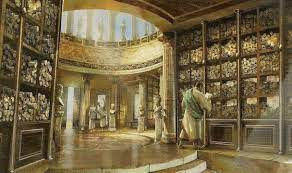
The first evidence of alphabetical order comes from the famed Library of Alexandria around 2,300 years ago. It is reasonably safe to assume this can never have been used unless alphabetical order was already in use - otherwise how would any user of the library have known where to look to find what they were looking for? Even then the use of alphabetical order would have been mostly pointless for most of the next 1,500 plus years, as most libraries and records offices simply did not have enough books and documents to warrant its use.
Take the famous Domesday Book, for example. The original is based on a system where they were sorted initially by status and then geography. Luckily later publications have opted to go for counties and then alphabetical order, or it might take many hours sorting through the 13,418 places listed. Two centuries later and religious documents are still being ordered theologically. Hence, 'angel' did not come before 'God', the order more based on status and then order of creation. Even as recently as the early nineteenth century, alphabetical order was seen as tantamount to sorting a broken mirror by just gathering up the pieces. This was how poet Samuel Taylor Coleridge described encyclopaedias, he preferred things sorted by themes.
Before you laugh at the ridiculous ideas of how to sort items in a list or record, keep in mind it is not that long ago - before the days of the internet and the search engine - we often paused in looking up something, to wonder what will it be filed under? Remember looking up something only to find 'Look under ....."?
When preparing those posts, I discovered something which for me was really weird. Alphabetical order, the way I used to post the words and the system of sorting which is common to most lists, has only been used since about 400BCE. How on earth did anything get sorted before then and what changed?
The obvious explanation as to other forms of ordering is down to the lack of an alphabet. There are plenty of other forms of writing which does not use an alphabet - think of cuneiform, hieroglyphs, the many Asian forms of writing - hence alphabetical order is simply not possible before the invention of the alphabet. Furthermore, until those first letters or characters were sorted into an accepted order, no alphabetical base existed and thus no alphabetical order.
The first evidence of alphabetical order comes from the famed Library of Alexandria around 2,300 years ago. It is reasonably safe to assume this can never have been used unless alphabetical order was already in use - otherwise how would any user of the library have known where to look to find what they were looking for? Even then the use of alphabetical order would have been mostly pointless for most of the next 1,500 plus years, as most libraries and records offices simply did not have enough books and documents to warrant its use.
Take the famous Domesday Book, for example. The original is based on a system where they were sorted initially by status and then geography. Luckily later publications have opted to go for counties and then alphabetical order, or it might take many hours sorting through the 13,418 places listed. Two centuries later and religious documents are still being ordered theologically. Hence, 'angel' did not come before 'God', the order more based on status and then order of creation. Even as recently as the early nineteenth century, alphabetical order was seen as tantamount to sorting a broken mirror by just gathering up the pieces. This was how poet Samuel Taylor Coleridge described encyclopaedias, he preferred things sorted by themes.
Before you laugh at the ridiculous ideas of how to sort items in a list or record, keep in mind it is not that long ago - before the days of the internet and the search engine - we often paused in looking up something, to wonder what will it be filed under? Remember looking up something only to find 'Look under ....."?
Sunday, 19 March 2017
Composers
Whilst my taste in music is varied it could never be described as eclectic - incidentally this is number two on my list of least favourite words, albeit a considerable way behind the P-word. But I digress. My mentioning music came after I was recently sent a list of classical composers, these were to be included in a quiz-style crossword. Followers of my blog will not be surprised to discover some of the clues were based on the etymologies of their names.Thus this time a look at the origins of a selection of the names of composers which many will infinitely better acquainted than I - and yes, 'a selection' means I have only included those I could define.
Bach - being German he took his name from the word for a stream, rivulet, brook, or creek.
Bartok - this Hungarian takes the pet form of a the Christian name Bartalan or Bertalan, itself a form of Bartholomew.
Beethoven - another of German origins where beeth, meaning 'beet', and hofen, the plural of hof, meaning 'farms', tell us this most famous of deaf people had ancestors who farmed beetroot.
Bellini - Italian operatic composer Vincenzo has a surname translating as 'the little beautiful one'.
Borodin - the Russian translation is, quite literally, 'well height' and understood to as 'tall'.
Brahms - a German name which is ultimately of Hebrew origin in Bram where it meant 'high or good father'.
Bruckner - a topographical name, the earliest meaning being for a person who lived on or near a causeway or bridge. However it is more commonly applied to those who worked at such a location, gathering tolls and/or maintaining a bridge.
Chopin - a French surname derived from an old liquid imperial measurement. In France it would be seen as roughly equal to a quart but in Scotland became corrupted to refer to a half pint.
Debussy - a French surname taken from any of several Norman place names all of which mean 'mouth' and of which there is even an example of a Norman landholder in Domesday, this being Robert de Buci.
Delius - a name of Greek origin meaning 'from Delos', a Greek island of 1.32 square miles and a population at the 2001 census of 14.
Dvorak - a common Czech surname referring to a rich landowner in a manor house.
Elgar - a name of Germanic origins, it literally means 'shining spear'.
Faure - an Occitan name, a Romance language, meaning simply 'blacksmith'.
Franck - comes from the French reference to those Germanic peoples living around the Rhine during the times of the Roman Empire, the Franks.
Glinka - a Polish name, one referring to those who came from Glinki.
Gluck - is taken from a Yiddish word glik meaning 'luck'.
Grieg - is ultimately from the Greek gregorein 'be awake, watchful'.
Handel - a Germanic name meaning 'trade' or 'commerce'.
Haydn - a Welsh name derived from the Celtic Aidan, itself meaning 'little fire'.
Holst - refers to someone from Holstein, the German town having a name coming from the people who lived here the Holcetae or 'dwellers in the wood'.
Liszt - a Hungarian name which literally translates as 'flour'.
Mahler - is a German surname and, like the above, is a trade name. Whilst it is derived from the word for 'painter', the name is very specifically used to refer to those who painted stained glass.
Mozart - derived from the Latin, this meaning 'the love of God'.
Purcell - another of Norman origin where the literal translation is 'piglet', however it would have been used a nickname or to refer to a swineherd.
Rossini - an Italian name derived from rosso meaning 'red' and originally applied to one with red hair or ruddy complexion.
Schoenberg - is another topographical name, here German scoene berg refers to 'a beautiful hill'.
Schubert - is a trade name of German origin where schuoch wurhte meant 'shoemaker, cobbler'.
Schumann - has an identical meaning, albeit here the German schuoh mann refers literally to 'a shoe man'.
Smetana - a name of Czech and/or Ukranian Jewish origins. The origin is undoubtedly smetana meaning 'cream', although whether it was a nickname, perhaps for someone who liked cream (or ironically one who did not) or a trader in this and other dairy products is unknown.
Sousa - a name of Portuguese origins, being particularly common in former Portuguese colonies. Archaically it refers to a place, any place where the people came from for it describes them as being 'of the rocks'.
Strauss - a Germanic surname which has at least three equally plausible origins. It may be the family lived in a place named Straus, itself referring to 'the ostrich'. Here this may point to a place where the feathers of this bird were used in heraldry or, and this an alternative origin, as a nickname for those who habitually wore same as an adornment. Alternatively this may also be a nickname for someone known for arguing or confrontation, for the German struz means 'quarrel, belligerent'.
Tchaikovsky - a Russian composer whose name comes from the Russian for a bird, specifically the gull.
Verdi - an Italian composer with an Italian name meaning 'green'.
Vivaldi - another Italian composer whose name is derived from vita or 'life'.
Wagner - a German name from waganari meaning either 'wagon maker' or 'wagon driver'.
Walton - an English place name, where wahl tun means 'the farmstead of the foreigners' (Britons).
Weber - a German name and another representing a trade for this translates as 'weaver'.
Bach - being German he took his name from the word for a stream, rivulet, brook, or creek.
Bartok - this Hungarian takes the pet form of a the Christian name Bartalan or Bertalan, itself a form of Bartholomew.
Beethoven - another of German origins where beeth, meaning 'beet', and hofen, the plural of hof, meaning 'farms', tell us this most famous of deaf people had ancestors who farmed beetroot.
Bellini - Italian operatic composer Vincenzo has a surname translating as 'the little beautiful one'.
Borodin - the Russian translation is, quite literally, 'well height' and understood to as 'tall'.
Brahms - a German name which is ultimately of Hebrew origin in Bram where it meant 'high or good father'.
Bruckner - a topographical name, the earliest meaning being for a person who lived on or near a causeway or bridge. However it is more commonly applied to those who worked at such a location, gathering tolls and/or maintaining a bridge.
Chopin - a French surname derived from an old liquid imperial measurement. In France it would be seen as roughly equal to a quart but in Scotland became corrupted to refer to a half pint.
Debussy - a French surname taken from any of several Norman place names all of which mean 'mouth' and of which there is even an example of a Norman landholder in Domesday, this being Robert de Buci.
Delius - a name of Greek origin meaning 'from Delos', a Greek island of 1.32 square miles and a population at the 2001 census of 14.
Dvorak - a common Czech surname referring to a rich landowner in a manor house.
Elgar - a name of Germanic origins, it literally means 'shining spear'.
Faure - an Occitan name, a Romance language, meaning simply 'blacksmith'.
Franck - comes from the French reference to those Germanic peoples living around the Rhine during the times of the Roman Empire, the Franks.
Glinka - a Polish name, one referring to those who came from Glinki.
Gluck - is taken from a Yiddish word glik meaning 'luck'.
Grieg - is ultimately from the Greek gregorein 'be awake, watchful'.
Handel - a Germanic name meaning 'trade' or 'commerce'.
Haydn - a Welsh name derived from the Celtic Aidan, itself meaning 'little fire'.
Holst - refers to someone from Holstein, the German town having a name coming from the people who lived here the Holcetae or 'dwellers in the wood'.
Liszt - a Hungarian name which literally translates as 'flour'.
Mahler - is a German surname and, like the above, is a trade name. Whilst it is derived from the word for 'painter', the name is very specifically used to refer to those who painted stained glass.
Mozart - derived from the Latin, this meaning 'the love of God'.
Purcell - another of Norman origin where the literal translation is 'piglet', however it would have been used a nickname or to refer to a swineherd.
Rossini - an Italian name derived from rosso meaning 'red' and originally applied to one with red hair or ruddy complexion.
Schoenberg - is another topographical name, here German scoene berg refers to 'a beautiful hill'.
Schubert - is a trade name of German origin where schuoch wurhte meant 'shoemaker, cobbler'.
Schumann - has an identical meaning, albeit here the German schuoh mann refers literally to 'a shoe man'.
Smetana - a name of Czech and/or Ukranian Jewish origins. The origin is undoubtedly smetana meaning 'cream', although whether it was a nickname, perhaps for someone who liked cream (or ironically one who did not) or a trader in this and other dairy products is unknown.
Sousa - a name of Portuguese origins, being particularly common in former Portuguese colonies. Archaically it refers to a place, any place where the people came from for it describes them as being 'of the rocks'.
Strauss - a Germanic surname which has at least three equally plausible origins. It may be the family lived in a place named Straus, itself referring to 'the ostrich'. Here this may point to a place where the feathers of this bird were used in heraldry or, and this an alternative origin, as a nickname for those who habitually wore same as an adornment. Alternatively this may also be a nickname for someone known for arguing or confrontation, for the German struz means 'quarrel, belligerent'.
Tchaikovsky - a Russian composer whose name comes from the Russian for a bird, specifically the gull.
Verdi - an Italian composer with an Italian name meaning 'green'.
Vivaldi - another Italian composer whose name is derived from vita or 'life'.
Wagner - a German name from waganari meaning either 'wagon maker' or 'wagon driver'.
Walton - an English place name, where wahl tun means 'the farmstead of the foreigners' (Britons).
Weber - a German name and another representing a trade for this translates as 'weaver'.
Subscribe to:
Posts (Atom)