
Showing posts with label Alexandria. Show all posts

Sunday, 23 January 2022

Alphabetical order

For the last few weeks, I have posted a number of words which have changed in meaning and/or usage over the years. I do hope you enjoyed some of these and found something interesting.


When preparing those posts, I discovered something which for me was really weird. Alphabetical order, the way I used to post the words and the system of sorting which is common to most lists, has only been used since about 400BCE. How on earth did anything get sorted before then and what changed?

The obvious explanation as to other forms of ordering is down to the lack of an alphabet. There are plenty of other forms of writing which does not use an alphabet - think of cuneiform, hieroglyphs, the many Asian forms of writing - hence alphabetical order is simply not possible before the invention of the alphabet. Furthermore, until those first letters or characters were sorted into an accepted order, no alphabetical base existed and thus no alphabetical order.
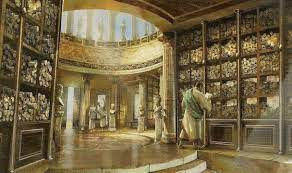

The first evidence of alphabetical order comes from the famed Library of Alexandria around 2,300 years ago. It is reasonably safe to assume this can never have been used unless alphabetical order was already in use - otherwise how would any user of the library have known where to look to find what they were looking for? Even then the use of alphabetical order would have been mostly pointless for most of the next 1,500 plus years, as most libraries and records offices simply did not have enough books and documents to warrant its use.

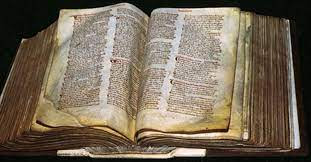
Take the famous Domesday Book, for example. The original is based on a system where they were sorted initially by status and then geography. Luckily later publications have opted to go for counties and then alphabetical order, or it might take many hours sorting through the 13,418 places listed. Two centuries later and religious documents are still being ordered theologically. Hence, 'angel' did not come before 'God', the order more based on status and then order of creation. Even as recently as the early nineteenth century, alphabetical order was seen as tantamount to sorting a broken mirror by just gathering up the pieces. This was how poet Samuel Taylor Coleridge described encyclopaedias, he preferred things sorted by themes.

Before you laugh at the ridiculous ideas of how to sort items in a list or record, keep in mind it is not that long ago - before the days of the internet and the search engine - we often paused in looking up something, to wonder what will it be filed under? Remember looking up something only to find 'Look under ....."?

Sunday, 25 December 2016

Seven Wonders of the World

Never had the opportunity to see any of these, I'm not that old. Now when it comes to the origins of the names it is quite obvious why a lighthouse is known as a lighthouse, thus it is only the place names and personal names which I shall bother to look at.

Great Pyramid of Giza takes the simplistic but informative place name coming from gaza and meaning 'to cross'. This shows this was a place known as a good crossing point on the Nile.

Hanging Gardens of Babylon is a Greek place name, translated from the Akkadian Babili. It is thought this Babylonian name is a translation of a non-Semitic place name but one unknown and lost in time. However the name Babili is thought to have come about in the belief it meant 'gate of God', this being the meaning of this phrase but not the original name.

Statue of Zeus at Olympia is a gold statue by the sculptor Phidias standing in a place taking its name from Mount Olympos and not to be confused with Mount Olympus, home of the gods, other than the origins of both are completely unknown. Zeus is a very different story and is easily traced. This Greek supreme deity came straight from Proto-Indo-European dewos meaning simply 'god' which is also the source of the Latin deus 'god' and Old Persian daiva 'demon, evil god'. It has also given us wordsin Old Slavonic and Sanskrit meaning 'to gleam, shine' and it is quite likely the idea of an aura around the god gave rise to all these words.

Temple of Artemis at Ephesus, a place in modern Turkey.The name of Ephesus is held to be from Greek ephoros meaning 'overseer' and telling of its importance as a religious site. While Artemis is of unknown origin, the alternative Diana can be traced to the Proto-Indo-European root dyeu meaning, as seen in Zeus, 'to shine'.

Mausoleum at Halicarnassus is thought to represent a place name meaning 'fortress', this supposes it comes from Carian, a language spoken alongside Greek in this area and said to be supported by the inscriptions found here of Alos-o-karnos-o.

Colossus at Rhodes sees the city and the island named from the nymph Rhodos of Greek mythology who bore seven sons sired by Helios, the sun god. Whils she gave her name to the island, three of her grandsons are remembered in three places on the island - namely Camirus, Ialysus, and Lindus.

Pharos Lighthouse at Alexandria is an easy enough place name to explain for it is named after Alexander the Great. Previously this had been known locally as Rhakotis meaning 'that which is built up' and is still a region of the modern city.