A few will be aware I have been known to speak on various subjects over the years. Fundamentally these all revolve around my favourite subject of etymology. Have always enjoyed bringing this fascinating subject to others. It’s not for me to say whether the audiences have, although many have asked me to return.
Thought it might be worthwhile sharing a snippet or two from these etymological presentations, continuing with 30 Years of Not Being Published. In over three decades more than ninety published works have appeared on the shelves. This talk is not as negative as it may first seem. During this period I have amassed a vast number of rejection letters, but still managed to average three books a year and more than one article each and every week. Listen to the experiences, the mistakes, the ideas, the tips and advice on how all writers have something to learn and also to contribute to the literary world. There is a PowerPoint presentation to accompany this talk if required.
When it comes to finding a publisher, possibly the best piece of advice I have is simply to find a published book that is as close to yours as possible, then pitch it to that publisher. The reason? Because an editorial department have the job of producing something new, but sales teams want what is selling .
Interesting verbs are seldom very interesting. — Says Jonathan Franzen, who fails to remember ‘very’ is a word which Oscar Wilde advised writers to edit out and replaced with ‘damned’ as the publisher will then cross out every example and thus make the ideal manuscript.
“Write what you know about” – Brilliant advice. Except for the advice on how to check every fact, research every snippet, and all the rest of the baloney. And there’s also the fact that people (yes even writers) are sometimes mistaken and what they “KNOW” is incorrect. If not, nobody would ever get divorced, have unwanted pregnancies, jobs they can’t do, or ever make a mistake. As a little pointer to how stupid this advice is, do some research into all these HOW TO books for writers and look at how many books they’ve had published previously – you’ll be amazed at how often it is their FIRST and perhaps even ONLY book .
If you think you know someone who would like to hear me speak on this subject, drop me a line.
Showing posts with label book. Show all posts
Sunday, 5 July 2026
Thursday, 3 April 2025
Book Idioms
Several words have become part of the language in being used in phrases. Last time we looked at ‘wall’ and now look at ‘book’.
Book is also used to refer to a record of bets made, this is first seen in 1812. Although ‘bookmaker’ is seen as early as 1862.
Book of life dates from the middle of the 14th century.
Nobody had the book thrown at them (in a legal sense) before 1932.
Nobody did anything ‘by the book’ until the 1590s.
Book-burning used to be a fairly common phrase, this from a time when it would have limited access to what some might consider inappropriate material, and first seen in 1850.
Domesday Book, a record dated 1086, but the first time anyone used the phrase was in 1178.
The red book, a list of peerages, is seen in 1788; but the more famous Little Red Book (Chairman Mao) comes from 1967.
The term schoolbook first appears in 1709.
Copybooks made their debut in the 1580s.
Fieldbooks, used by naturalists, is seen from 1848.
Bookplates have been written about since 1791.
Nobody used a cheque book until 1872.
Scrap books have been known since 1821.
Matchbook, which contains matches, is seen from 1913.
We have seen songbooks since the late 15th century.
Storybooks have been seen since 1711, these always then referring to books for children.
Bookends have been utilized for many years, and certainly predate the first written mention in 1907.
Textbooks have existed since 1779.
Bookkeepers have been known since the 1550s.
Book is also used to refer to a record of bets made, this is first seen in 1812. Although ‘bookmaker’ is seen as early as 1862.
Book of life dates from the middle of the 14th century.
Nobody had the book thrown at them (in a legal sense) before 1932.
Nobody did anything ‘by the book’ until the 1590s.
Book-burning used to be a fairly common phrase, this from a time when it would have limited access to what some might consider inappropriate material, and first seen in 1850.
Domesday Book, a record dated 1086, but the first time anyone used the phrase was in 1178.
The red book, a list of peerages, is seen in 1788; but the more famous Little Red Book (Chairman Mao) comes from 1967.
The term schoolbook first appears in 1709.
Copybooks made their debut in the 1580s.
Fieldbooks, used by naturalists, is seen from 1848.
Bookplates have been written about since 1791.
Nobody used a cheque book until 1872.
Scrap books have been known since 1821.
Matchbook, which contains matches, is seen from 1913.
We have seen songbooks since the late 15th century.
Storybooks have been seen since 1711, these always then referring to books for children.
Bookends have been utilized for many years, and certainly predate the first written mention in 1907.
Textbooks have existed since 1779.
Bookkeepers have been known since the 1550s.
Sunday, 23 January 2022
Alphabetical order
For the last few weeks, I have posted a number of words which have changed in meaning and/or usage over the years. I do hope you enjoyed some of these and found something interesting.
When preparing those posts, I discovered something which for me was really weird. Alphabetical order, the way I used to post the words and the system of sorting which is common to most lists, has only been used since about 400BCE. How on earth did anything get sorted before then and what changed?
The obvious explanation as to other forms of ordering is down to the lack of an alphabet. There are plenty of other forms of writing which does not use an alphabet - think of cuneiform, hieroglyphs, the many Asian forms of writing - hence alphabetical order is simply not possible before the invention of the alphabet. Furthermore, until those first letters or characters were sorted into an accepted order, no alphabetical base existed and thus no alphabetical order.
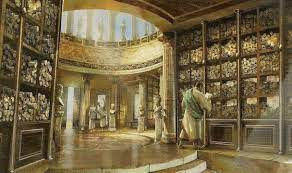
The first evidence of alphabetical order comes from the famed Library of Alexandria around 2,300 years ago. It is reasonably safe to assume this can never have been used unless alphabetical order was already in use - otherwise how would any user of the library have known where to look to find what they were looking for? Even then the use of alphabetical order would have been mostly pointless for most of the next 1,500 plus years, as most libraries and records offices simply did not have enough books and documents to warrant its use.
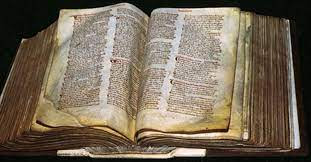
Take the famous Domesday Book, for example. The original is based on a system where they were sorted initially by status and then geography. Luckily later publications have opted to go for counties and then alphabetical order, or it might take many hours sorting through the 13,418 places listed. Two centuries later and religious documents are still being ordered theologically. Hence, 'angel' did not come before 'God', the order more based on status and then order of creation. Even as recently as the early nineteenth century, alphabetical order was seen as tantamount to sorting a broken mirror by just gathering up the pieces. This was how poet Samuel Taylor Coleridge described encyclopaedias, he preferred things sorted by themes.
Before you laugh at the ridiculous ideas of how to sort items in a list or record, keep in mind it is not that long ago - before the days of the internet and the search engine - we often paused in looking up something, to wonder what will it be filed under? Remember looking up something only to find 'Look under ....."?
When preparing those posts, I discovered something which for me was really weird. Alphabetical order, the way I used to post the words and the system of sorting which is common to most lists, has only been used since about 400BCE. How on earth did anything get sorted before then and what changed?
The obvious explanation as to other forms of ordering is down to the lack of an alphabet. There are plenty of other forms of writing which does not use an alphabet - think of cuneiform, hieroglyphs, the many Asian forms of writing - hence alphabetical order is simply not possible before the invention of the alphabet. Furthermore, until those first letters or characters were sorted into an accepted order, no alphabetical base existed and thus no alphabetical order.
The first evidence of alphabetical order comes from the famed Library of Alexandria around 2,300 years ago. It is reasonably safe to assume this can never have been used unless alphabetical order was already in use - otherwise how would any user of the library have known where to look to find what they were looking for? Even then the use of alphabetical order would have been mostly pointless for most of the next 1,500 plus years, as most libraries and records offices simply did not have enough books and documents to warrant its use.
Take the famous Domesday Book, for example. The original is based on a system where they were sorted initially by status and then geography. Luckily later publications have opted to go for counties and then alphabetical order, or it might take many hours sorting through the 13,418 places listed. Two centuries later and religious documents are still being ordered theologically. Hence, 'angel' did not come before 'God', the order more based on status and then order of creation. Even as recently as the early nineteenth century, alphabetical order was seen as tantamount to sorting a broken mirror by just gathering up the pieces. This was how poet Samuel Taylor Coleridge described encyclopaedias, he preferred things sorted by themes.
Before you laugh at the ridiculous ideas of how to sort items in a list or record, keep in mind it is not that long ago - before the days of the internet and the search engine - we often paused in looking up something, to wonder what will it be filed under? Remember looking up something only to find 'Look under ....."?
Sunday, 27 August 2017
Cathedral Cities of England
It has been a couple of months since I looked at place names, even longer since I looked at the origins of English place names. Thus recently having popped in to look at some architecture - Pugin it was, not particularly uplifting unlike the majority I have seen - I thought it time to look at some of England's place names through the cathedral cities. This is also a thinly disguised way to remind everyone of my books on place names covering England.
Canterbury - this is 'the fortified place of the people of Kent'. Further information can be found in my bookEast Kent Place Names . Available both in print and as an ebook.
Bath - 'the place at the Roman baths'. Further information can be found in my bookSomerset Place Names . Available both in print and as an ebook.
Wells - 'the springs'. Further information can be found in my bookSomerset Place Names .
Birmingham - 'the homestead of the family or followers of a man called Boerma'. Further information can be found in my bookWarwickshire Place Names . Available both in print and as an ebook.
Bristol - 'assembly place by the bridge'. Further information can be found in my bookSomerset Place Names . Available both in print and as an ebook.
Chelmsford - 'the ford of a man named Ceolmaer'. Further information can be found in my bookEssex Place Names . Available both in print and as an ebook.
Chichester - 'the former Roman strognhold of a man called Cissa'. Further information can be found in my bookWest Sussex Place Names . Available both in print and as an ebook.
Coventry - 'the tree of a man named Cofa'. Further information can be found in my bookWarwickshire Place Names . Available both in print and as an ebook.
Derby - 'the farmstead where deer are seen'. Further information can be found in my bookDerbyshire Place Names . Available both in print and as an ebook.
Ely - 'the district where eels can be found'. Further information can be found in my bookCambridgeshire Place Names . Available both in print and as an ebook.
Exeter - 'the former Roman stronghold on the river Exe', this a British river name meaning simply 'water'. Further information can be found in my bookSouth Devon Place Names . Available both in print and as an ebook.
Gloucester - 'the former Roman stronghold known as Glevum', this a Romano-British place name meaning 'the bright place'. Further information can be found in my bookGloucestershire Place Names . Available both in print and as an ebook.
Guildford - ''ford by the gold-coloured hill'. Further information can be found in my bookSurrey Place Names . Available both in print and as an ebook.
Ipswich - 'the trading centre of a man named Gip'. Further information can be found in my bookSuffolk Place Names . Available both in print and as an ebook.
Hereford - 'the ford capable of permitting an army to cross'. Further information can be found in my bookHerefordshire Place Names . Available both in print and as an ebook.
Leicester - 'the former Roman stronghold of the Ligore'. Further information can be found in my bookLeicestershire and Rutland Place Names . Available both in print and as an ebook.
Lichfield - 'the grey wood'. Further information can be found in my bookStaffordshire Place Names . Available both in print and as an ebook.
Lincoln - 'the Romany colony by the pool'. Further information can be found in my bookLincolnshire Place Names . Available both in print and as an ebook.
London - an uncertain name but maybe 'the landing place of man named Londo'. Further information can be found in my bookMiddlesex Place Names . Available both in print and as an ebook.
Norwich - 'the northern trading centre'. Further information can be found in my bookNorfolk Place Names . Available both in print and as an ebook.
Oxford - 'the ford used by oxen'. Further information can be found in my bookOxfordshire Place Names . Available both in print and as an ebook.
Peterborough - 'the borough of St Peter'. Further information can be found in my bookCambridgeshire Place Names . Available both in print and as an ebook.
Portsmouth - 'the mouth of the harbour'. Further information can be found in my bookHampshire Place Names . Available both in print and as an ebook.
Rochester - 'the former Roman stronghold known as Hrofi', the British place name meaning 'the walled town with bridges'. Further information can be found in my bookEast Kent Place Names . Available both in print and as an ebook.
St Albans - 'the holy place of St Alban'. Further information can be found in my bookHertfordshire Place Names . Available both in print and as an ebook.
Salisbury - 'the fortified place known as Sorvio', the British place name of uncertain origins. Further information can be found in my bookWiltshire Place Names . Available both in print and as an ebook.
Truro - 'place of turbulent water'. Further information can be found in my bookCornwall Place Names . Available both in print and as an ebook.
Winchester - 'the former Roman stronghold known as Venta', the British place name meaning 'the chief place'. Further information can be found in my bookHampshire Place Names . Available both in print and as an ebook.
Worcester - 'the former Roman stronghold of the Weogora tribe', this British people taking their name from their home being at the 'winding river'. Further information can be found in my bookWorcestershire Place Names . Available both in print and as an ebook.
York - ''the estate marked by yew trees'. Further information can be found in my bookNorth Yorkshire Place Names . Available both in print and as an ebook.
Blackburn - 'the dark stream'. Further information can be found in my bookLancashire Place Names . Available both in print and as an ebook.
Bradford - 'the broad ford'. Further information can be found in my bookWest Yorkshire Place Names . Available both in print and as an ebook.
Carlisle - 'fortified place of man named Luguvalos'. Further information can be found in my bookCumbria Place Names . Available both in print and as an ebook.
Chester - 'the former Roman stronghold'. Further information can be found in my bookCheshire Place Names . Available both in print and as an ebook.
Durham - 'the island with a hill'. Further information can be found in my bookCounty Durham Place Names . Available both in print and as an ebook.
Liverpool - 'the dark-coloured pool'. Further information can be found in my bookLancashire Place Names . Available both in print and as an ebook.
Manchester - 'the former Roman stronghold at the breast-shaped hill'. Further information can be found in my bookLancashire Place Names . Available both in print and as an ebook.
Newcastle - 'the new castle'. Further information can be found in my bookNorthumberland Place Names . Available both in print and as an ebook.
Ripon - 'the territory of the Hrype tribe'. Further information can be found in my bookNorth Yorkshire Place Names . Available both in print and as an ebook.
Sheffield - 'the open land on the river Sheaf', a river name meaning 'boundary stream'. Further information can be found in my bookSouth Yorkshire Place Names . Available both in print and as an ebook.
Southwell - 'the southern spring'. Further information can be found in my bookNottinghamshire Place Names . Available both in print and as an ebook.
Wakefield - 'open land where wakes are held'. Further information can be found in my bookWest Yorkshire Place Names . Available both in print and as an ebook.
Canterbury - this is 'the fortified place of the people of Kent'. Further information can be found in my book
Bath - 'the place at the Roman baths'. Further information can be found in my book
Wells - 'the springs'. Further information can be found in my book
Birmingham - 'the homestead of the family or followers of a man called Boerma'. Further information can be found in my book
Bristol - 'assembly place by the bridge'. Further information can be found in my book
Chelmsford - 'the ford of a man named Ceolmaer'. Further information can be found in my book
Chichester - 'the former Roman strognhold of a man called Cissa'. Further information can be found in my book
Coventry - 'the tree of a man named Cofa'. Further information can be found in my book
Derby - 'the farmstead where deer are seen'. Further information can be found in my book
Ely - 'the district where eels can be found'. Further information can be found in my book
Exeter - 'the former Roman stronghold on the river Exe', this a British river name meaning simply 'water'. Further information can be found in my book
Gloucester - 'the former Roman stronghold known as Glevum', this a Romano-British place name meaning 'the bright place'. Further information can be found in my book
Guildford - ''ford by the gold-coloured hill'. Further information can be found in my book
Ipswich - 'the trading centre of a man named Gip'. Further information can be found in my book
Hereford - 'the ford capable of permitting an army to cross'. Further information can be found in my book
Leicester - 'the former Roman stronghold of the Ligore'. Further information can be found in my book
Lichfield - 'the grey wood'. Further information can be found in my book
Lincoln - 'the Romany colony by the pool'. Further information can be found in my book
London - an uncertain name but maybe 'the landing place of man named Londo'. Further information can be found in my book
Norwich - 'the northern trading centre'. Further information can be found in my book
Oxford - 'the ford used by oxen'. Further information can be found in my book
Peterborough - 'the borough of St Peter'. Further information can be found in my book
Portsmouth - 'the mouth of the harbour'. Further information can be found in my book
Rochester - 'the former Roman stronghold known as Hrofi', the British place name meaning 'the walled town with bridges'. Further information can be found in my book
St Albans - 'the holy place of St Alban'. Further information can be found in my book
Salisbury - 'the fortified place known as Sorvio', the British place name of uncertain origins. Further information can be found in my book
Truro - 'place of turbulent water'. Further information can be found in my book
Winchester - 'the former Roman stronghold known as Venta', the British place name meaning 'the chief place'. Further information can be found in my book
Worcester - 'the former Roman stronghold of the Weogora tribe', this British people taking their name from their home being at the 'winding river'. Further information can be found in my book
York - ''the estate marked by yew trees'. Further information can be found in my book
Blackburn - 'the dark stream'. Further information can be found in my book
Bradford - 'the broad ford'. Further information can be found in my book
Carlisle - 'fortified place of man named Luguvalos'. Further information can be found in my book
Chester - 'the former Roman stronghold'. Further information can be found in my book
Durham - 'the island with a hill'. Further information can be found in my book
Liverpool - 'the dark-coloured pool'. Further information can be found in my book
Manchester - 'the former Roman stronghold at the breast-shaped hill'. Further information can be found in my book
Newcastle - 'the new castle'. Further information can be found in my book
Ripon - 'the territory of the Hrype tribe'. Further information can be found in my book
Sheffield - 'the open land on the river Sheaf', a river name meaning 'boundary stream'. Further information can be found in my book
Southwell - 'the southern spring'. Further information can be found in my book
Wakefield - 'open land where wakes are held'. Further information can be found in my book
Labels:
archbishop,
bishop,
book,
City,
Island,
Kent,
London,
Manchester,
Roman,
York
Sunday, 24 August 2014
Northumberland Place Names - Hexham
Last time I offered a taster of my Durham Place Names, due out this autumn. Publication will coincide with Northumberland Place Names and, as previously, offer a quick glimpse of this release. I have chosen the lovely town of Hexham, as it is the one place which stands out when recalling my days researching and photographing.
Hexham
A place name found as Hagustaldes in 685, this is Old English hagustald ham and 'the homestead of the warrior'.
The street names of Hexham seem to have changed more than most towns of its size. Perhaps this is due to the topography, where much of the original settlement sits atop the escarpment which naturally limits the expansion and means necessary improvements and alterations inevitably wipe away something of the earlier town. Examining both current and earlier names provides a glimpse into the later history of a town or village.
What is now Robbs Car Park was previously Alma Court which, along with Alma Place, also lost, were named from an inn which had taken the name of a battle fought in the Crimea. Here, on September 20th 1854, the first engagement of the war saw a combined Anglo-French force of more than 60,000 defeat little more than half that number of the Russian army. The battle took the name of the River Alma, in turn named from the Tatar word for ‘apple’. Eastgate, literally the ‘eastern route into the place’, was previously Bondgate from bondigata and telling us this road led past ‘the land of the bondsmen’ or peasant farmers.
What was Carlisle Road has become renamed in several places, in particular Shaftoe Leazes. This is found in several places in this part of the country and always describes a long strip as ‘the shaft-shaped ridge of land’. Fore Street speaks of itself as ‘the front entrance’ and should be understood as the main entry point, there once being a Back Lane, too. Pudding Mews, previously Golden Lion Lane, was probably named for the sticky morass of which the road was made. While this is often seen as mud, it could easily have been sewage or, particularly considering the use of ‘pudding’, the intestines of slaughtered animals. A similar evolution is seen in what was Half Moon Yard, again named after a pub, becoming the self-explanatory Slaughter Houses.
St Hilda’s Road certainly fits with the nearby names, where St George’s Road, St Andrew’s Road, St Wilfrid’s Road and St Cuthbert’s Road link to Priestlands Crescent, Priestlands Avenue, and Priestlands Road. However St Hilda’s Road was previously known as Hilda Street which may have been named from a resident rather than the saint. Intake, earlier given as Intack, is an early field name pointing to ‘the land recently enclosed for farming’. Merry Leazes was probably a deliberate change, for the modern suggests something pleasant while the earlier Mirrey from miry tells us it was known for being muddy.
From the Saxon name Eardwulf comes shortened form seen in Ardley as 'the woodland clearing of a man called Earda'. Aydon Shiels would have begun as 'the sheds or huts associated with a man called Ealdwine'. Telling us it was once known as 'the row (of dwellings) associated with a man called Bacga', the hamlet is now marked on the map as Bagraw. Coastley has nothing to do with the shoreline, this is 'the leah or woodland clearing of a man called Cocc'.
Dipton comes from deop dene 'the deep valley'. Dotland features an Old Scandinavian personal name in 'the cultivated land of a man called Dot'. Eshells features the suffix sheles, here either follow a personal name in 'the shed of a man called Asketin' or, if the first element is Old Scandinavian eski, 'the shed by the ash trees'.
Hackford belongs to that group of places where, simply be defining the name, we see an image of the place as it appeared in Saxon times. Here the first element is heck, a regional variation on haecc or 'hatch gate'. This is understood to refer to a gate downstream from the ford, one which prevented animals from either straying or being carried downstream when the river was in spate.
Greenridge is easily seen as 'the grassy ridge of land'. Ham Burn is simply enough, from ham burna it describes 'the stream by a homestead'. Harwood Shiel speaks of 'the summer pasture by the boundary wood'. Hotley was Holtolaye in 1296, this referring to 'the leah or woodland clearing of a man called Holte'. Langhope is from Old English lang hop 'the long enclosed valley'.
Found as Lilleswrth in 1233 and as Lilleswude in 1663, this is probably 'the woodland of a man named Lilla', although that early record does seem to be describing 'the worth or enclosure of a man called Lilla'. Recorded as Linelis in 1251, Linnolds is 'the farm of a man called Linnel', itself a pet form of Linbeald. Nubbock was once known as Yokesley, a name meaning 'the woodland clearing of someone called Yoke'. This is not a true personal name but comes from dialect yoke, used to describe a 'spouse or bedfellow' and genderless. First seen as Nobbock-scheles in 1479, Nubbock quickly lost its suffix leaving a name which has defied all attempts to define it.
Riddlehamhope, seen as Redeleme in 1214 and Ridlam in 1338, here is 'the homestead of the ridded or cleared valley'. Rowley is an Old English name from ruh leah meaning 'the rough woodland clearing'. The stream known as the Rowley Burn takes its name from the place. A place name of Steel comes from the word steel, a term once used by Scots dialect speakers to refer to 'a long line of rocks projecting into the sea'. Yarridge is recorded as Jernerig in 1232 and Yarwrigg in 1298, a name from Old English gearwe hrycg 'the ridge where yarrow grass grows'.
The Station Inn was named to advertise refreshment for travellers arriving on the (then) new mode of transport. Similarly the Globe conveys the message that this place will open its doors to all.
Doubtless salmon would have been served at the Salmon Inn, which means this is an advertisement for what was on offer. Another advert is seen in the Tap and Spile, the two parts hammered into a wooden barrel to enable easy dispensing of the contents. The tap is clear, a very simple version of the modern household tap, the spile is less clear. Anyone who attempts to pour any liquid from a container will know if no allowance is made to allow air to enter and replace the volume of liquid drawn off causes a bubble to enter and the steady flow is interrupted, often with messy results. Hence the spile was hammered into the top of the barrel and removed to encourage a nice steady flow of the contents through the open tap, then replaced when the tap was closed.
Location was in mind when naming the Shiregate public house, the Dipton Mill Inn, and the Old Tannery. However the Heart of England pub is clearly many miles from the centre of the country, indeed the name has nothing to do with location but can be found at nearby Hexham Racecourse, where the most famous race is the Heart of All England Steeplechase and the Heart of All England Cup presented to the winner. Traditionally this recalls the time when James VI of Scotland rode south to become James I of England and thus unite the two kingdoms. It is said he reached Hexham and announced: "Verily this is the heart of all England".
Other names include the Hare and Hounds, a reminder of the once popular sport of hare coursing. The Grapes, an image associated with the production of wines. The Coach and Horses shows this was a staging post for the major means of land transport in times before the railways. The Rose and Crown is a patriotic name, rose for the nation and the crown its monarch. The Kings Head carries an image of Charles II, a reference to 1660 and the Restoration of the Monarchy. Common as the animal lends itself readily to anthropomorphisation, the Fox Inn is as popular as ever.
Hexham
A place name found as Hagustaldes in 685, this is Old English hagustald ham and 'the homestead of the warrior'.
The street names of Hexham seem to have changed more than most towns of its size. Perhaps this is due to the topography, where much of the original settlement sits atop the escarpment which naturally limits the expansion and means necessary improvements and alterations inevitably wipe away something of the earlier town. Examining both current and earlier names provides a glimpse into the later history of a town or village.
What is now Robbs Car Park was previously Alma Court which, along with Alma Place, also lost, were named from an inn which had taken the name of a battle fought in the Crimea. Here, on September 20th 1854, the first engagement of the war saw a combined Anglo-French force of more than 60,000 defeat little more than half that number of the Russian army. The battle took the name of the River Alma, in turn named from the Tatar word for ‘apple’. Eastgate, literally the ‘eastern route into the place’, was previously Bondgate from bondigata and telling us this road led past ‘the land of the bondsmen’ or peasant farmers.
What was Carlisle Road has become renamed in several places, in particular Shaftoe Leazes. This is found in several places in this part of the country and always describes a long strip as ‘the shaft-shaped ridge of land’. Fore Street speaks of itself as ‘the front entrance’ and should be understood as the main entry point, there once being a Back Lane, too. Pudding Mews, previously Golden Lion Lane, was probably named for the sticky morass of which the road was made. While this is often seen as mud, it could easily have been sewage or, particularly considering the use of ‘pudding’, the intestines of slaughtered animals. A similar evolution is seen in what was Half Moon Yard, again named after a pub, becoming the self-explanatory Slaughter Houses.
St Hilda’s Road certainly fits with the nearby names, where St George’s Road, St Andrew’s Road, St Wilfrid’s Road and St Cuthbert’s Road link to Priestlands Crescent, Priestlands Avenue, and Priestlands Road. However St Hilda’s Road was previously known as Hilda Street which may have been named from a resident rather than the saint. Intake, earlier given as Intack, is an early field name pointing to ‘the land recently enclosed for farming’. Merry Leazes was probably a deliberate change, for the modern suggests something pleasant while the earlier Mirrey from miry tells us it was known for being muddy.
From the Saxon name Eardwulf comes shortened form seen in Ardley as 'the woodland clearing of a man called Earda'. Aydon Shiels would have begun as 'the sheds or huts associated with a man called Ealdwine'. Telling us it was once known as 'the row (of dwellings) associated with a man called Bacga', the hamlet is now marked on the map as Bagraw. Coastley has nothing to do with the shoreline, this is 'the leah or woodland clearing of a man called Cocc'.
Dipton comes from deop dene 'the deep valley'. Dotland features an Old Scandinavian personal name in 'the cultivated land of a man called Dot'. Eshells features the suffix sheles, here either follow a personal name in 'the shed of a man called Asketin' or, if the first element is Old Scandinavian eski, 'the shed by the ash trees'.
Hackford belongs to that group of places where, simply be defining the name, we see an image of the place as it appeared in Saxon times. Here the first element is heck, a regional variation on haecc or 'hatch gate'. This is understood to refer to a gate downstream from the ford, one which prevented animals from either straying or being carried downstream when the river was in spate.
Greenridge is easily seen as 'the grassy ridge of land'. Ham Burn is simply enough, from ham burna it describes 'the stream by a homestead'. Harwood Shiel speaks of 'the summer pasture by the boundary wood'. Hotley was Holtolaye in 1296, this referring to 'the leah or woodland clearing of a man called Holte'. Langhope is from Old English lang hop 'the long enclosed valley'.
Found as Lilleswrth in 1233 and as Lilleswude in 1663, this is probably 'the woodland of a man named Lilla', although that early record does seem to be describing 'the worth or enclosure of a man called Lilla'. Recorded as Linelis in 1251, Linnolds is 'the farm of a man called Linnel', itself a pet form of Linbeald. Nubbock was once known as Yokesley, a name meaning 'the woodland clearing of someone called Yoke'. This is not a true personal name but comes from dialect yoke, used to describe a 'spouse or bedfellow' and genderless. First seen as Nobbock-scheles in 1479, Nubbock quickly lost its suffix leaving a name which has defied all attempts to define it.
Riddlehamhope, seen as Redeleme in 1214 and Ridlam in 1338, here is 'the homestead of the ridded or cleared valley'. Rowley is an Old English name from ruh leah meaning 'the rough woodland clearing'. The stream known as the Rowley Burn takes its name from the place. A place name of Steel comes from the word steel, a term once used by Scots dialect speakers to refer to 'a long line of rocks projecting into the sea'. Yarridge is recorded as Jernerig in 1232 and Yarwrigg in 1298, a name from Old English gearwe hrycg 'the ridge where yarrow grass grows'.
The Station Inn was named to advertise refreshment for travellers arriving on the (then) new mode of transport. Similarly the Globe conveys the message that this place will open its doors to all.
Doubtless salmon would have been served at the Salmon Inn, which means this is an advertisement for what was on offer. Another advert is seen in the Tap and Spile, the two parts hammered into a wooden barrel to enable easy dispensing of the contents. The tap is clear, a very simple version of the modern household tap, the spile is less clear. Anyone who attempts to pour any liquid from a container will know if no allowance is made to allow air to enter and replace the volume of liquid drawn off causes a bubble to enter and the steady flow is interrupted, often with messy results. Hence the spile was hammered into the top of the barrel and removed to encourage a nice steady flow of the contents through the open tap, then replaced when the tap was closed.
Location was in mind when naming the Shiregate public house, the Dipton Mill Inn, and the Old Tannery. However the Heart of England pub is clearly many miles from the centre of the country, indeed the name has nothing to do with location but can be found at nearby Hexham Racecourse, where the most famous race is the Heart of All England Steeplechase and the Heart of All England Cup presented to the winner. Traditionally this recalls the time when James VI of Scotland rode south to become James I of England and thus unite the two kingdoms. It is said he reached Hexham and announced: "Verily this is the heart of all England".
Other names include the Hare and Hounds, a reminder of the once popular sport of hare coursing. The Grapes, an image associated with the production of wines. The Coach and Horses shows this was a staging post for the major means of land transport in times before the railways. The Rose and Crown is a patriotic name, rose for the nation and the crown its monarch. The Kings Head carries an image of Charles II, a reference to 1660 and the Restoration of the Monarchy. Common as the animal lends itself readily to anthropomorphisation, the Fox Inn is as popular as ever.
Sunday, 17 August 2014
Durham Place Names – Hartlepool
It may still be summer but currently the weather is decidedly autumnal. For me autumn, at least on a professional note, means the publication of a new book. Not aware of the exact date yet but offer a sample to whet the appetite.
Hartlepool
A place listed as Herterpol around the end of the twelfth century, this name comes from Old English heorot eg pol and describes 'the pool or bay near the peninsula frequented by stags'.
Street names begin with Alma Street, named after the battle which was fought on 20th September 1854, considered the first battle of the Crimean War it is often seen as a pub name. Baltic Street was named for it being associated with those principally trading with the Baltic provinces of Estonia, Livonia and Courland. Cleveland Street commemorates the Marquis of Cleveland, who served as mayor in 1831. Another mayor was William Vollum, a ship owner who served five terms as mayor and who had Vollum Road named after him. Prissick Street was named in 1841 to mark the work of philanthropists Henry and Elizabeth Prissick. Stripe is an old street name, taken from a field name referring to a long, narrow strip of land.
The hamlet of Brierton appeared as Brerton and Brereton in the fourteenth century, while quite recently the name is recorded with the alternative spelling of Brearton. The name is of Old English origin in braer tun 'the farmstead of the brambles'. Stranton comes from Old English strand tun 'the place on the shore'. Throston has been recorded since the fourteenth century, although 'the farmstead of a man called Thor' will have existed since shortly after Roman times. Trickley is derived from a little used English word trickle describing 'the farm of sheep dung'.
On the coast is the name of Eden, seen as Geodene, Iodene and Yoden in early records, this speaks of 'the valley of Goda'. From naes byht comes the name of Nesbitt and describes 'the bend at the headland'. Found as Ovetun in the twelfth century, the name of Owton is from a very common personal name and refers to 'the farmstead of a man called Offa or Ofa'.
Seaton Carew is found as Ceattun, Setona, Seton Carrowe, and Seton Karrow between the thirteenth and fourteenth centuries. Here Old English sae tun refers to 'the farmstead on the sea'. The addition is seen in the name of former tenant Petrus Carou, whose surname appears to be a nickname rather than a place name as there are no references as 'de Carou'. Another Old English name is Throston, a name speaking of 'the tun or farmstead of a man called Thurstan'. Inscar Point is a coastal feature derived from Middle English sker 'a rocky cliff', while further along the coast we find Maiden Bower, traditionally where a young woman was flung to her death on the rocks by her violent lover. Possibly describing 'the farmstead of a man called Neale', Nelson is first seen as Nelestune in 1196.
Hartlepool
A place listed as Herterpol around the end of the twelfth century, this name comes from Old English heorot eg pol and describes 'the pool or bay near the peninsula frequented by stags'.
Street names begin with Alma Street, named after the battle which was fought on 20th September 1854, considered the first battle of the Crimean War it is often seen as a pub name. Baltic Street was named for it being associated with those principally trading with the Baltic provinces of Estonia, Livonia and Courland. Cleveland Street commemorates the Marquis of Cleveland, who served as mayor in 1831. Another mayor was William Vollum, a ship owner who served five terms as mayor and who had Vollum Road named after him. Prissick Street was named in 1841 to mark the work of philanthropists Henry and Elizabeth Prissick. Stripe is an old street name, taken from a field name referring to a long, narrow strip of land.
The hamlet of Brierton appeared as Brerton and Brereton in the fourteenth century, while quite recently the name is recorded with the alternative spelling of Brearton. The name is of Old English origin in braer tun 'the farmstead of the brambles'. Stranton comes from Old English strand tun 'the place on the shore'. Throston has been recorded since the fourteenth century, although 'the farmstead of a man called Thor' will have existed since shortly after Roman times. Trickley is derived from a little used English word trickle describing 'the farm of sheep dung'.
On the coast is the name of Eden, seen as Geodene, Iodene and Yoden in early records, this speaks of 'the valley of Goda'. From naes byht comes the name of Nesbitt and describes 'the bend at the headland'. Found as Ovetun in the twelfth century, the name of Owton is from a very common personal name and refers to 'the farmstead of a man called Offa or Ofa'.
Seaton Carew is found as Ceattun, Setona, Seton Carrowe, and Seton Karrow between the thirteenth and fourteenth centuries. Here Old English sae tun refers to 'the farmstead on the sea'. The addition is seen in the name of former tenant Petrus Carou, whose surname appears to be a nickname rather than a place name as there are no references as 'de Carou'. Another Old English name is Throston, a name speaking of 'the tun or farmstead of a man called Thurstan'. Inscar Point is a coastal feature derived from Middle English sker 'a rocky cliff', while further along the coast we find Maiden Bower, traditionally where a young woman was flung to her death on the rocks by her violent lover. Possibly describing 'the farmstead of a man called Neale', Nelson is first seen as Nelestune in 1196.
Sunday, 29 December 2013
2013
As this will be my last post of the year and the media is full of what has happened in the last twelve months, I thought I would offer some thoughts of my own. Over the last twelve months or so, some five books in the Through Time series with my name on have been released. As the name suggests these compare modern images with similar views from yesteryear and below I offer a taster from these books, where the older view in each case date from around a century ago.
In these images from Tamworth Through Time we see identical views looking up the hill in my home town of Tamworth, with Tamworth Castle on the right. The road is known as Holloway because it was quite literally hollowed out by the constant passage of wheels, hooves and feet as they crossed the River Tame at what was for centuries the only bridge for miles over this river.

A view of Dr Samuel Johnson’s Birthplace from Lichfield Through Time . Born here in September 1709, he was a sickly baby and his aunt is held to have announced on seeing him for the first time how she ‘would not have picked up such a poor creature in the street’.

From Stafford Through Time come these views of Stafford Common Station. The old image is at it appeared in August 1968, with the modern view from below the bridge featured in the earlier picture.

Two very different scenes from Solihulll Through Time but taken from the same position. What is now Riverdale Drive opposite Malvern Park was previously the former Solihull Brickworks. However there is one remaining landmark, out of shot to the left in both these images, of a Post Office pillar box which is still in daily use.

When photographing English Riviera Through Time , my favourite part of the world, I was struck by something clearly evidenced by these images. First we see the village of Galmpton around 1907, the home of Agatha Christie is situated behind the camera. Note the sapling in the old image is the same tree as that dominating the modern view. This is also true of the background which is devoid of trees in the old image but, although largely hidden in the modern view, litter the scene today.

The same is true in this view of Anstey’s Cove where vegetation is the dominant feature in the twenty-first century.

As usual I would welcome any suggestions for themes or subjects, or even specific words to examine the origins, meanings and etymologies. I’d be delighted to hear from you. Meanwhile I shall take this opportunity to say to one and all a very Happy New Year and wish for you everything you would wish for yourselves.
In these images from

A view of Dr Samuel Johnson’s Birthplace from

From

Two very different scenes from

When photographing

The same is true in this view of Anstey’s Cove where vegetation is the dominant feature in the twenty-first century.

As usual I would welcome any suggestions for themes or subjects, or even specific words to examine the origins, meanings and etymologies. I’d be delighted to hear from you. Meanwhile I shall take this opportunity to say to one and all a very Happy New Year and wish for you everything you would wish for yourselves.
Sunday, 17 November 2013
Origins of English Place Names
This week saw me complete negotiations for more books on the origins of place names. These, together with previously released volumes, mean I will have penned and published something on every English county by the time the last of these is released by the summer of 2014. I make no apologies for taking this opportunity to define the names of the counties and include a shameless plug for each volume and include a link to each. The list appears in the same chronological order these books were and/or wiil be released.
My first book wasStaffordshire Place Names in 1996. The county, as with so many names, simply adds Old English scir to the name of the county town. The Saxon ‘shire’ was an administrative region, created when they realised something was required between the hundred and the nation. When it comes to Stafford, we see two elements where staeth ford speaks of ‘the river crossing near the landing place’. It stands to reason the landing place would have been at the highest navigable point upstream, a place which would also have been shallow enough to ford. I should add that while this book is now out of print, there will be an e-book version out within the next few months.
Next cameWarwickshire Place Names which is already available as an e-book. Another ‘shire’ attached to the name of the county town. Here we see Warwick from Old English waering wic or ‘the dwellings at the weir’.
ExaminingWorcestershire Place Names we see another scir or ‘administrative district’, this time following the city of Worcester, named as ‘the Roman stronghold of the Weogora tribe’. These Celtic peoples are thought to have been named as ‘the dwellers at the winding river’.
On toDerbyshire Place Names and the city of Derby. Here another scir with Old Scandinavian deor by telling of ‘the farmstead where deer are found’.
InLeicestershire and Rutland Place Names two counties were covered. With Leicester we see another Celtic tribe named. Although ‘the Roman stronghold of the people called Ligore’, again with scir, features a tribal name which has never been understood. In Rutland we have a place name which was adopted as the county name, this referring to ‘the estate of a man called Rota’.
South to yet another scir andOxfordshire Place Names with the city of spires being named from far humbler beginnings, this ‘the ford used by oxen’.
My next volume wasShropshire Place Names and a county town where pronunciation will never be agreed, at least not by Salopians. So we will ignore Shrewsbury and define Shropshire and find another scir or ‘administrative district’. The first element comes from Old English scrob meaning ‘scrubland’, thus correctly it should be Shrobshire, although the question of where this ‘scrubland’ was found remains. The answer is the county town, for Shrewsbury began as scrob’s-bury and shows why it should be pronounced Shro- and not read as Shrew- for it is the spelling of Shrewsbury which is in error and as a wise professor once told me, no name was ever mispronounced before the people could read. I am already aware the ‘correct’ pronunciation is becoming less popular and already I am wondering when the ‘incorrect’ form will become the accepted version.
No such problems when tacklingNottinghamshire Place Names where this scir suffixes the city named as ‘the homestead of the family or followers of a man named Snot’. Whilst I’m sure the residents would not appreciate the initial ‘S’ being reinstalled, they might be interested to learn the name refers to Snot’s followers, not Snot himself. Thus it is likely he was never here and this settlement may well have been named posthumously.
WithHampshire Place Names the county town is Southampton, this recorded simply as Hamtun in 825 and telling of ‘the farmstead of the hemmed-in land or promontory’. The question of why ‘south’ was always answered with Northampton being on the other end of a ancient trade route. While there may have been a regular supply of goods along a road, this is not the correct Northampton, that is in Hampshire although, for reasons nobody has ever understood, that suddenly changed the suffix and is today known as Northington.
Sharing a suffix with other Roman strongholds, the name which resulted inGloucestershire Place Names comes from ‘the Roman stronghold called Glevum’, this a Celtic place name meaning ‘bright place’.
No scir forDorset Place Names although it is derived from another major settlement within its borders. Today known as Dorchester, the county name simply an abbreviated version, telling of ‘the Roman stronghold known as Durnovaria’. As with the previous name this is a Celtic place name describing ‘place with large pebbles’.
Back to the suffix scir or ‘administrative district’ forNorthamptonshire Place Names . As we have seen this has nothing to do with Southampton and does not share the same meaning. Here ‘the northern home farmstead’ distinguishes it from other ham tuns much closer to home.
No scir forSomerset Place Names and yet, like neighbouring Dorset, is based on a local place name. Here the county speaks of it being that of ‘the settlers around Somerton’, itself telling of its humble beginnings as ‘the farmstead used only in summer’.
The large county of Devon, covered in two volumes by firstlySouth Devon Place Names and the forthcoming 2014 release of North Devon Place Names , has no scir today but did originally. Here is ‘the administrative district of the Devonians or Dummonii’.
Another two volumes were released for the southeast county of Sussex, now officially split in two and covered byEast Sussex Place Names andWest Sussex Place Names . As with the other counties sharing this suffix the reference is to the Saxons, here is ‘the territory of the south Saxons’ – now correctly, and rather confusingly, the east south Saxons and the west south Saxons.
Another scir is found inHerefordshire Place Names where we find ‘the administrative district of the ford capable of carrying an army’. Note the relevant part is ‘capable’, for Hereford does not tell us an army was marching back and forth but says it was of good size and solidly built.
With the county town of Chester leading toCheshire Place Names , this is ‘the administrative district of the Roman stronghold’ from Old English caster scir.
WithBuckinghamshire Place Names we see Old English inga hamm and a Saxon personal name speaking of ‘the administrative district of the hemmed-in land of the family or followers of a man called Bucca’.
North to the findCambridgeshire Place Names and ‘the administrative district of the place at the bridge over the River Granta’ otherwise known as the Cam – this odd change is entirely down to Norman error.
Down south and another large county split intoEast Kent Place Names and West Kent Place Names . As a name, Kent has never really been understood. Clearly it is different from other counties and this is down to it once being a Saxon kingdom in its own right, although the name is certainly Celtic. Possibly this is ‘the coastal district’ but an origin of ‘land of the hosts or armies’ can also be seen.
Back to the scir forBedfordshire Place Names and ‘the administrative district of the ford of a man called Beda’.
Another scir in the Home Counties andHertfordshire Place Names where ‘the administrative district of the ford frequented by harts’ is the origin.
On the east coast is the large county covered byLincolnshire Place Names where we find the Roman influence once more. Here the city dominated by its cathedral gives us ‘the administrative district of the Roman colony by the pool’. That ‘colony’ was for retired legionaires.
Publishing in early December 2013Berkshire Place Names is an oddity in being a scir but without a town called ‘Berk’. Here the term describes the region as ‘the administrative district of the hilly place’, what we know as the Berkshire Downs.
Appearing in early 2014Surrey Place Names is no scir but comes from Old English suther ge and tells of ‘the southern district’.
Another early 2014 release isEssex Place Names which, as with Sussex, speaks of itself as ‘the territory of the East Saxons’.
Set for the spring of 2014 Middlesex Place Names covers ‘the territory of the middle Saxons’.
Another scir andLancashire Place Names will be out early next year. Here the basis is the town of Lancaster, thus this ‘the administrative district of the Roman stronghold on the River Lune’ – where the river name is understood as ‘healthy, pure’.
Spring 2014 will seeCumbria Place Names which is a modern county name based on an eighth century record speaking of ‘the territory of the Cymry or Cumbrian Britons’.
The Scilly Isles are covered in the 2014 release ofCornwall Place Names . As with the previous name, this refers to the native Celtic peoples in ‘the territory of the Cornovii tribes’.
Another new county in a 2014 release isIsle of Wight Place Names where the island, so often said to refer to the ‘white’ chalk lands, is from a Celtic word speaking of ‘the place of the division’, that the two channels between here and the mainland known as the Solent. Note the name Solent has never been understood, although it has been given to the river which eroded this valley in the millennia before our islands were severed from mainland Europe with the rising of sea level at the end of the last Ice Age.
Spring of 2014 will also see the release ofCounty Durham Place Names where the word ‘county’ is added to differentiate between the city and the shire. Here is the dun holmr or ‘hill of drier land in the marsh’.
Also available in early 2014 is the neighbouring county covered byNorthumberland Place Names and another scir in all but name. This former Saxon kingdom was much larger than the present county and it is that kingdom of ‘the territory of the Northhymbre’ or ‘those living north of the Humber’ which has led to the modern name.
Also publishing in May 2014 isSuffolk Place Names and ‘the territory of the southern people of the East Angles’.
Spring 2014 andWiltshire Place Names and ‘the administrative disctive of Wilton’, the town itself ‘the farmstead near a spring or stream’.
In the summer of 2014 we will see four volumes for Yorkshire. The county town of the original county giving us ‘the administrative district of the yew tree estate’. Not only the vast area covered by the original county but the tremendous number of small settlements means one volume would be very heavy and very expensive. Eventually it was decided to combine the three ridings and three counties to produce four volumes entitledNorth Yorkshire Place Names , South Yorkshire Place Names , East Yorkshire Place Names , and West Yorkshire Place Names
Finally towards the end of 2014Isle of Man Place Names will appear. True this is neither a scir nor a county but a place I wanted to write about and to examine its place names. The island’s name is thought to be derived from an early leader by the name of Manu, although traditionally this was said to be named after the fabled Irish sea deity Manannan mac Lir.
I would welcome any suggestions for themes or subjects, or even specific words to examine the origins, meanings and etymologies. I’d be delighted to hear from you.
My first book was
Next came
Examining
On to
In
South to yet another scir and
My next volume was
No such problems when tackling
With
Sharing a suffix with other Roman strongholds, the name which resulted in
No scir for
Back to the suffix scir or ‘administrative district’ for
No scir for
The large county of Devon, covered in two volumes by firstly
Another two volumes were released for the southeast county of Sussex, now officially split in two and covered by
Another scir is found in
With the county town of Chester leading to
With
North to the find
Down south and another large county split into
Back to the scir for
Another scir in the Home Counties and
On the east coast is the large county covered by
Publishing in early December 2013
Appearing in early 2014
Another early 2014 release is
Set for the spring of 2014
Another scir and
Spring 2014 will see
The Scilly Isles are covered in the 2014 release of
Another new county in a 2014 release is
Spring of 2014 will also see the release of
Also available in early 2014 is the neighbouring county covered by
Also publishing in May 2014 is
Spring 2014 and
In the summer of 2014 we will see four volumes for Yorkshire. The county town of the original county giving us ‘the administrative district of the yew tree estate’. Not only the vast area covered by the original county but the tremendous number of small settlements means one volume would be very heavy and very expensive. Eventually it was decided to combine the three ridings and three counties to produce four volumes entitled
Finally towards the end of 2014
I would welcome any suggestions for themes or subjects, or even specific words to examine the origins, meanings and etymologies. I’d be delighted to hear from you.
Sunday, 6 October 2013
A Writer’s Research
As the majority of my writing recalls events which happened before anyone I’ve ever known was born, it takes a great deal of research to produce the finished work. Personally I find all research to be enjoyable, although that for my recent release of Bloody British History Stafford published by The History Press was particularly enjoyable and I’m very much looking forward to producing further volumes.
In preparing the Stafford volume I ploughed through every local newspaper released for the area from the early nineteenth century until the end of the Second World War. I lost count of the number of reels of microfilm I saw scrolling past but soon learned where to find the relevant columns. This would have saved some time had I not been distracted by some of the reporting of the day. Some of the news items would hardly be considered worthy of even a mention today. The reporting style, too, was most entertaining. One story, covered in Bloody British History Stafford, concerns the large fire destroying much of the town centre in 1887. Many volunteers pitched in to aid the firemen, some being interviewed by the local reporter. I found the quotes most amusing. Such eloquence from witnesses regularly given free supplies of thirst-quenching ale during their rest breaks, with not even a hint of a grammatical slip.
Not suitable for inclusion in the book were a number of stories which I made a note of simply because I found them so entertaining. For example can we imagine a modern headline proclaiming how wondrous it must be to live in a certain terraced house as recently the combined ages of the four residents surpassed three hundred years!
With modern transportation methods meat is brought into our towns and cities in easily handled sizes to be trimmed and cut for the customer. Once the slaughterhouses were situated within the town, the animals brought in alive. Several stories were related regarding the cattle and their attempts to avoid the butcher’s slab, always assuming they knew of their destination. It was common for butchers to bring the animal to their premises, the beast led by a halter to its final destination. One butcher could not understand where all his halters were disappearing to, so instigated a thorough search of his servants’ rooms. He found the remains of the halters, each minus the ends, within the skirts. It seems his employee desired a very full skirt in the style of the day, however could not afford the metal hoops to fill them out and found a suitable replacement in the halters.
Escaped animals, presumably those not tethered by a halter, were quite commonplace. One evening in May of 1858, Mr Bridgwood, a butcher in Eastgate Street, lost control of a bullock. It ran into the yard of the New Inn where a young lady was targeted. She fled and escaped when a young child wandered into the path of the now rather angry bullock. The child was knocked down and would have suffered worse than the minor bruising had it not been for the intervention by a man who “seizing a large stick laying conveniently at hand, applied it with vigour to the forehead of the enraged brute.” Others managed to tether its legs, making it topple over and enabling them to break its legs, thus preventing it escaping and allowing the butcher to kill it where it lay – in the middle of Stafford.
However one narrative of Victorian pomposity appeared in an edition from May 1864. The newspaper reported how, while it was mindful a Smithfield (meat market) was a necessity, it was appalled that these creatures were still allowed to roam the streets on the way to the abattoir. It seems on the day of the May Fair two animals were highlighted as to why this must be dealt a most severe and final blow. Firstly one rampaged through the crowded streets until apprehended. However it was the second, a cow which attracted the most attention when it decided “to venture into the District Bank, perhaps in order to pay a call on the mayor.” There is no explanation as to why the mayor was in the bank, nor why they thought the cow may be seeking the man out. However it seems likely the mayor had done something to irritate the newspaper in recent weeks, or maybe he was just extremely unpopular. Yet things deteriorated shortly afterwards when, as the newspaper reported, “in the presence of both sexes of all ages the screams and dismay was apparent to all as it did the unthinkable – it calved. An indecent disgrace and disgusting filth for any town to be forced to endure.” A letter the following week echoed the editor’s sentiments in saying “in 1864 and within 130 miles of the Metropolis (London) this should be allowed to happen!” I still wonder how far from the Metropolis a cow would need to be to give birth in public and for it to be considered acceptable?
Incidentally, I shall be signing copies of Bloody British History Stafford at Waterstones in Stafford from 10am on Saturday October 19th 2013. Look forward to meeting you there.
I would welcome any suggestions for themes or subjects, or even specific words to examine the origins, meanings and etymologies. I’d be delighted to hear from you.
In preparing the Stafford volume I ploughed through every local newspaper released for the area from the early nineteenth century until the end of the Second World War. I lost count of the number of reels of microfilm I saw scrolling past but soon learned where to find the relevant columns. This would have saved some time had I not been distracted by some of the reporting of the day. Some of the news items would hardly be considered worthy of even a mention today. The reporting style, too, was most entertaining. One story, covered in
Not suitable for inclusion in the book were a number of stories which I made a note of simply because I found them so entertaining. For example can we imagine a modern headline proclaiming how wondrous it must be to live in a certain terraced house as recently the combined ages of the four residents surpassed three hundred years!
With modern transportation methods meat is brought into our towns and cities in easily handled sizes to be trimmed and cut for the customer. Once the slaughterhouses were situated within the town, the animals brought in alive. Several stories were related regarding the cattle and their attempts to avoid the butcher’s slab, always assuming they knew of their destination. It was common for butchers to bring the animal to their premises, the beast led by a halter to its final destination. One butcher could not understand where all his halters were disappearing to, so instigated a thorough search of his servants’ rooms. He found the remains of the halters, each minus the ends, within the skirts. It seems his employee desired a very full skirt in the style of the day, however could not afford the metal hoops to fill them out and found a suitable replacement in the halters.
Escaped animals, presumably those not tethered by a halter, were quite commonplace. One evening in May of 1858, Mr Bridgwood, a butcher in Eastgate Street, lost control of a bullock. It ran into the yard of the New Inn where a young lady was targeted. She fled and escaped when a young child wandered into the path of the now rather angry bullock. The child was knocked down and would have suffered worse than the minor bruising had it not been for the intervention by a man who “seizing a large stick laying conveniently at hand, applied it with vigour to the forehead of the enraged brute.” Others managed to tether its legs, making it topple over and enabling them to break its legs, thus preventing it escaping and allowing the butcher to kill it where it lay – in the middle of Stafford.
However one narrative of Victorian pomposity appeared in an edition from May 1864. The newspaper reported how, while it was mindful a Smithfield (meat market) was a necessity, it was appalled that these creatures were still allowed to roam the streets on the way to the abattoir. It seems on the day of the May Fair two animals were highlighted as to why this must be dealt a most severe and final blow. Firstly one rampaged through the crowded streets until apprehended. However it was the second, a cow which attracted the most attention when it decided “to venture into the District Bank, perhaps in order to pay a call on the mayor.” There is no explanation as to why the mayor was in the bank, nor why they thought the cow may be seeking the man out. However it seems likely the mayor had done something to irritate the newspaper in recent weeks, or maybe he was just extremely unpopular. Yet things deteriorated shortly afterwards when, as the newspaper reported, “in the presence of both sexes of all ages the screams and dismay was apparent to all as it did the unthinkable – it calved. An indecent disgrace and disgusting filth for any town to be forced to endure.” A letter the following week echoed the editor’s sentiments in saying “in 1864 and within 130 miles of the Metropolis (London) this should be allowed to happen!” I still wonder how far from the Metropolis a cow would need to be to give birth in public and for it to be considered acceptable?
Incidentally, I shall be signing copies of
I would welcome any suggestions for themes or subjects, or even specific words to examine the origins, meanings and etymologies. I’d be delighted to hear from you.
Sunday, 18 November 2012
Desert Island Discs
First introduced to this long-running radio broadcast by my grandmother. In those days nearly every piece of music chosen was classical or from some musical or other – at least it seemed that way. In recent years the delights of the podcast, the ideal companion on a long walk, has reunited me with Desert Island Discs and started me thinking about my own particular choices and just how difficult it must be to select just eight tracks to represent one’s life thus far. When first listening, with my grandmother, as I was around seven years old and, with the Merseybeat dominating the UK charts, the decision would have been much easier than today, almost five decades later!
Never one to be able to resist a challenge, I began to jot down some favourite tracks but soon abandoned this method as I would have ended up with hundreds before long. Hence I tried to think of music which reminded me of significant moments in my life. Oddly this failed for the opposite reason, for I have no notion of what (if anything) was playing when I heard about 9/11 or Kennedy’s assassination, for example. So I tried eras and genres and eventually whittled the list down to the following. Unlike the programme I’ve not explained the reason for my choices, indeed I’d probably struggle to find explanations for most. Incidentally this list would probably change dramatically every single day.
She Loves You – The Beatles
Meditation de Thais – Jules Massenet
Brown Sugar – The Rolling Stones
The Impossible Dream – Matt Monroe
Running Scared – Roy Orbison
Walk Hand In Hand – Gerry and the Pacemakers
I Shall Be Released – The Hollies
Imagine – John Lennon
When it came to a choice of books the decision was much easier. My favourite sci-fi author is, was and ever shall be Isaac Asimov. Mr Asimov was also famous for being the first (and maybe still the only) person to have a published work in every category of the Dewey Decimal System. As Kirsty is very flexible when it comes to book choices, I shall opt for the yet to be released The Complete Works of Isaac Asimov, it might even be able to tell me how to survive on this island. Incidentally the mandatory Shakespeare I can take or leave, and the Bible will only be ballast. I have no faith and if I accept it will teach me to be better inclined toward my fellow man it is doubly redundant as I am now alone on a desert island!
Luxury item was very difficult. It changes every time I make a decision. So before it changes again, I’ll opt for R Daneel Olivaw – I doubt if this will be allowed but I’m not giving her the chance to veto it. Oh, and if you don’t know who or what R Daneel Olivaw is, you haven’t read my book choice.
Never one to be able to resist a challenge, I began to jot down some favourite tracks but soon abandoned this method as I would have ended up with hundreds before long. Hence I tried to think of music which reminded me of significant moments in my life. Oddly this failed for the opposite reason, for I have no notion of what (if anything) was playing when I heard about 9/11 or Kennedy’s assassination, for example. So I tried eras and genres and eventually whittled the list down to the following. Unlike the programme I’ve not explained the reason for my choices, indeed I’d probably struggle to find explanations for most. Incidentally this list would probably change dramatically every single day.
She Loves You – The Beatles
Meditation de Thais – Jules Massenet
Brown Sugar – The Rolling Stones
The Impossible Dream – Matt Monroe
Running Scared – Roy Orbison
Walk Hand In Hand – Gerry and the Pacemakers
I Shall Be Released – The Hollies
Imagine – John Lennon
When it came to a choice of books the decision was much easier. My favourite sci-fi author is, was and ever shall be Isaac Asimov. Mr Asimov was also famous for being the first (and maybe still the only) person to have a published work in every category of the Dewey Decimal System. As Kirsty is very flexible when it comes to book choices, I shall opt for the yet to be released The Complete Works of Isaac Asimov, it might even be able to tell me how to survive on this island. Incidentally the mandatory Shakespeare I can take or leave, and the Bible will only be ballast. I have no faith and if I accept it will teach me to be better inclined toward my fellow man it is doubly redundant as I am now alone on a desert island!
Luxury item was very difficult. It changes every time I make a decision. So before it changes again, I’ll opt for R Daneel Olivaw – I doubt if this will be allowed but I’m not giving her the chance to veto it. Oh, and if you don’t know who or what R Daneel Olivaw is, you haven’t read my book choice.
Sunday, 21 August 2011
Never Judge a Book
I recently sent off a synopsis for a book idea to a publisher I had not dealt with before. Said publisher specialised in the both the area concerned and the subject was also appropriate. It seemed my research had been spot on when the response at first seemed positive, they liked the idea, my CV was admired, but then came the final paragraph.
It seems this individual had checked with Amazon to see I had not exaggerated any of the statements. It was then they noticed the only reviews of any of my books had just one star and would therefore not be interested in pursuing the idea further. I was not overly disappointed by such a comment, this simply showed I was lucky not to have to deal with someone with such weird ideas, but I was dumbfounded that a professional with a proven record could be so naive.
As stated in my blog postA Matter of Opinion two reviews can be poles apart. The review they read was on Amazon.co.uk where only one star was awarded. However another buyer across the Atlantic purchased their copy at Amazon.com where a very different five star review followed. It is a shame the two sites cannot be combined to show an average. Incidentally I later found another one star review of my books from the same buyer and it struck me as odd that a man who had clearly disliked his first purchase should ever consider buying another by the same author. I later discovered the reason, which was not entirely in the spirit of the idea.
Hence to base a decision not to publish seems a little odd. Incidentally, within a few days of receiving the email I discovered two new reviews on Amazon of another two of my books, this person being quite pleased with his purchases and resulting in four star reviews.
Perhaps this publisher should take note of somereviews of books which went on to sell quite a few copies!
It seems this individual had checked with Amazon to see I had not exaggerated any of the statements. It was then they noticed the only reviews of any of my books had just one star and would therefore not be interested in pursuing the idea further. I was not overly disappointed by such a comment, this simply showed I was lucky not to have to deal with someone with such weird ideas, but I was dumbfounded that a professional with a proven record could be so naive.
As stated in my blog post
Hence to base a decision not to publish seems a little odd. Incidentally, within a few days of receiving the email I discovered two new reviews on Amazon of another two of my books, this person being quite pleased with his purchases and resulting in four star reviews.
Perhaps this publisher should take note of some
Subscribe to:
Posts (Atom)