Showing posts with label storm. Show all posts

Sunday, 24 November 2024

North Idioms

Several words have become part of the language in being used in phrases. Last time we looked at ‘south’ and now, somewhat predictably, look at ‘north’.

North Pole can refer either to the geographical north pole, this the normal idea of the region and the northernmost point around which the planet turns on its axis – it’s the only point on the planet where you can only travel south, north, east, and west are not available – or there is the magnetic north pole, which is where the compass always points and moves all the time, not in any regularity or overly predictable way.

Not until 1766 was anyone referred to as a North American.

North Sea has been known as either the German Sea or German Ocean for most of British recorded history, and only disappeared for good in 1830. Earlier the North Sea was what we would know as the Bristol Channel (ie it north of the Celtic Sea or English Channel). It was the Dutch who first referred to the body of water as the North Sea, from around the 13th century and to distinguish from the South Sea or Zuider Zee. Note the Danes referred to the North Sea as the West Sea, while in the late 14th century the North Sea was the northernmost portion of the ocean which surrounded the entire globe.


Nothing was described as northbound until 1870.

The North Star, also known as Polaris or Pole Star, has been known as such since the late 14th century. Note the Pole Star, the one point of light around which the heavens appear to rotate in the northern hemisphere, has only been seen as such for about 1500 years, around 5,000 years ago it was Thuban in the constellation of Draco, 13,000 years ago it was Vega, 10,000 years ago it was Iota Herculis, and in 5,000 years it will be Alderamin in Cepheus.


Northeasters, or nor’easter at times, is a strong wind coming from that point of the compass and first recorded in 1794.

The Northwest Passage, that hypothetical sea route from the Atlantic to the Pacific around the north of the continent of North America, is first described around 1600.


Northumbria, named because it was north of the Humber, is one of the kingdoms which once comprised England and is first mentioned around 720.


Several place names have been named as being ‘north’, these include Norway, Norfolk, Pohjoinen (is in Finland), Beijing,

Sunday, 17 November 2024

South Idioms

Several words have become part of the language in being used in phrases. Last time we looked at ‘ship’ and now look at ‘south’.

South Sea has had several meanings over the years and obviously so as some parts of the world hadn’t been discovered. From the late 14th century the South Sea was the Mediterranean, and in the early 15th century used for what is now known as the English Channel. Today it is normally used to refer to the Pacific Ocean in the southern hemisphere, as it has since the 1520s.


Go south, as in ‘vanish’ or ‘abscond’, has been in use since the 1920s.

South Africa has been used generally for the southern part of the continent since 1815, and for the nation since 1910.

Southern Cross is a constellation not visible in much of the northern hemisphere. It was named such by the English in 1756.


Nothing was described as Southern Fried, as a cooking style, until 1972.

Southwester when referring to a wind, gale, or storm is seen from 1833, and three years later pronounced as sou’wester to refer to the nautical coat protecting the wearer from any inclement weather.


Southeaster is first found rather earlier, first seen from 1797. This is not to say one was in use for more than three decades before the other, likely they were used concurrently and only seen as being from slightly different ages as there are no surviving records from earlier.

Southbound originally referred solely to the railways, although not seen until 1872.


Several familiar place names from around the globe have origins speaking of them as being seen as in the south. Australia, Yemen, Yugoslavia, Vietnam, Hunan (a province of China), Soweto (a community outside Johannesburg), Suffolk, Nanking (city in China),

Sunday, 20 October 2024

Storm Idioms

Several words have become part of the language in being used in phrases. Last time we looked at ‘rain’ and now look at ‘storm’.

Taking something by storm comes from military terminology, first seen around 1680.

Doing something up a storm dates from 1946.

Storm doors are not recorded before 1872.

Storm-tossed, a term normally only used by writers, is seen in print for the first time in 1610.

Storm-bird is seen from 1752, today we refer to it as a petrel.


Storm clouds are unrecorded before 1822.

Dust storms are not described as such until 1838.


Storm troopers are first recorded in 1933, however this had nothing to do with a galaxy far, far away, these were members of the Nazi Sturmabteiling or earlier the German military sturmtruppen during the First World War.


Barnstorming began in 1815, and referred specifically to short theatrical performances of a smutty or vulgar kind. So-called because they were performed in barns in upstate New York. By 1896 the term had started to be used to refer to electioneering tours; and in 1928 to pilots who performed stunts at fairs and during air races. Thunderstorms were not known until 1560.


Snowstorms have been known as such since 1771.

Hailstorms come between the above two, seen since 1690.

Rainstorms are, considering the previous three examples, quite recent in only appearing in writing since 1804.

Brainstorm is a term used since 1861, when it referred to a fit of delirious malaria or sudden loss of the ability to reason. Prior to that, and also as a noun, it was a symptom of a disease seen to be increasing in strength or repetitiveness. The modern use of ‘a concerted attack on a problem’ comes from 1947; while another sense of ‘a brilliant idea’ was around from 1934.


Firestorms have been around since the 1580.

Windstorms have been known since the late 14th century.

Sunday, 11 June 2023

An Etymologist's look at Mayan Mythology.

Continuing on after my recent course on ancient languages, I thought it would be interesting to examine a selection of Mayan mythological figures and examine the etymologies for their names.

Acat is the Mayan god associated with tattooing, of all things, and a name which either describes a water reed or, if the pronunciation is 'ah-cat', then it would be 'He of the Storage Jar'. I do so hope it's the latter.


Awilix is the goddess of the moon, or the queen of the night, depending upon the source consulted. Similarly the name has two possible sources and two meanings, depending upon the language of origin: if the Nuahatal language of the Aztecs then this seems to be a place name; but if the Q'eqchi' Mayan language, then it represents the 'swallow' as in the bird.

Bacab is not one god but four. Tha Bacabs being the four associated with the interior of the world, the source of the soil and water deposits. The meaning of the name is uncertain, but what we do know is their names - Hobnil, Cantzicnal, Sacimi, and Hosanek - who held up the four points of the sky after escaping from the deluge which destroyed it. (Amazing how many ancient cultures have a story where the world was reset following a flood.)

Camazotz is a compound name, one formed from the K'iche' words kame meaning 'death' and sotz meaning 'bat', which is really good news as Camazotz is the god of death and bats.


Cizin has a name meaning 'stench', it is derived from the root ciz meaning 'flatulence'. As a Mayan god of death and earthquakes, and on a person's death he is said to burn their souls on his mouth and anus.

Gukumatz is derived from two K'iche' words q'uq the 'replendant quetzal' and kumatz 'snake'. This small Central American bird seems a rather odd choice for the head and wings end of a creature with a ophidian's body/tail.

Itzamna was original defined as 'lizard house, from the Yucatecan words itzam na. But latterly other suggestions have been put forward, including itz which covers several secretions such as sap, dew, and even semen, and also itzam meaning 'asperser, sorcerer'.


Jacawitz, the mountain god, probably gets his name from the Cholan languages where jacawitz means 'first mountain' (as in the first mountain of creation). That does make more sense than the alternative offering of Mam xq'aqwitz 'yellow wasp'.

Tepeu means 'sovereign' in the K'iche' language, and is one of the creation gods.

Yopaat, the Mayan storm god, gets his name from yop and aat which quite literally translates as 'leaf penis'.

Sunday, 30 January 2022

Trees

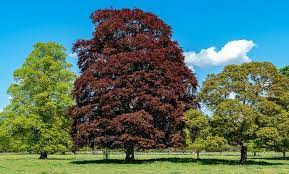
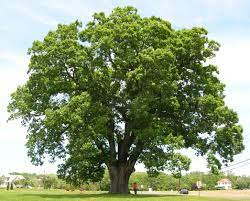
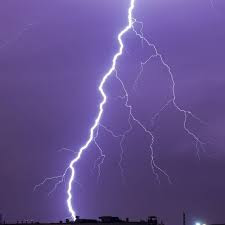
Normally I post observations on words and language, etymology being my fascination. Yet occasionally I add something a little different, invariably these snippets are uncovered while researching - many will tell you how often you find more interesting stuff when looking for something specific than you ever find for the subject in hand - and one example came when I was looking through old copies of the Derby Mercury. One copy of the Mercury from October 1837, claimed that beech trees are never struck by lightning and how Native Americans have always known this.


It nagged at me and so I chose to find out whether this was factual or not. I discovered the tree most likely to be hit by lightning is the oak. But this is not saying that oak trees will attract lightning more than any other, we also have to take into consideration the vast number of oaks and that oaks are likely the tallest of trees and contain more moisture than surrounding trees.


And the beech? Another sizable tree, but one which has a higher fat content than most woods, and therefore is a better conductor of electricity. This means the bolt of lightning is more likely to run to the ground. But does this make it safer? Absolutely not, leaning against any tree as it is hit by lightning is likely to mean you get a rather nasty shock (at best).


If any tree could be said to be less likely to be hit than any other, that might just be the birch. It has a high oil content and is a poor conductor of electricity. But any discussion regarding conductivity of the wood and its content is largely pointless, for lightning and thunder is invariably associated with something else - RAIN. Water is an excellent conductor, hence why you should not mix electrical appliances and the bath. If the tree is wet during the storm, any electrical discharge is likely going to run through the moisture rather than the wood. Furthermore, the person underneath the tree is likely wet through, too. Immaterial of the tree you're under, the likelihood of being hit is the same.

Sunday, 12 August 2018

Stafford Storm

June 19th 1861 and, in true British summer tradition, a huge thunderstorm raged over and around Stafford. At Aston Hall a "very valuable" horse belonging to Mr Lindop was, as the local press termed it, "killed by the electric fluid". The horse had been left out to graze in the field and, when the owners went to check on their animal, found the creature to be "complete jelly from the violence of the shock".


Note the press took pains to point out the owner was insured against such losses and the Norwich Union Fire Office promptly reimbursed him for his loss".