The Pooley Hall Estate surrounded the hall built by Sir Thomas Cockayne in 1509. Later the hall became the property of Charles Jennens and subsequently the Hon. Charles Finch MP. When the Coventry Canal opened in 1789 – it runs within twenty metres of the hall – it was probably inevitable that coal would be extracted from the extensive coalfields.
The first shaft was sunk in 1849 and completed in 1849, with the first coal extracted the following year. By 1897 the colliery had been formed and a branch line built to connect to the Trent Valley Line – remains of the bridge across the canal can still be seen.
In 1921 the Pooley Hall miners did not join the miners’ strike and in June the striking miners at Baddesley and Birch Coppice marched on Polesworth to persuade them to join the strike – but 200 policemen had been drafted in and a baton charge left several striking miners unconscious. Eventually the strikers accepted the reduction in salary and extension of the working week, as the Pooley Hall miners already had.
In 1924 the colliery was visited by the Duke of York – the miners selected to meet the future King George VI were instructed to wear their Sunday best suit and a flat cap (if you didn’t own a flat cap, go out and buy one!) Further evidence of the conditions they worked in was hidden by whitewashing the pit bottom, while an underground toilet was installed (the first in the country) complete with rosewood seat. Nobody could use this toilet until the Duke’s visit was over, and within the week the bucket toilet was removed as the stench was overpowering.
The miners did join the strike of 1936, but as the family also owned Tamworth Electricity Company, they used the suddenly available labour to dig trenches for the electricity cables to bring electricity to surrounding villages.
The colliery closed in 1965 – much of the buildings had to be demolished due to subsidence. Today 154 acres of the estate is Pooley Hall Country Park.
Showing posts with label strike. Show all posts
Sunday, 12 October 2025
Sunday, 3 September 2023
Hit Idioms
Several words have found themselves used in a number of phrases. We looked at 'foot' last time and this time it's 'hit'.
Hit it off dates from as early as 1780, and was used the same as the modern 'hit on' only from 1970.
Hit the nail on the head is recorded as early as 1570, but had nothing to do with hammers. This was an archery reference.
Hit the hay is first seen in 1912, which is strange as by then few mattresses would have been stuffed with hay.
Hit the bricks dates from 1909. Not heard today, it was trade union slang and referred to going on strike.
Hit (someone) up, to request something of someone, dates from 1917.
Not know what hit them is first seen in print in 1923.
Hit the road appears in print for the first time in 1873.
Hit and run has had no less than three lives. The vehicular reference is first seen in 1924; later this was also used for a military strike, first appearing in 1940; but the earliest, and probably the most obvious, is the baseball reference from 1899.
Hit the bottle is not seen before 1933, although 'hit the booze' had been in use since at least 1899.
Hit song/record/film/ etc dates as early as 1811, when it was used to refer to plays and shows.
Hit it off dates from as early as 1780, and was used the same as the modern 'hit on' only from 1970.
Hit the nail on the head is recorded as early as 1570, but had nothing to do with hammers. This was an archery reference.
Hit the hay is first seen in 1912, which is strange as by then few mattresses would have been stuffed with hay.
Hit the bricks dates from 1909. Not heard today, it was trade union slang and referred to going on strike.
Hit (someone) up, to request something of someone, dates from 1917.
Not know what hit them is first seen in print in 1923.
Hit the road appears in print for the first time in 1873.
Hit and run has had no less than three lives. The vehicular reference is first seen in 1924; later this was also used for a military strike, first appearing in 1940; but the earliest, and probably the most obvious, is the baseball reference from 1899.
Hit the bottle is not seen before 1933, although 'hit the booze' had been in use since at least 1899.
Hit song/record/film/ etc dates as early as 1811, when it was used to refer to plays and shows.
Sunday, 20 November 2022
Homonyms, Etymologically Speaking: B
Many words have two meanings, sometimes more, which are often very different. Such words have identical spelling and pronunciation, they are known as homonyms. Here I continue an A to Z list of such words and look at how that word came to have two different meanings.
B is for band and also for bat. Taking 'band' first, clearly the earliest usage would have been as in the sense 'a flat strip, that which binds'. This word is seen in Old English bend, Old Scandinavian band, and Old French bande, and all with identical meanings. Clearly this monosyllabic word has been around a long time, and we can trace it back to the root word bhendh, meaning 'to bind' in Proto-Indo-European.
The second use of 'band' is as in the sense 'an organised group', particularly used when speaking of an armed group of men. It is not difficult to see how the 'binding' of a flat strip has been transferred to the 'binding together' of a group of individuals. This is also why a group of musicians are known as a 'band', and has been since at least 1660.
An examination of 'bat' looks at both the flying mammal and that used to hit a ball (or similar) in sporting contests. Taking the latter first, Old English batt was used to refer to a cudgel, and was a loan word from Irish bat and Gaelic bata, both having identical meanings. These come from the Proto-Indo-European bhat 'to strike'. Note the Middle English use referred to a 'lump, piece, chunk', the term surviving in terms such as 'brickbat'.
When it comes to the mammal, the creature was known in Middle English as bakke, this related to Old Swedish natbakka 'night bat', and Old Norse ledrblaka which might be used to mean 'bat' but literally translates as 'leather flapper'. This is also seen in the Proto-Indo-European bhlag 'to strike', this also the origin of words such as 'flagellate'. Old English hreremus was also used to refer to a bat, this from hreran 'to shake'.
B is for band and also for bat. Taking 'band' first, clearly the earliest usage would have been as in the sense 'a flat strip, that which binds'. This word is seen in Old English bend, Old Scandinavian band, and Old French bande, and all with identical meanings. Clearly this monosyllabic word has been around a long time, and we can trace it back to the root word bhendh, meaning 'to bind' in Proto-Indo-European.
The second use of 'band' is as in the sense 'an organised group', particularly used when speaking of an armed group of men. It is not difficult to see how the 'binding' of a flat strip has been transferred to the 'binding together' of a group of individuals. This is also why a group of musicians are known as a 'band', and has been since at least 1660.
An examination of 'bat' looks at both the flying mammal and that used to hit a ball (or similar) in sporting contests. Taking the latter first, Old English batt was used to refer to a cudgel, and was a loan word from Irish bat and Gaelic bata, both having identical meanings. These come from the Proto-Indo-European bhat 'to strike'. Note the Middle English use referred to a 'lump, piece, chunk', the term surviving in terms such as 'brickbat'.
When it comes to the mammal, the creature was known in Middle English as bakke, this related to Old Swedish natbakka 'night bat', and Old Norse ledrblaka which might be used to mean 'bat' but literally translates as 'leather flapper'. This is also seen in the Proto-Indo-European bhlag 'to strike', this also the origin of words such as 'flagellate'. Old English hreremus was also used to refer to a bat, this from hreran 'to shake'.
Sunday, 30 January 2022
Trees
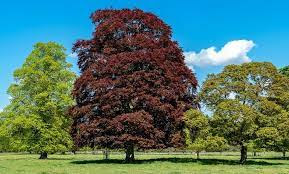
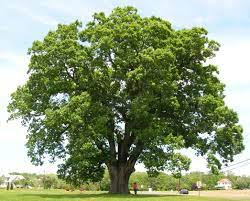
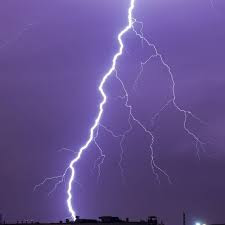
Normally I post observations on words and language, etymology being my fascination. Yet occasionally I add something a little different, invariably these snippets are uncovered while researching - many will tell you how often you find more interesting stuff when looking for something specific than you ever find for the subject in hand - and one example came when I was looking through old copies of the Derby Mercury. One copy of the Mercury from October 1837, claimed that beech trees are never struck by lightning and how Native Americans have always known this.
It nagged at me and so I chose to find out whether this was factual or not. I discovered the tree most likely to be hit by lightning is the oak. But this is not saying that oak trees will attract lightning more than any other, we also have to take into consideration the vast number of oaks and that oaks are likely the tallest of trees and contain more moisture than surrounding trees.
And the beech? Another sizable tree, but one which has a higher fat content than most woods, and therefore is a better conductor of electricity. This means the bolt of lightning is more likely to run to the ground. But does this make it safer? Absolutely not, leaning against any tree as it is hit by lightning is likely to mean you get a rather nasty shock (at best).
If any tree could be said to be less likely to be hit than any other, that might just be the birch. It has a high oil content and is a poor conductor of electricity. But any discussion regarding conductivity of the wood and its content is largely pointless, for lightning and thunder is invariably associated with something else - RAIN. Water is an excellent conductor, hence why you should not mix electrical appliances and the bath. If the tree is wet during the storm, any electrical discharge is likely going to run through the moisture rather than the wood. Furthermore, the person underneath the tree is likely wet through, too. Immaterial of the tree you're under, the likelihood of being hit is the same.
It nagged at me and so I chose to find out whether this was factual or not. I discovered the tree most likely to be hit by lightning is the oak. But this is not saying that oak trees will attract lightning more than any other, we also have to take into consideration the vast number of oaks and that oaks are likely the tallest of trees and contain more moisture than surrounding trees.
And the beech? Another sizable tree, but one which has a higher fat content than most woods, and therefore is a better conductor of electricity. This means the bolt of lightning is more likely to run to the ground. But does this make it safer? Absolutely not, leaning against any tree as it is hit by lightning is likely to mean you get a rather nasty shock (at best).
If any tree could be said to be less likely to be hit than any other, that might just be the birch. It has a high oil content and is a poor conductor of electricity. But any discussion regarding conductivity of the wood and its content is largely pointless, for lightning and thunder is invariably associated with something else - RAIN. Water is an excellent conductor, hence why you should not mix electrical appliances and the bath. If the tree is wet during the storm, any electrical discharge is likely going to run through the moisture rather than the wood. Furthermore, the person underneath the tree is likely wet through, too. Immaterial of the tree you're under, the likelihood of being hit is the same.
Sunday, 14 April 2013
Bloody British History: Stafford
As part of the series Bloody British History, here is a glimpse at my forthcoming volume on Stafford. Not every story involves the spilling of blood and gore or even disease and pestilence as can be seen from the following excerpt.
During the nineteenth century shoemaking was among the major employers in the town. Many worked from home, for the work was mostly done by hand. Workers owned their own set of tools, keeping them in excellent condition and guarding them well. Clearly this was a significant investment and without such would be unable to work.
Thus when one Mr Singer made important improvements to the sewing machine people of Stafford had good cause to be worried. A job they had done by hand all their lives could now be mechanised and production increased greatly. This was fine for those who could afford the new technology but for the rest it spelled financial disaster. The workers could see no alternative but to take strike action.
Yet this could not be a withdrawal of labour in the modern sense but was indeed such in a very real sense for they left Stafford in their droves. Many went to Nantwich in Cheshire. Fairly close to their home town and, more importantly, somewhere the sewing machine had yet to reach. Hence they took lodgings in Nantwich, bringing with them their skills and earning much-needed cash.
Of course their former employers were suffering from a lack of quality but did manage to keep supply lines open with a smaller workforce who were able to produce shoes much faster even if of poorer quality, the new machines could stitch the uppers at some 1,500 to 1,700 stitches per minute.
Yet the manufacturers could not let this continue, poorer quality would eventually lose them business altogether. Customers would find other suppliers in Birmingham, Shrewsbury, Chester and Wolverhampton more than willing to step in. Stafford employers were at a loss to understand just why their workers refused to undergo minor retraining just to use a machine which would make their working lives much easier.
However they were not the only ones to feel the impact. Far harder hit were the families of those whose apparent move away from Stafford was simply to find work. The men found themselves work alright, lodgings were much easier to come by in those days, but the wage packets never found their way back to Stafford. Left without a breadwinner, Stafford suddenly found itself home to women with children rapidly descending into destitution. This was absolutely unacceptable and led to a Stafford shoemaker complaining of how their former workers were “taking the strike as an avenue to divorce”.
Not all shoemakers had deserted their hometown. Poaching was a common way to add to the meagre menus of the majority and, for those with the knowhow, their quarry could be sought directly. This left out the middle man and the only expense was in time and trouble. Oswald Beeman had been adding to his table for years, meaning more of his hard-earned cash as a shoemaker could be spent at the local pub instead of the butcher. With the strike he saw the opportunity to fill his pockets and simply spent more time poaching.
One Thursday in May, Beeman was in the grounds of Creswell Hall, his favourite hunting place. When he saw a keeper approaching he panicked and, as he attempted to unscrew his gun in order to hide the pieces in his voluminous pockets, managed to discharge his gun. Hit from point blank range, the bones in his left leg was utterly shattered above the ankle. Rushed to the infirmary he paid a high price for his illegal activities for that leg was amputated at the knee. Perhaps this was considered to be adequate punishment for there is no record of him ever being charged for his crimes.
Six months after the strike began to hit one manufacturer called a meeting with his competitors. Something had to be done to encourage their workforce back to Stafford otherwise not only would their families starve but they would soon be out of business. An agreement was reached whereby all would pay an extra penny on shoes and twice that amount on boots and welts if they return to work and accept the new technology.
As the workers came home to Stafford the businesses were saved and wives and children were no longer forced to beg for food. While no companies went out of business as a direct result of the strike, it is impossible to gauge whether their action did lasting damage either to the town or the industry.
As usual I would welcome any suggestions for themes or subjects, or even specific words to examine the origins, meanings and etymologies. I’d be delighted to hear from you.
During the nineteenth century shoemaking was among the major employers in the town. Many worked from home, for the work was mostly done by hand. Workers owned their own set of tools, keeping them in excellent condition and guarding them well. Clearly this was a significant investment and without such would be unable to work.
Thus when one Mr Singer made important improvements to the sewing machine people of Stafford had good cause to be worried. A job they had done by hand all their lives could now be mechanised and production increased greatly. This was fine for those who could afford the new technology but for the rest it spelled financial disaster. The workers could see no alternative but to take strike action.
Yet this could not be a withdrawal of labour in the modern sense but was indeed such in a very real sense for they left Stafford in their droves. Many went to Nantwich in Cheshire. Fairly close to their home town and, more importantly, somewhere the sewing machine had yet to reach. Hence they took lodgings in Nantwich, bringing with them their skills and earning much-needed cash.
Of course their former employers were suffering from a lack of quality but did manage to keep supply lines open with a smaller workforce who were able to produce shoes much faster even if of poorer quality, the new machines could stitch the uppers at some 1,500 to 1,700 stitches per minute.
Yet the manufacturers could not let this continue, poorer quality would eventually lose them business altogether. Customers would find other suppliers in Birmingham, Shrewsbury, Chester and Wolverhampton more than willing to step in. Stafford employers were at a loss to understand just why their workers refused to undergo minor retraining just to use a machine which would make their working lives much easier.
However they were not the only ones to feel the impact. Far harder hit were the families of those whose apparent move away from Stafford was simply to find work. The men found themselves work alright, lodgings were much easier to come by in those days, but the wage packets never found their way back to Stafford. Left without a breadwinner, Stafford suddenly found itself home to women with children rapidly descending into destitution. This was absolutely unacceptable and led to a Stafford shoemaker complaining of how their former workers were “taking the strike as an avenue to divorce”.
Not all shoemakers had deserted their hometown. Poaching was a common way to add to the meagre menus of the majority and, for those with the knowhow, their quarry could be sought directly. This left out the middle man and the only expense was in time and trouble. Oswald Beeman had been adding to his table for years, meaning more of his hard-earned cash as a shoemaker could be spent at the local pub instead of the butcher. With the strike he saw the opportunity to fill his pockets and simply spent more time poaching.
One Thursday in May, Beeman was in the grounds of Creswell Hall, his favourite hunting place. When he saw a keeper approaching he panicked and, as he attempted to unscrew his gun in order to hide the pieces in his voluminous pockets, managed to discharge his gun. Hit from point blank range, the bones in his left leg was utterly shattered above the ankle. Rushed to the infirmary he paid a high price for his illegal activities for that leg was amputated at the knee. Perhaps this was considered to be adequate punishment for there is no record of him ever being charged for his crimes.
Six months after the strike began to hit one manufacturer called a meeting with his competitors. Something had to be done to encourage their workforce back to Stafford otherwise not only would their families starve but they would soon be out of business. An agreement was reached whereby all would pay an extra penny on shoes and twice that amount on boots and welts if they return to work and accept the new technology.
As the workers came home to Stafford the businesses were saved and wives and children were no longer forced to beg for food. While no companies went out of business as a direct result of the strike, it is impossible to gauge whether their action did lasting damage either to the town or the industry.
As usual I would welcome any suggestions for themes or subjects, or even specific words to examine the origins, meanings and etymologies. I’d be delighted to hear from you.
Subscribe to:
Posts (Atom)