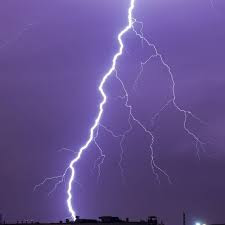
Normally I post observations on words and language, etymology being my fascination. Yet occasionally I add something a little different, invariably these snippets are uncovered while researching - many will tell you how often you find more interesting stuff when looking for something specific than you ever find for the subject in hand - and one example came when I was looking through old copies of the Derby Mercury. One copy of the Mercury from October 1837, claimed that beech trees are never struck by lightning and how Native Americans have always known this.
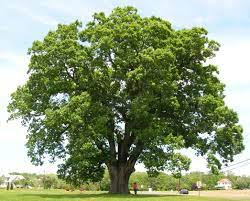
It nagged at me and so I chose to find out whether this was factual or not. I discovered the tree most likely to be hit by lightning is the oak. But this is not saying that oak trees will attract lightning more than any other, we also have to take into consideration the vast number of oaks and that oaks are likely the tallest of trees and contain more moisture than surrounding trees.
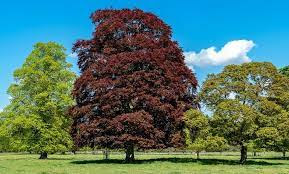
And the beech? Another sizable tree, but one which has a higher fat content than most woods, and therefore is a better conductor of electricity. This means the bolt of lightning is more likely to run to the ground. But does this make it safer? Absolutely not, leaning against any tree as it is hit by lightning is likely to mean you get a rather nasty shock (at best).
If any tree could be said to be less likely to be hit than any other, that might just be the birch. It has a high oil content and is a poor conductor of electricity. But any discussion regarding conductivity of the wood and its content is largely pointless, for lightning and thunder is invariably associated with something else - RAIN. Water is an excellent conductor, hence why you should not mix electrical appliances and the bath. If the tree is wet during the storm, any electrical discharge is likely going to run through the moisture rather than the wood. Furthermore, the person underneath the tree is likely wet through, too. Immaterial of the tree you're under, the likelihood of being hit is the same.
Showing posts with label beech. Show all posts
Sunday, 30 January 2022
Sunday, 29 October 2017
Trees
Trees are comprised of wood, yet a wood is made up of trees. A linguistic quirk? No. If we go back far enough we find Proto-Germanic widu and Proto-Indo-European widhu, each used to refer to the both the 'timber' and also 'tree'. Hence the anomaly is the word 'tree', itself odly derived from the root (no pun intended) drew-o meaning 'be firm, solid' and for obvious reasons.
But what about the different names given to various kinds of trees? Where do these originate?
Oak - a name which is Germanic but that is where the trail ends and the etymology is a mystery. However the Indo-European root of deru, which is also the Greek and Celtic word for 'oak', is also the source of the English word 'tree'. And if that isn't confusing enough, when the Vikings arrived in Iceland and brought with them the Norse word eik or 'oak', they discovered no oaks whatsoever and thus used eik to mean simply 'tree'.
Broom - the tree gets its name from the Proto-Germanic braemaz 'thorny bush' and derived from Proto-Indo-European bherem 'to project, a point'. Such lumps and points characterise the broom tree, this also making them most suitable for being tied together to produce what we would call a besom but which is effectively still a broom for sweeping.
Elm - quite easy to trace this back to Proto-Indo-European el meaning 'red, brown'. It is also the origin of the word 'elk' and 'eland'.
Yew - a similar origin to that of the elm (see above), where Proto-Indo-European ei-wo also suggests 'reddish'.
Maple - a name of surprisingly recent origins, indeed it seems to have simply appeared in Germanic languages around 1,500 years ago. It is highly improbable to think all Germanci languages suddenly began using the name, hence there must be a common origin but that root is unknown.
Lime - or linden tree is derived from Proto-Indo-European lent-o meaning 'flexible', this a reference to the trees pliant bast, this the inner fibrous bark.
Beech - all forms across the Proto-Indo-European languages, these all from Proto-Indo-European bhago and all simply refer to the tree. The same word is also the source of the word 'book' and thus the smooth bark of the tree would be seen as being a black metaphorical page on which to make marks to send messages.
Pine - ultimately from Proto-Indo-European pi-nu and derived from peie 'be fat, to swell' and liely referring to the sap or resin pouring from the tree when it is damaged.
Alder - has exactly the same origins as the elm (see above) and simply means 'red, brown'.
Ash - a Germanic term and, while the origin is far from certain, seems to come from it being the preferred wood used in the making of spear shafts. Old English aesc plega may have been used to mean 'war' but it literally translates as 'spear play'.
Holly - easy to see why the Proto-Indo-European root here is kel meaning 'to prick'.
Willow - ultimately from Proto-Indo-European wel meaning 'to turn, revolve' and a reference to the young willow's usefulness as it is whippy and flexible.
Larch - thought to be a loanword from an Alpine Gaulish langauge which could be related to Old Celtic darik meaning 'oak' which may add to the information known for 'oak' (see above) to suggest the word 'oak' simply meant 'tree'.
But what about the different names given to various kinds of trees? Where do these originate?
Oak - a name which is Germanic but that is where the trail ends and the etymology is a mystery. However the Indo-European root of deru, which is also the Greek and Celtic word for 'oak', is also the source of the English word 'tree'. And if that isn't confusing enough, when the Vikings arrived in Iceland and brought with them the Norse word eik or 'oak', they discovered no oaks whatsoever and thus used eik to mean simply 'tree'.
Broom - the tree gets its name from the Proto-Germanic braemaz 'thorny bush' and derived from Proto-Indo-European bherem 'to project, a point'. Such lumps and points characterise the broom tree, this also making them most suitable for being tied together to produce what we would call a besom but which is effectively still a broom for sweeping.
Elm - quite easy to trace this back to Proto-Indo-European el meaning 'red, brown'. It is also the origin of the word 'elk' and 'eland'.
Yew - a similar origin to that of the elm (see above), where Proto-Indo-European ei-wo also suggests 'reddish'.
Maple - a name of surprisingly recent origins, indeed it seems to have simply appeared in Germanic languages around 1,500 years ago. It is highly improbable to think all Germanci languages suddenly began using the name, hence there must be a common origin but that root is unknown.
Lime - or linden tree is derived from Proto-Indo-European lent-o meaning 'flexible', this a reference to the trees pliant bast, this the inner fibrous bark.
Beech - all forms across the Proto-Indo-European languages, these all from Proto-Indo-European bhago and all simply refer to the tree. The same word is also the source of the word 'book' and thus the smooth bark of the tree would be seen as being a black metaphorical page on which to make marks to send messages.
Pine - ultimately from Proto-Indo-European pi-nu and derived from peie 'be fat, to swell' and liely referring to the sap or resin pouring from the tree when it is damaged.
Alder - has exactly the same origins as the elm (see above) and simply means 'red, brown'.
Ash - a Germanic term and, while the origin is far from certain, seems to come from it being the preferred wood used in the making of spear shafts. Old English aesc plega may have been used to mean 'war' but it literally translates as 'spear play'.
Holly - easy to see why the Proto-Indo-European root here is kel meaning 'to prick'.
Willow - ultimately from Proto-Indo-European wel meaning 'to turn, revolve' and a reference to the young willow's usefulness as it is whippy and flexible.
Larch - thought to be a loanword from an Alpine Gaulish langauge which could be related to Old Celtic darik meaning 'oak' which may add to the information known for 'oak' (see above) to suggest the word 'oak' simply meant 'tree'.
Subscribe to:
Posts (Atom)