Sunday, 14 November 2021

That's Not What I Meant (N)

Interesting to see naughty children were not always naughty.

Naughty is not that had to see as meaning 'having nothing', especially if we tweak the spelling to 'noughty'. The change from 'poor' to the present 'mischievous' came about when a later use was as 'bad' or 'inferior quality'.

Net, in the sense of after deductions or additions, came to English in the fourteenth century from the Old French net meaning 'neat'. This was not only the original meaning but is also a tidy way of describing the financial sense. In later years 'net' was also used in English as synonyms for 'smart, clean, bright'.

Newfangled is to be seemingly modern, but in an overly complex way. Back in the fifteenth century it was only used to describe someone fond of things new.

News, something I personally loathe as it isn't informative it's gossip, is a word which came to English in the fourteenth century and was used to mean 'novelties'. Ah, now if the BBC had a 24-hour channel devoted to novelties - I still wouldn't watch it.


Nice, that is as in the rhyme with 'rice' and not the French city, came to English from Old French in the thirteenth century and was originally used in the same sense as the French word, that is to mean 'silly, simple' and is derived from the Latin nescius 'ignorant'. Incidentally the French city was named by the Greeks after the goddess Nike, and her name is thought to come from the Proto-Indo-European neik 'to attack', which also fits nicely with Nike being the goddess of victory. And if you that is confusing, read on …….

Niece is first seen in English in the early seventeenth century, when it was used to mean 'granddaughter' or simple 'female descendant' and not the very specific 'daughter of a sibling' as it does today.

Nightmare is not considered politically correct today, the modern term seems to be night terrors, but when it first came to English it referred to the evil female spirits held responsible for the for bad dreams, which they created by pressing down on the sleeper. Note this earlier use is still the only sense until the middle of the nineteenth century, meaning 'nightmare' fell out of favour inside 150 years. Imagine if every word in the English language changed its meaning and was then kicked out of the dictionary in just 150 years? What a nightmare!

Noon is that time in the middle of the day when cuckoo clocks push their luck. Until the thirteenth century, 'noon' was a term only used in religious conversations where it was referred to as nona hora, which is Latin for 'the ninth hour'. As the day began at sunrise (for the sake of argument six o'clock on average), the ninth hour would be three o'clock in the afternoon. Interesting to note only English and Dutch use 'noon', every other European language uses a word related to 'midday'.


Nostalgia isn't what it used to be. No, really it isn't for in the eighteenth century it would only be used by Englishmen abroad who were pining for the old country. Earlier nostalgia referred to 'home sickness'.

Nuzzle is one of those modern words used to refer to close contact with another's face. It's also used to describe the actions of a pet rubbing its muzzle against its human/owner/keeper (never will understand that). Originally it was used to mean 'grovel' (that I understand), where the idea is to see someone with their nose to the ground.

Sunday, 7 November 2021

That was not what I meant (M)

Minion certainly has gone through some changes in meaning.

Machine may refer to a mechanical device today, but before the seventeenth century was used in the sense of 'structure, fabric'.


Main was once used to mean 'of greatest size' rather than 'chief, leading' as it does today.

Manipulation is used to mean 'to control to one's own advantage', which is a much more general sense than the original eighteenth century meaning of handling chemical apparatus.

Manufacture today is accepted as a mechanical process, when the original sixteenth century use was 'made by hand'.

Martyr is, as we all know, one who dies for a cause, particularly a religious cause. But originally it was a person who chose to die, be it at their own hands or that of another.

Medley is a 'mix' today, but in the fourteenth century this word, releated to melee, meant 'combat, conflict'.

Menial is, today, a very negative word meaning 'lowly' or even 'degrading'. But when first seen in English in the fourteenth century it simply meant 'domestic'.

Mere as in 'in its simplest form', began in the fifteenth century as 'done alone'.

Merry began in Old English as myrge and was used to mean 'pleasant, agreeable' and is most famously used in antiquity as in Merry England, where the early use is much easier to understand.

Meticulous or 'very careful', is derived from a Latin root meaning 'fear' and came into use in English in the sense of 'timid'.

Mildew began in English as a word with the same meaning as 'honeydew', a substance excreted by aphids (or a quite delicious organic ale brewed by Fullers and most certainly my favourite tipple).


Minion, forget the little yellow things, the real definition is 'a servant, a petty official', but when it came to English from the French mignon, a word still meaning 'darling', it was used in the sense of 'lover' and particularly 'lady love'.


Minister has a similar complete reversal to 'minion', albeit the opposite bad to good. Today the church official, in the thirteenth century 'a servant'.

Misericord is that part of the seat in the choirstall on which the occupant may stand, but in the fourteenth century meant 'pitiful heart', by the eighteenth century spoke of 'mercy on us', and later eighteenth century 'mercy seat'.

Mistake today is any error, originally it was used in the very literal sense of 'to take wrongly'.

Mode means 'fashion, manner' today, but in the fourteenth century referred specifically to music in the 'tune or 'melody'.

Moist or 'damp' today, but in the fourteenth century could be used to mean 'new' or 'liquid' depending upon context.

Mortuary is where the deceased are stored, but in the fourteenth century it referred to the gift claimed by the clergyman from the estate of the dead person.


Muddle may mean 'confuse' today, but the fourteenth century use as 'wallow in mud' is still easily seen.

Must in Old English meant 'was able to' or 'permitted to', rather than the 'compulsory' sense today.

Sunday, 31 October 2021

That was not what I meant. (L)

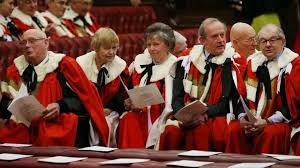
With the original definition of 'lord' I might not want the title. I only said 'might', note.

Large today is the opposite of 'small', but when it first came to English in the twelfth century it was used more in the sense of 'liberal' or 'generous'.

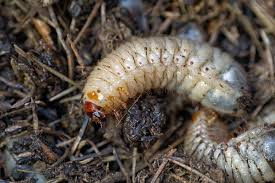
Larva, that's the young of an insect, is the Latin word for a 'ghost, spectre'.


Ledger today suggests an accounts book, historically it was a book which remained in one place.

Legend may suggest a glorious tale or myth today, but its earliest use was specifically the story of a saint's life.

Lewd today is anything coarse of crude, but when first used in the sixteenth century meant anything but, for the sixteenth century usage would suggest 'lay' in the sense of 'not clerical'

Liaison means 'cooperation, communication', but came to English in the seventeenth century to refer to the thickening of sauces (especially using egg yolks) in cooking.

List is a column of items or notes today, but originally referred to the 'border, strip' on the page.

Literature is surely nothing other than the written word, but in the fourteenth century it was used in a much more general sense to mean 'learning, knowledge'.

Litter has two meanings today - multiple births for an animal, or rubbish - but historically it came from Old French and meant 'bed'.

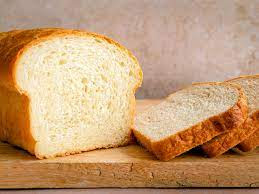
Loaf today refers to the whole baked lump of bread, but historically was used as a synonym for 'bread'.


Loan has to be given back today, it's what the word means. But before the fifteenth century it referred to a gift, particularly one from a person of superior standing or a gift seen as coming from God.

Locket may be a small container worn as an item of jewellery today, but when it first came to English it referred to an iron bar across a window - designed, quite literally, to 'lock it'.

Lollipop is specifically a sweet on a stick, but before the eighteenth century it referred to any sweets.

Lord, as in the rank and not the deity, may be a member of the nobility today, but when first used in English described a hlafweard which literally means 'loaf ward' or 'keeper of the bread'.


Lot, as in a large amount or many, came to English meaning 'portion' as is still used in words such as 'allotted'.

Lucid is a synonym of 'clear, plain', but when it came to English from French in th sixteenth century, it meant 'shining'.

Sunday, 24 October 2021

That was not what I meant. (K)

It is difficult to see the word 'kill' having any other meaning, but it did.

Kill is to end a life today, but in the fourteenth century it simply meant 'strike, beat'.


Keen or 'eager', was used in Old English to mean 'wise' or 'brave' depending on the context.

Kind is benevolent today, but Old English cynd was used in the sense of 'natural' or perhaps 'native'.

Knight is a title today, but the Old English version came from the Germanic and meant 'servant, farmhand'.

Sunday, 17 October 2021

That was not what I meant. (J)

The etymology of 'Jargon' has always been one of my favourites.

Jangle, the discordant sound of metal on metal, is first recorded in the thirteenth century as meaning 'to chatter'.

Jargon might today be used to describe talk using specialist knowledge, but in the fourteenth century the word referred to the 'twittering of birds'.


Jaunt was used to mean 'ride a horse back and forth' in the sixteenth century, not simply 'a short pleasure trip' as today.

Jeopardy is to take a risk, but came to English from the Old French jeu parti or 'divided game', but used in English to refer to a chess move in the fourteenth century.

Jet is a stream of matter, usually gaseous but sometimes liquid, but began in sixteenth century English as a synonym for 'project, protrude, stick out'.


Jilt is to reject, and particularly a lover, but first appeared in English in the seventeenth century to mean 'loose woman, harlot'.

Journal, a record of ones thoughts or activities, is a word first seen in the fourteenth century when it referred to a book containing prayers for the different canonical hours of the day.


Junket is a sweet milk dessert consumed most often on feast days, but the word originated in the fourteenth century as a reference to a basket for fish destined for the table, ths later transferred to the contents. In later centuries those contents altered, too.

That was not what I meant. (I)

When working through the list of words it never fails to astonish me how often words have not only changed in meaning completely, but have even come to mean the opposite of the earlier sense. And who can we blame? Those who speak the language - or perhaps speak the language badly, would be a better way of describing it.

Idiom, a distinctive expression or turn of phrase, began in the sixteenth century as a reference to a specific language.


Improve must surely have always meant 'make better', surely? But no. For in the sixteenth century there are plenty of written used where the word is clearly used to mean 'make profit'.

Impudent or 'cheeky' today, but the word actually tells us its meaning of 'not pudent' and therefore was used to mean 'immodest. lacking decency' in the fourteenth century.


Inane comes from Latin, and instead of meaning 'mad, crazy' as used today, was first used in English to mean 'empty'.

Industry meant 'skill' or 'dexterity' in the fifteenth century, not seen in a manufacturing sense until the eighteenth century.

Infants today are young children, but for nearly the entire existence of the English language it simply referred to a child of any age.

Infest today suggests being subjected to an attack by hordes of undesirables, but originalyl described the 'swarm' of anything, be it undesirable of not.


Inmate today suggests someone who resides in an institution and who would not be there by choice. When the word was first used in English it was simply referred to one residing at another's premises, such as a lodger or tenant.

Inn, today a word which can only be a pub or perhaps a hotel. Yet in the fourteenth century we all lived in inns, for every dwelling was referred as such.


Insulate is to keep separate, detach, today. But when first used in English it described somewhere 'made into an island'.


Insult would be insulting to define in the modern sense, so we'll stick with the sixteenth century sense meaning 'to triumph over'.

Interfere originates from the Latin inter 'one another' and ferire 'to strike', and thus what is used today to mean 'meddle' began as being used to mean 'to strike each other'.

Invent or 'devise' today, was a fifteenth century word meaning 'to come'.

Investment has a financial meaning today, but began in the sixteenth century meaning 'to clothe'.

Involve is derived from the Latin onvolvere or 'to roll in', which is exactly what it meant in the fourteenth century.

Item is an individual object today, but in the fourteenth century meant 'also' which, if the list is itemised, and 'item' inserted before each then that makes perfect sense.

Tuesday, 5 October 2021

That was not what I meant. (H)

Another look at the sometimes ludicrous change in meanings. We tend to blame the dictionary, or more likely the government for any change we have no control over, but when it comes to language it is purely the populous who have full control. Use it in the wrong or a different sense often enough, it becomes part of the language.

Haggard, 'drawn, tired' tired, but in the sixteenth century was used to refer to an untamed hawk in adult plumage, especially a female hawk.

Handsome's original meaning can still be seen if split into its two composite words. Here 'hand some', at least from the fifteenth century, referred to something 'easy to handle'.

Happy is the state of being pleased or contented, and surely couldn't have meant anything else. But in the fourteenth century it was the state of enjoying 'hap', a word meaning 'good fortune'.

Harlot is a derogatory term which is exclusively femail in the modern era. Back in the thirteenth century when the term first appeared, it referred to a 'low fellow'.

Harvest today is the act of gathering in the crops. As this is generally at the end of the growing season in autumn, it is easy to see why 'harvest' was originally a synonym for 'autumn'.


Hazard is a danger, perhaps an obstacle, today but back in the thirteenth century was a dice game - indeed it is mentioned as such in Shakespeare's Henry V.

Headland may be a topographical feature today, a bluff or higher ground, but it began simply as the end of the ploughed strip in a field.

Hearse is today a vehicle used to transport a coffin, but when it first came to England in the fourteenth century from the French herse it described a framework resembling a harrow, but designed to carry candles over a coffin.


Heckle, the harrassment of a speaker, started life meaning the long feathers around the nexks of some birds.

Henchmen today are criminals, albeit not a term used frequently in conversation, but in the fourteenth century it referred to a squire or one who attended horses.

Hike refers to a long, chiefly rural, walk. From the eighteenth century it was used to mean 'jerk, pull'.

History can only be history, a tale or record of events in times past. But no, in the fifteenth century it meant the same as 'story', and appears in the original translation of AEsop's Fables.

Hobby today is a pastime, or perhaps a small hawk, but in the fourteenth century it was a small horse or pony.

Honest may mean 'trustworthy, fair' today, but its early use in the thirteenth century was used to mean 'comely, of pleasant appearance'.

Hoodwink or 'deceive' today, but a more literal sense in the thirteenth century as 'blindfold'.

Horrid is unpleasant today, but when it first came to English from the Latin horridus it had the same meaning as 'shaggy, bristling'.

Hospice/hospital share an origin with 'hospitality' and referred to a place where people could get their head down and most often this was a religious establishment.


Host, at least from the thirteenth century, would not offer a warm welcome as it was used as a synonym for 'army'.

Humour may be laughed at today, but in the fourteenth century was used in the sense of 'sense-changer'.

Hussy today is seen as a derogatory term, used to describe a woman or questionable morals, although I tend to hear it more often used in a jocular way. Historically there was no question of it being politically incorrect in the sixteenth century, for it simply meant 'housewife', and by the early eighteenth century was also used to refer to a woman who was known for her frugal lifestyle.

Hutch, a small pen and usually for a rabbit, began as a storage container in the fourteenth century and would have contained clothes or money.


Hypochondriacs worry about their health incessantly, see symptoms where none exist, but 'hypochondria' began as a general term for the upper abdomen.