Showing posts with label lord. Show all posts

Saturday, 8 July 2023

An Etymologist's look at Celtic Mythology.

Continuing on after my recent course on ancient languages, I thought it would be interesting to examine a selection of Celtic mythological figures and examine the etymologies for their names. Some of these would have been understood by Boudica.


Caturix is of Gaulish origins and means either 'battle king' or 'battle lord'.


Cunomaglus is the Celtic version of Apollo, his name meaning 'hound lord'.


Grannus gets his name from the Proto-Celtic granno, an element which combines with others to speak of the sun, its heat, and its healing properties.

Virotutis is another with associations with Apollo, this name has been interpreted as 'benefactor of humanity'.

Ancasta may be from the Proto-Celtic kasto 'swift' which would also fit with her association with the river Itchen.

Andrasta is the goddess invoked by Boudica in her fight against the Romans, with a name meaning 'indestructible' or 'unconquerable' perhaps she hoped for more than annhiliation for her Iceni tribe.

Divona means 'divine', unsurprisingly, and is derived from the Gaulish deous 'god'.

Bricta is from brixta the Gaulish word for 'magic', this goddess is one of many associated with springs.


Litavis is 'the broad one', an earth-goddess who seems to have been very popular in Gaul.

Rosmerta, a goddess of fertility and abundance, takes the element smert 'provider' or 'carer', and adds the prefix for 'great'.

Sabrina, the goddess associated with the river Severn, has virtually no other reference. Some consider her to be the same person as Hafren, a legendary British princess who drowned in the Severn.


Sirona was lauded chiefly in the area drained by the Danube, her name coming from Proto-Celtic ster with the suffix no or 'belonging', thus the name referring to her as 'stellar' or 'astral'.

Sunday, 31 October 2021

That was not what I meant. (L)

With the original definition of 'lord' I might not want the title. I only said 'might', note.

Large today is the opposite of 'small', but when it first came to English in the twelfth century it was used more in the sense of 'liberal' or 'generous'.

Larva, that's the young of an insect, is the Latin word for a 'ghost, spectre'.


Ledger today suggests an accounts book, historically it was a book which remained in one place.

Legend may suggest a glorious tale or myth today, but its earliest use was specifically the story of a saint's life.

Lewd today is anything coarse of crude, but when first used in the sixteenth century meant anything but, for the sixteenth century usage would suggest 'lay' in the sense of 'not clerical'

Liaison means 'cooperation, communication', but came to English in the seventeenth century to refer to the thickening of sauces (especially using egg yolks) in cooking.

List is a column of items or notes today, but originally referred to the 'border, strip' on the page.

Literature is surely nothing other than the written word, but in the fourteenth century it was used in a much more general sense to mean 'learning, knowledge'.

Litter has two meanings today - multiple births for an animal, or rubbish - but historically it came from Old French and meant 'bed'.

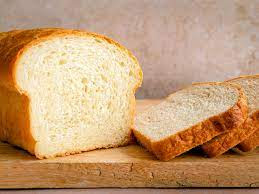
Loaf today refers to the whole baked lump of bread, but historically was used as a synonym for 'bread'.


Loan has to be given back today, it's what the word means. But before the fifteenth century it referred to a gift, particularly one from a person of superior standing or a gift seen as coming from God.

Locket may be a small container worn as an item of jewellery today, but when it first came to English it referred to an iron bar across a window - designed, quite literally, to 'lock it'.

Lollipop is specifically a sweet on a stick, but before the eighteenth century it referred to any sweets.

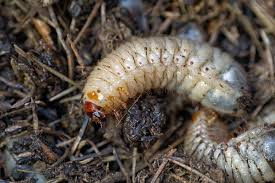
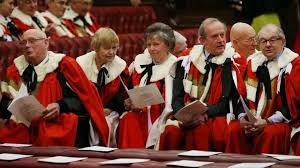
Lord, as in the rank and not the deity, may be a member of the nobility today, but when first used in English described a hlafweard which literally means 'loaf ward' or 'keeper of the bread'.


Lot, as in a large amount or many, came to English meaning 'portion' as is still used in words such as 'allotted'.

Lucid is a synonym of 'clear, plain', but when it came to English from French in th sixteenth century, it meant 'shining'.

Sunday, 5 May 2019

Malta Place Names Explained

Having blogged samples of my books on English place names and also examined the etymologies of the nations of the world and their respective capitals I thought it time I cast my net a little wider. As English place names share some links to other tongues it would be interesting to see if any of the elements contributing to our place names could be found elsewhere. Continuing an alphabetical tour of the world and a look at the largest Maltese settlements.

Valletta was named after the Grand Master Jean de Valette of the Order of St John, following the Great Seige of 1565 when they defeated the Ottomans.He laid the foundation stone himself, on 28th March 1566.


Mdina had previously been known as Maleth by Phoenician settlers of the 8th century BC, this name changed to Melite by the Romans. The Roman settlement was larger than the present daty Mdina, reduced during the Arab occupation and confined behind the city walls. The Roman name of Melite refers to the 'suburbs' and the Arabic name of medina simply means 'city' or 'town'.


Senglea is named after the Grand Master who built it, Claude de la Sengle, 48th Grand Master of the Order of Malta (1553 to 1557).


Cospicua is known locally as Bormla, from Bir Mula or 'the well of the Lord'.


Zebbug is named for its many groves of olive tress and just means 'olives'.


Zabbar is likely from the Maltese word tizbor, a reference to 'pruning trees', although it is also possible the place took a family name, they earning it because they pruned trees.


Zetjun, as with Zebbug above, simply means 'olives' although here the origin is the Arabic zaytun.


Attard shares the confusion of Zabbar, although here the preferred idea is a family name, this from the Arabic atr meaning 'perfume' and possibly referring to oils obtained from the many blossoms which grew here.


Balzan is certainly from a family name as it is from balsan 'tax collector'.


Birkirkara is understood as either 'cold water' or 'running water', either way the understanding is 'drinking water'.


Birzebbuga has a lot in common with Zebbug above, simply here the name refers to a 'well of olives'.


Dingli is named after Sir Thomas Dingley, an English knight of the Order of St John who owned the lands here.


Fgura is not simply coincidentally similar to the English 'figure', it has the same meaning. Here the reference is to the niche where devotees to Our Lady of Mount Carmel would stop to admire and perhaps give thanks to the statue.


Floriana is named after Pietro Paolo Floriana, an Italian engineer who designed the fortifications.


Gudja refers to the place's location 'on higher ground', not a hill as such but higher than the surrounding area.


Gzira is the Maltese word for 'island', although that island is Manoel Island which today lies adjacent to the main focus of the settlement but likely the original location of the settlement.


Gharghur is probably the Maltese word for 'flooding', although some credence is also given to the idea this refers to Malta's national tree the sigra tal-gharghar.


Ghaxaq probably refers to a noble family recorded as Axiaq. Less likely is the idea this represents the Maltese for 'delight'.


Iklin is derived from a herb which once gre here, Rosmarinus Officinalis and known as i-iklin in Malta. The herb grew in a valley which has now been developed extensively.


Kalkara takes its name from the Latin word for 'lime', Calce, for there had been a lime kiln here since Roman times.


Note the spellings of the places are English as the piece is written in English.

Sunday, 1 July 2018

Insane Inclines

In 1857 Lord Shaftesbury published his supplemental report on the state of workhouses in England and Wales. Figures showed the number of 'insane, idiotic and imbecile inmates' at the various workhouses in Staffordshire numbered 239, of which 89 were male. In the county town of Stafford 7 males and 12 females were considered insane, this out of a total of 7,555 in England and Wales.


It was stated these numbers were not spread evenly throughout England and Wales, remote rural locations would have a much higher percentage than those in more populous localities. Furthermore, this was particularly true in the hilly parts of the country.


It seems altitude was considered a factor in 19th century insanity.