Having spent many hours talking to those convinced their jobs are more important than anything, I wished we still used 'officious' in the original sense.
Occult came to English in the sixteenth century, but only since the eighteenth century has it been used to refer to the supernatural, prior to that it simply meant 'hidden, secret'.
Officious is an excellent word which today describes that irritating individual who thinks their job is the most important thing in the universe. Originally it was used to mean 'dutiful' or 'eager to please'. If only that were true today.
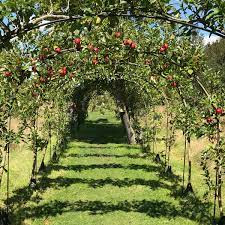
Orchards are areas where fruit trees grow, but from the fourteenth century it simply meant 'garden'.
Orientate is to adjust a position or bearing. Originally it meant simply 'to turn to face east', quite literally 'to the orient'.
Outings today are pleasant excursions, a trip out. In the fourteenth century it was used to mean 'expulsion', much as 'ousting' does today.
Owe is one of those weird words which has changed meaning completely. Today to 'owe' is to be in debt, yet in the fourteenth century it was used to mean 'own, possess'.
Showing posts with label garden. Show all posts
Sunday, 21 November 2021
Sunday, 23 August 2020
Uzbekistan Place Names Explained
Having blogged samples of my books on English place names and also examined the etymologies of the nations of the world and their respective capitals I thought it time I cast my net a little wider. As English place names share some links to other tongues it would be interesting to see if any of the elements contributing to our place names could be found elsewhere. Continuing an alphabetical tour of the world and a look at the largest Uzbekistan cities.
Tashkent is thought to mean either 'stone tower' or 'stone city', a tower said to mark the midpoint between Europe and China.
Lake Charvak comes from the Persian char bagh meaning 'four gardens'
Samarkand comes from the Sogdian samar kand 'stone fort / town'.
Namangan comes from Persian namak kan 'a salt mine'.
Nukus comes from an old tribal name of the Karakalpaks.
Bukhara is thought to come from the Sogdian buxarak meaning 'place of good fortune'.
Qarshi means simply 'fort'.
Margilan is said to have been named by Alexander the great and named when he was given lunch of chicken murgh and bread nan.
Note the spellings of the places are English as the piece is written in English.
Tashkent is thought to mean either 'stone tower' or 'stone city', a tower said to mark the midpoint between Europe and China.
Lake Charvak comes from the Persian char bagh meaning 'four gardens'
Samarkand comes from the Sogdian samar kand 'stone fort / town'.
Namangan comes from Persian namak kan 'a salt mine'.
Nukus comes from an old tribal name of the Karakalpaks.
Bukhara is thought to come from the Sogdian buxarak meaning 'place of good fortune'.
Qarshi means simply 'fort'.
Margilan is said to have been named by Alexander the great and named when he was given lunch of chicken murgh and bread nan.
Note the spellings of the places are English as the piece is written in English.
Subscribe to:
Posts (Atom)


