Having spent many hours talking to those convinced their jobs are more important than anything, I wished we still used 'officious' in the original sense.
Occult came to English in the sixteenth century, but only since the eighteenth century has it been used to refer to the supernatural, prior to that it simply meant 'hidden, secret'.
Officious is an excellent word which today describes that irritating individual who thinks their job is the most important thing in the universe. Originally it was used to mean 'dutiful' or 'eager to please'. If only that were true today.
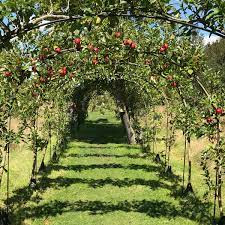
Orchards are areas where fruit trees grow, but from the fourteenth century it simply meant 'garden'.
Orientate is to adjust a position or bearing. Originally it meant simply 'to turn to face east', quite literally 'to the orient'.
Outings today are pleasant excursions, a trip out. In the fourteenth century it was used to mean 'expulsion', much as 'ousting' does today.
Owe is one of those weird words which has changed meaning completely. Today to 'owe' is to be in debt, yet in the fourteenth century it was used to mean 'own, possess'.
Showing posts with label orchard. Show all posts
Sunday, 21 November 2021
Sunday, 26 January 2020
Serbia Place Names Explained
Having blogged samples of my books on English place names and also examined the etymologies of the nations of the world and their respective capitals I thought it time I cast my net a little wider. As English place names share some links to other tongues it would be interesting to see if any of the elements contributing to our place names could be found elsewhere. Continuing an alphabetical tour of the world and a look at the largest Serbian cities.
Belgrade, the capital, is the Anglicised version of the Serbian Beograd meaning 'white city'. The settlement began as the Celtic city of Singidunum, founded by the Scordisci tribe in the 3rd century BC. Here the suffix meaning 'fortress' follows an uncertain first element which could be related to seng 'slender, narrow'; Sings, the Thracian tribe who may have occupied the area previously; sin-gi 'old prayer'; or perhaps the Sinds a Scythain tribe named by Herodotus as living hereabouts in the 5th century BC.
Novi Sad is from the Serbian for 'new orchard'.
Nis is said to get its name from the Nisava River. However, it seems more likelt to be from Serbo-Croat niz meaning 'along the course of'. If this idea is correct, it means an early settlement gave its name to the river and not vice versa.
Kragujevac is from a Serbian word, kraguj refers to a species of hawk. Common to the area and used for hunting, the city's name of 'hawks' roost' reflects this era.
Subotica appeared earlier as Zabotka or Zabatka, possibly from szabad a derivative of svobod or 'peace'. Alternatively the South Slavic word of zabat or 'gable' and thus a reference to a different style of house in the area.
Krusevac is from the Serbian krusac or 'river stone', a common material used in building houses at that time.
Kraljevo is a name meaning 'the kings' town', this given by King Milan I of Serbia (d1889) and a reference to the six Serbian kings who had been crowned in this region.
Pancevo has an uncertain origin but possibly comes from an Old Slavonic term referring to this being largely marshland.
Zrenjanin was named after Zarko Zrenjanin (1902-1942) in 1946 as he was one of the leaders of the Vojvodina Communist Partisans during the Second World War.
Sabac is first recorded in 1454, the origin uncertain but may share an origin with the local River Sava, itself thought to come from Proto-Indo-European sewh meaning 'to take liquid' (and a root also giving us the English 'sup') but here with the suffix -eh to describe 'that which waters' and a reference to it irrigating the land.
Cacak was once known as Gradac or 'little town'. First recorded as Cacak in a document dated 3 January 1409, it may be from cackovit referring to lumpos of frozen or dried mud used as a building material, alternativel this could represent skak or 'jumping', although it is not clear how the latter would work etymologically.
Novi Pazar means 'new bazaar', a name used since the 15th century when there was another well-established market less than two miles east of here.
Sombor takes the family name Czobor, first used in 1543, who owned this area in the 14th century. Earlier had been known as Czoborszentmihaly.
Sremska Mitrovica gets the latter from Saint Demetrius. Added to the area of Syrmia, an ancient region now divided between Serbia and Croatia, named from and ruled by the city of Sirmium - itself now known as Sremska Mitrovica. Sirmium means 'flowing water, wetland' and refers to its location by the River Sava.
Loznica began as lozica, the Serbian for 'small vine'.
Pozarevac can be translated as 'fire town', this thought to refer to a burning of a settlement here.
Jagodina is first recorded as jagodna a word meaning 'strawberry' in Serbian.
Zajeca is from the Torlak dialect zajec 'hare' and thus this place was once renowned as 'the man who breeds hares'.
Note the spellings of the places are English as the piece is written in English.

Belgrade, the capital, is the Anglicised version of the Serbian Beograd meaning 'white city'. The settlement began as the Celtic city of Singidunum, founded by the Scordisci tribe in the 3rd century BC. Here the suffix meaning 'fortress' follows an uncertain first element which could be related to seng 'slender, narrow'; Sings, the Thracian tribe who may have occupied the area previously; sin-gi 'old prayer'; or perhaps the Sinds a Scythain tribe named by Herodotus as living hereabouts in the 5th century BC.
Novi Sad is from the Serbian for 'new orchard'.
Nis is said to get its name from the Nisava River. However, it seems more likelt to be from Serbo-Croat niz meaning 'along the course of'. If this idea is correct, it means an early settlement gave its name to the river and not vice versa.
Kragujevac is from a Serbian word, kraguj refers to a species of hawk. Common to the area and used for hunting, the city's name of 'hawks' roost' reflects this era.
Subotica appeared earlier as Zabotka or Zabatka, possibly from szabad a derivative of svobod or 'peace'. Alternatively the South Slavic word of zabat or 'gable' and thus a reference to a different style of house in the area.
Krusevac is from the Serbian krusac or 'river stone', a common material used in building houses at that time.
Kraljevo is a name meaning 'the kings' town', this given by King Milan I of Serbia (d1889) and a reference to the six Serbian kings who had been crowned in this region.
Pancevo has an uncertain origin but possibly comes from an Old Slavonic term referring to this being largely marshland.
Zrenjanin was named after Zarko Zrenjanin (1902-1942) in 1946 as he was one of the leaders of the Vojvodina Communist Partisans during the Second World War.
Sabac is first recorded in 1454, the origin uncertain but may share an origin with the local River Sava, itself thought to come from Proto-Indo-European sewh meaning 'to take liquid' (and a root also giving us the English 'sup') but here with the suffix -eh to describe 'that which waters' and a reference to it irrigating the land.
Cacak was once known as Gradac or 'little town'. First recorded as Cacak in a document dated 3 January 1409, it may be from cackovit referring to lumpos of frozen or dried mud used as a building material, alternativel this could represent skak or 'jumping', although it is not clear how the latter would work etymologically.
Novi Pazar means 'new bazaar', a name used since the 15th century when there was another well-established market less than two miles east of here.
Sombor takes the family name Czobor, first used in 1543, who owned this area in the 14th century. Earlier had been known as Czoborszentmihaly.
Sremska Mitrovica gets the latter from Saint Demetrius. Added to the area of Syrmia, an ancient region now divided between Serbia and Croatia, named from and ruled by the city of Sirmium - itself now known as Sremska Mitrovica. Sirmium means 'flowing water, wetland' and refers to its location by the River Sava.
Loznica began as lozica, the Serbian for 'small vine'.
Pozarevac can be translated as 'fire town', this thought to refer to a burning of a settlement here.
Jagodina is first recorded as jagodna a word meaning 'strawberry' in Serbian.
Zajeca is from the Torlak dialect zajec 'hare' and thus this place was once renowned as 'the man who breeds hares'.
Note the spellings of the places are English as the piece is written in English.
Sunday, 25 November 2018
Jordan Place Names Explained
Having blogged samples of my books on English place names and also examined the etymologies of the nations of the world and their respective capitals I thought it time I cast my net a little wider. As English place names share some links to other tongues it would be interesting to see if any of the elements contributing to our place names could be found elsewhere. Continuing an alphabetical tour of the world and a look at the largest Jordanian cities.
Amman is not only the capital city but by far the most populous city in Jordan. Its name was coined some 3,300 years ago when the Ammonites, the people who occupied this region for several hundred years, arrived and referred to it as Rabbath Ammon. Here rabbath means 'capital' while ammon, clearly referring to the people, is a Semintic word and is likely from the same source as the name of the Arnon valley. However, the origin of that name is unknown. During the Greek and Roman eras the place was known as Philadelphia, from the Ancient Greek philos 'beloved, dear' and adelphos 'brother, brotherly', most often said to refer to 'brotherly love'.
Zarqa has a name meaning 'the blue city'.
Wadi Al-Seer is from the Arabic and means 'valley of the orchards'.
Aqaba is a shortened version of al-aqabat Aylah meaning 'the mountain pass of Ayla'. Originally the name was Elath, this the Semitic name for the Pistacia tree, grown since pre-history for its edible nuts.
Al-Salt is thought to have been named after the city of Saltos, a part of the former Roman Empire, the name meaning exactly what we would expect. Of more interest than the obvious condiment is how this region was famed for its harvests of fruit and vegetables. There is some evidence to suggest it gave a name to the 'sultana'.
Ar Ramtha takes the name of the al-ramath, a local desert plant also known as saxaul. These trees are being seeded across the bed of the former Aral Sea in order to prevent the spread of the sands and produce a forest of trees, albeit the average height of this forest will probably be little more than the height of a man.
Mafraq was named by the Ottoman Turks, and means 'crossroads'.
Ma'an is held to have been named after Ma'an, the Biblical son of Lot.
Al-Husn is said to have been named for the castle ruins, for husn means 'castle' in Arabic.
Al-Karak takes its name from the Aramaic Kharkha meaning simply 'town'.
Anjara is comprised of two words from two languages. Arabic ain 'spring' and Syriac caria 'running' telling of a reliable source of fresh water.
Note the spellings of the places are English as the piece is written in English.
Amman is not only the capital city but by far the most populous city in Jordan. Its name was coined some 3,300 years ago when the Ammonites, the people who occupied this region for several hundred years, arrived and referred to it as Rabbath Ammon. Here rabbath means 'capital' while ammon, clearly referring to the people, is a Semintic word and is likely from the same source as the name of the Arnon valley. However, the origin of that name is unknown. During the Greek and Roman eras the place was known as Philadelphia, from the Ancient Greek philos 'beloved, dear' and adelphos 'brother, brotherly', most often said to refer to 'brotherly love'.
Zarqa has a name meaning 'the blue city'.
Wadi Al-Seer is from the Arabic and means 'valley of the orchards'.
Aqaba is a shortened version of al-aqabat Aylah meaning 'the mountain pass of Ayla'. Originally the name was Elath, this the Semitic name for the Pistacia tree, grown since pre-history for its edible nuts.
Al-Salt is thought to have been named after the city of Saltos, a part of the former Roman Empire, the name meaning exactly what we would expect. Of more interest than the obvious condiment is how this region was famed for its harvests of fruit and vegetables. There is some evidence to suggest it gave a name to the 'sultana'.
Ar Ramtha takes the name of the al-ramath, a local desert plant also known as saxaul. These trees are being seeded across the bed of the former Aral Sea in order to prevent the spread of the sands and produce a forest of trees, albeit the average height of this forest will probably be little more than the height of a man.
Mafraq was named by the Ottoman Turks, and means 'crossroads'.
Ma'an is held to have been named after Ma'an, the Biblical son of Lot.
Al-Husn is said to have been named for the castle ruins, for husn means 'castle' in Arabic.
Al-Karak takes its name from the Aramaic Kharkha meaning simply 'town'.
Anjara is comprised of two words from two languages. Arabic ain 'spring' and Syriac caria 'running' telling of a reliable source of fresh water.
Note the spellings of the places are English as the piece is written in English.
Subscribe to:
Posts (Atom)


