Showing posts with label trip. Show all posts

Sunday, 28 January 2024

Road Idioms

Several words have found themselves used in a number of phrases. We looked at 'bread' last time and this time it's 'road'.

Road test (of a vehicle) is first recorded in 1906, but not as a verb before 1937.

Road hogs, rather surprisingly, have been around since 1886.


However, road rage has only been seen since 1988.

Road maps have only been around since 1786, or at least the term has.

Road trip, still more often used in the USA but gaining popularity in Britain, was first used in 1950 but originally only of baseball teams. (Presumably when they were heading for an away game.)

Road runner, the Warner Brothers cartoon character dates from 1948, was first recorded in a document dated 1847. Of course the bird has been around for much longer – it is also known as a ‘long-tailed crested desert cuckoo’ or ‘the chaparral-cock’.


Nothing ran ‘off-road’ before 1949.

By-road (or side road as we would say in Britain) appears as early as 1670.

Post road, this a road on which there are stations used by post horses in a relay system to transport the mail, is first described as such in 1650.

The ring road, that which annoys so many when they are built on green belt land, is first seen in 1928.

Crossroad is first seen in the modern sense in 1808. Before then, and since the 1680s, it referred to a road which connects one main road to another. When roads were just tracks, a crossroad would be a single road with a marker on it showing where a meeting would take place.


Railroad is an American term and first seen in 1757 when referring to rails laid to allow heavy waggons to pass and used in mining operations. It was not applied to trains in the modern sense until 1825.


Roadkill is first seen in 1962.

Roadside is first seen in 1744, but not used as an adjective until 1810.

Roadblocks were not put up until 1940, prior to that they were known as something else – keep this in mind when the military in that First World War film put up a roadblock!

Roadwork is first seen in 1765 when it was used to refer to repairs or even making roads. This makes perfect sense as it coincides, more or less, with the turnpike roads. Surprisingly the sense of ‘to exercise’ comes as early as 1903.

To make inroads is first seen as 1540, when used to describe a hostile incursion.

Sunday, 26 March 2023

Homonyms, Etymologically Speaking: T

Many words have two meanings, sometimes more, which are often very different. Such words have identical spelling and pronunciation, they are known as homonyms. Here I continue an A to Z list of such words and look at how that word came to have two different meanings.

T is for trip, as in to stumble and to make (usually a short one) a journey. The loss of footing is only seen from the middle of the 15th century, prior to that 'trip' was used in a positive sense as in to 'step lightly, to dance, caper, skip'. It is thought to come from Proto-Indo-European dreb meaning 'step, walk'.

Around the same time as the stumbling meaning came into use, the word also began to describe a journey, which would also link it to the 'step, walk' meaning.

What both show is that the so-called oldest pub in England, Ye Olde Trip to Jerusalem in Nottingham, does not date from 1189 as is claimed. The claim could well be partially correct, the premises occupy (at least in part) the brewhouse for Nottingham Castle, but a date isn't possible as no documented record exists. The story goes that those wanting to travel to the Holy Land for the Crusades would meet here before setting out. At the time 'trip' did not mean a journey, and would not for another three hundred years, the journey was certainly not a short one, and - which for me is the absolute clincher - why would anyone heading to Jerusalem meet in Nottingham of all places? I have nothing against Nottingham, but if I'm going abroad in the 12th century, I think my point of departure might be the coast.

Sunday, 21 November 2021

That's not what I meant (O)

Having spent many hours talking to those convinced their jobs are more important than anything, I wished we still used 'officious' in the original sense.

Occult came to English in the sixteenth century, but only since the eighteenth century has it been used to refer to the supernatural, prior to that it simply meant 'hidden, secret'.


Officious is an excellent word which today describes that irritating individual who thinks their job is the most important thing in the universe. Originally it was used to mean 'dutiful' or 'eager to please'. If only that were true today.

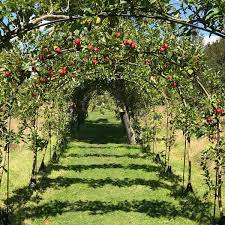
Orchards are areas where fruit trees grow, but from the fourteenth century it simply meant 'garden'.


Orientate is to adjust a position or bearing. Originally it meant simply 'to turn to face east', quite literally 'to the orient'.

Outings today are pleasant excursions, a trip out. In the fourteenth century it was used to mean 'expulsion', much as 'ousting' does today.

Owe is one of those weird words which has changed meaning completely. Today to 'owe' is to be in debt, yet in the fourteenth century it was used to mean 'own, possess'.