Several words have become part of the language in being used in phrases. Last time we looked at ‘pink’ and now look at ‘white’.
White flag used to signal a truce, is first seen in the early 17th century. There must have been a time when both sides agreed this would signal a temporary ceasefire, for if only one side knew it could be disastrous for them.
White dwarf is an astronomical reference to a type of star and first recorded in 1924.
White witch, one who uses her power for good, is first recorded in 1620.
Nobody told a white lie until 1741.
White water, a reference to the turbulent waters over rapids, is first seen in the 1580s.
White collar workers were first described in 1911. Although white collar crime was not seen until 1957.
White elephant, something which proved expensive and nigh impossible to get rid of, is first seen in 1851. This was said to be because the King of Siam insisted on giving a present of a sacred albino elephant to any courtier who had fallen out of favour. Said courtier could not sell it nor dispose of it without incurring the wrath of the monarch, but would still have to pay for its upkeep.
White meat, chicken for example, is first seen in 1752.
White bread was not described as such until the early 14th century – this simply because the flour used to make the bread was not white.
White feather, a symbol of cowardice, is first seen in 1785 – although then it referred to the blood sport of cock fighting, when the bird with no white feathers was considered to be braver.
White noise, the sound you get when a receiver is not tuned properly, is first described in 1970.
Nothing was white hot until 1820.
White out – when everywhere is blanketed in a cover of snow – is first recorded in 1946. In 1977 it was also used to describe correction fluid, until the preparatory name took over.
Egg white, that part of the egg which is colourless until cooked, must have been known since the earliest days when Homo sapiens walked the planet. Yet it was never referred to as egg white until as recently as 1881. As we all know it is also known as albumen, but for the vast majority the term ‘glair’ was used before egg white gained in popularity.
Showing posts with label egg. Show all posts
Sunday, 30 June 2024
Sunday, 24 March 2024
Egg Idioms
Several words have found themselves used in a number of phrases. We looked at 'job' last time and this time it's 'egg'.
Bad egg is a phrase used for the first time in the figurative sense in 1855.
Nobody was described as appearing foolish with the expression ‘to have egg on one’s face’ until 1948.
Eggs Benedict did not appear on a menu (or a recipe book) until 1898 – might have been the Waldorf-Astoria in New York City.
Nobody was ever said to put all their eggs in one basket until 1875.
The first record of a person being ‘egged on’ or encouraged dates from as earlier as the beginning of the 13th century and came to English from Old Norse. Nobody was ‘egged on’ in the sense of being pelted with eggs until 1857, and a third sense of ‘covered or mixed with eggs’ is seen in culinary terms from 1808.
Eggnog is first recorded around 1775, ‘nog’ being an old term for ‘strong ale’.
Although the sandglass used to measure time has been known since at least the eighth century, they probably weren’t made from glass until the 14th century, and they were not referred to as ‘egg timers’ until 1873. Yes, I did wonder how they ended up with a soft-boiled egg before then. However……
…. they probably had soft-boiled eggs at that time, for egg cups were described by 1773.
Egg rolls, those pseudo-Chinese dishes invented by the Americans, is first described in 1917. I am told that modern egg rolls often contain no egg but cabbage instead.
Egg beaters must have been used before 1828, but not produced or known as such. From 1937 the same phrase was used as a slang term for the helicopter.
Nobody referred to an ‘egg white’ until 1881.
The eggplant, most often known as an aubergine in the United Kingdom, is first recorded in 1763.
Addle, a word meaning ‘to spoil, go rotten, putrid’, is first seen in the 1640s. However, this must have come from an earlier phrase of ‘addle egg’, as that is recorded as early as the middle of the 13th century.
Egg shells are not described as such until the early 15th century; although people were ‘walking on egg shells’ by 1734; used as a reference to something delicate and fragile by 1835; and the term was first used to describe a colour in 1894.
Bad egg is a phrase used for the first time in the figurative sense in 1855.
Nobody was described as appearing foolish with the expression ‘to have egg on one’s face’ until 1948.
Eggs Benedict did not appear on a menu (or a recipe book) until 1898 – might have been the Waldorf-Astoria in New York City.
Nobody was ever said to put all their eggs in one basket until 1875.
The first record of a person being ‘egged on’ or encouraged dates from as earlier as the beginning of the 13th century and came to English from Old Norse. Nobody was ‘egged on’ in the sense of being pelted with eggs until 1857, and a third sense of ‘covered or mixed with eggs’ is seen in culinary terms from 1808.
Eggnog is first recorded around 1775, ‘nog’ being an old term for ‘strong ale’.
Although the sandglass used to measure time has been known since at least the eighth century, they probably weren’t made from glass until the 14th century, and they were not referred to as ‘egg timers’ until 1873. Yes, I did wonder how they ended up with a soft-boiled egg before then. However……
…. they probably had soft-boiled eggs at that time, for egg cups were described by 1773.
Egg rolls, those pseudo-Chinese dishes invented by the Americans, is first described in 1917. I am told that modern egg rolls often contain no egg but cabbage instead.
Egg beaters must have been used before 1828, but not produced or known as such. From 1937 the same phrase was used as a slang term for the helicopter.
Nobody referred to an ‘egg white’ until 1881.
The eggplant, most often known as an aubergine in the United Kingdom, is first recorded in 1763.
Addle, a word meaning ‘to spoil, go rotten, putrid’, is first seen in the 1640s. However, this must have come from an earlier phrase of ‘addle egg’, as that is recorded as early as the middle of the 13th century.
Egg shells are not described as such until the early 15th century; although people were ‘walking on egg shells’ by 1734; used as a reference to something delicate and fragile by 1835; and the term was first used to describe a colour in 1894.
Sunday, 19 February 2023
Homonyms, Etymologically Speaking: O
Many words have two meanings, sometimes more, which are often very different. Such words have identical spelling and pronunciation, they are known as homonyms. Here I continue an A to Z list of such words and look at how that word came to have two different meanings.
O is for orange, and the pretty obvious choice for 'O' as it enables us to examine the age-old chicken and egg question as to which came first, the fruit or its colour. The answer is surprisingly easy, for we have to show the orange was known as such in the late 14th century (albeit as the tree more than its fruit) while the colour was known as red-yellow for some time after that. The fruit originated in India with Sanskrit naranga-s 'orange tree', sadly nothing earlier than that is known.
Whilst on the subject of such posers, we do not which came first the chicken or the egg. It was the egg, and by a staggering period of time. The chicken was domesticated by man about 10,000 years ago, having diverged from the junglefowl about 58,000 years ago. A long time, most certainly, but a blink of the eye in the life of the Earth and life on it, for eggs were certainly used by all manner of creatures before chickens - dinosaurs, fish, and just about every multi-cellular creature to evolve in the sea all began life as an egg (this applies to humans, too). Hence, eggs have been around for at least 500 million years.
The chicken and egg question has an answer, because the question is wrong. It should be, which came first the chicken or the chicken egg? The answer is the chicken, because until there's a chicken to lay the egg, it won't be a chicken egg.
O is for orange, and the pretty obvious choice for 'O' as it enables us to examine the age-old chicken and egg question as to which came first, the fruit or its colour. The answer is surprisingly easy, for we have to show the orange was known as such in the late 14th century (albeit as the tree more than its fruit) while the colour was known as red-yellow for some time after that. The fruit originated in India with Sanskrit naranga-s 'orange tree', sadly nothing earlier than that is known.
Whilst on the subject of such posers, we do not which came first the chicken or the egg. It was the egg, and by a staggering period of time. The chicken was domesticated by man about 10,000 years ago, having diverged from the junglefowl about 58,000 years ago. A long time, most certainly, but a blink of the eye in the life of the Earth and life on it, for eggs were certainly used by all manner of creatures before chickens - dinosaurs, fish, and just about every multi-cellular creature to evolve in the sea all began life as an egg (this applies to humans, too). Hence, eggs have been around for at least 500 million years.
The chicken and egg question has an answer, because the question is wrong. It should be, which came first the chicken or the chicken egg? The answer is the chicken, because until there's a chicken to lay the egg, it won't be a chicken egg.
Saturday, 6 August 2022
Synonym Etymologies R
Continuing the look at synonyms through the eyes of the etymologist, this time it is the letter R and round. It can be traced through Old French to Latin and rotundus 'like a wheel', which is where the trail ends. Also of interest is how the word came to English from the French roont and Anglo-French rounde as a surname.
Circular is clearly from 'circle', which is another from the Latin group of languages and where Latin circulus 'small ring, hoop'.
Bulbous is derived from bulb, itself from the French bulbe meaning 'onion'. This can be traced to the Greek bolbos 'plant with round swelling on an underground stem'.
Curved, from curve, can be traced to Latin curvus 'crooked, bent' and ultimately Proto-Indo-European sker 'to turn, bend'.
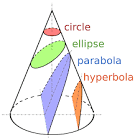
Elliptical is derived from ellipse, and the first of two words which are not strictly 'round' in the correct sense. Ellipse comes from the Old French ellipse and further back to Latin ellipsis which not only meant 'ellipse' but also 'a falling short, a deficit' and clearly as in the sense of 'not a circle'. These both come from the Greek elleipsis and first coined by Apollonius of Pergia in the 3rd century BCE, to describe the section of the acute-angled cone which is smaller at the base than the side.
Oval is another 'not round' words, comes from Latin ovalis or 'egg-shaped'. Note the term 'Oval Office' to refer to the Presidency of the USA is first seen in 1942.
Spherical is the first of two words which are three dimensional and thus not 'round' in the usual sense. Derived from 'sphere', the word comes from Old French espereand Latin sphaera 'globe, ball, celestial sphere'.
Cylindrical, from cylinder, came to English from Old French cylindre and Latin cylindrus 'roller, cylinder, roll'.
Around has been increasingly ignored in favour of round and, unsurprisingly, shares the same root.
Round is also used in a number of phrases: round the clock is first recorded in 1715; round the world appears in 1600; round the corner in 1743; nobody took a round trip until 1844; a round number (multiples of ten, hundred, thousand, etc) from 1640; to make the rounds as recently as 1967; and nobody bought a round of drinks until 1880 and interestingly it was banned from July 1916 until June 1919.
Circular is clearly from 'circle', which is another from the Latin group of languages and where Latin circulus 'small ring, hoop'.
Bulbous is derived from bulb, itself from the French bulbe meaning 'onion'. This can be traced to the Greek bolbos 'plant with round swelling on an underground stem'.
Curved, from curve, can be traced to Latin curvus 'crooked, bent' and ultimately Proto-Indo-European sker 'to turn, bend'.
Elliptical is derived from ellipse, and the first of two words which are not strictly 'round' in the correct sense. Ellipse comes from the Old French ellipse and further back to Latin ellipsis which not only meant 'ellipse' but also 'a falling short, a deficit' and clearly as in the sense of 'not a circle'. These both come from the Greek elleipsis and first coined by Apollonius of Pergia in the 3rd century BCE, to describe the section of the acute-angled cone which is smaller at the base than the side.
Oval is another 'not round' words, comes from Latin ovalis or 'egg-shaped'. Note the term 'Oval Office' to refer to the Presidency of the USA is first seen in 1942.
Spherical is the first of two words which are three dimensional and thus not 'round' in the usual sense. Derived from 'sphere', the word comes from Old French espereand Latin sphaera 'globe, ball, celestial sphere'.
Cylindrical, from cylinder, came to English from Old French cylindre and Latin cylindrus 'roller, cylinder, roll'.
Around has been increasingly ignored in favour of round and, unsurprisingly, shares the same root.
Round is also used in a number of phrases: round the clock is first recorded in 1715; round the world appears in 1600; round the corner in 1743; nobody took a round trip until 1844; a round number (multiples of ten, hundred, thousand, etc) from 1640; to make the rounds as recently as 1967; and nobody bought a round of drinks until 1880 and interestingly it was banned from July 1916 until June 1919.
Sunday, 24 April 2022
Synonym Etymologies E
Continuing the look at synonyms through the eyes of the etymologist, this time it is the letter E and edge. We will look at the noun twice, first as in 'rim' and then as in 'advantage'.
Edge as in 'rim' comes to English through the Germanic route and ultimately from the Proto-Indo-European ak 'be sharp' or perhaps 'point'. Note that Germanic trail also sees forms such as the Old Frisian egg, Old Saxon eggia, and Old Norse egg. Remember these early forms when we look at the other use of 'edge' below.
Rim is derived from Old Norse rimi where it was used to refer to 'a raised strip of land or ridge'. That it came to be used in this sense is down to it being used in the Old English saerima or 'seashore'.
Border has only been used in this sense since the early fifteenth century, it came to English with Old French bordeure 'seam, edge of a shield'.
Boundary puts the suffix '-ary' on the word which should be seen as meaning 'limit'.
Fringe also came to English from French, there frenge was used to refer to 'thread, strand' as much as 'edge'.
Margin was first used in English to refer to the edge of a body of water (and still is today). It came from Old French margin and ultimately from Proto-Indo-European merg 'border'.
Lip has only been used in this sense for the last two centuries at most. Clearly from the body part it has hardly changed in millennia and has never had any other meaning, thus the etymology is difficult to see.
Brim, as with margin, started as a reference to where land met water, this time more often used to refer to the riverbank. It is derived from Proto-Indo-European bhrem 'point, spike, edge', where it is easy to see why it came to be used when referring to hats.
Brink has near identical historical usage and meanings, with the exception of Proto-Indo-European bhreng meaning 'to protect' as well as 'edge'.
Verge comes from the Old French verge meaning 'twig, branch' and also 'measuring rod' and 'rod of office' and also 'penis'.
Perimeter is a compound of peri- 'around, about' and -meter from metron 'measure'.
Circumference is another compound word, from circum- 'around' and ferre 'to carry' and also 'to bear children'.
Periphery is first seen in the fourteenth century, where periferie means 'atmosphere around the earth'. It is a compound of peri- (as in perimeter) and the same suffix found in cirumference.
Edge again, this time as in 'advantage'. is from the verb 'to egg on'. Now, if you've ever wondered why we 'egg' someone on, it's because 'egg' is the correct early form and only from the early 17th century did the word become 'edge'. There was no confusion between the two as these would be used in quite different contexts. Thus to 'egg' someone on is the same as edging forward or advancing slowly. (I won't bother with the etymology of 'egg' as in chicken here, or we'll be here all day.)
Advantage is another first sen in the fourteenth century, and comes from the Latin abante 'from before' and Proto-Indo-European ant 'front, forehead'.
Lead is a Germanic word, all forms suggesting 'to travel' and all can be traced back to Proto-Indo-European leit 'to go forth'.
Superiority is from 'superior' and from 'super', 'above, upper' and from Proto-Indo-European uper 'over'.
Dominance is a derivative of dominant, coming to English from Old French dominant, from Latin dominari 'to rule', and ultimately from Proto-Indo-European dem 'home, household'.
Supremacy is derived from supreme, from Latin supremus 'highest' and from that same Proto-Indo-European root uper seen in 'superior'. (Well who else did you think I was going to suggest fitted this description?)
Edge as in 'rim' comes to English through the Germanic route and ultimately from the Proto-Indo-European ak 'be sharp' or perhaps 'point'. Note that Germanic trail also sees forms such as the Old Frisian egg, Old Saxon eggia, and Old Norse egg. Remember these early forms when we look at the other use of 'edge' below.
Rim is derived from Old Norse rimi where it was used to refer to 'a raised strip of land or ridge'. That it came to be used in this sense is down to it being used in the Old English saerima or 'seashore'.
Border has only been used in this sense since the early fifteenth century, it came to English with Old French bordeure 'seam, edge of a shield'.
Boundary puts the suffix '-ary' on the word which should be seen as meaning 'limit'.
Fringe also came to English from French, there frenge was used to refer to 'thread, strand' as much as 'edge'.
Margin was first used in English to refer to the edge of a body of water (and still is today). It came from Old French margin and ultimately from Proto-Indo-European merg 'border'.
Lip has only been used in this sense for the last two centuries at most. Clearly from the body part it has hardly changed in millennia and has never had any other meaning, thus the etymology is difficult to see.
Brim, as with margin, started as a reference to where land met water, this time more often used to refer to the riverbank. It is derived from Proto-Indo-European bhrem 'point, spike, edge', where it is easy to see why it came to be used when referring to hats.
Brink has near identical historical usage and meanings, with the exception of Proto-Indo-European bhreng meaning 'to protect' as well as 'edge'.
Verge comes from the Old French verge meaning 'twig, branch' and also 'measuring rod' and 'rod of office' and also 'penis'.
Perimeter is a compound of peri- 'around, about' and -meter from metron 'measure'.
Circumference is another compound word, from circum- 'around' and ferre 'to carry' and also 'to bear children'.
Periphery is first seen in the fourteenth century, where periferie means 'atmosphere around the earth'. It is a compound of peri- (as in perimeter) and the same suffix found in cirumference.
Edge again, this time as in 'advantage'. is from the verb 'to egg on'. Now, if you've ever wondered why we 'egg' someone on, it's because 'egg' is the correct early form and only from the early 17th century did the word become 'edge'. There was no confusion between the two as these would be used in quite different contexts. Thus to 'egg' someone on is the same as edging forward or advancing slowly. (I won't bother with the etymology of 'egg' as in chicken here, or we'll be here all day.)
Advantage is another first sen in the fourteenth century, and comes from the Latin abante 'from before' and Proto-Indo-European ant 'front, forehead'.
Lead is a Germanic word, all forms suggesting 'to travel' and all can be traced back to Proto-Indo-European leit 'to go forth'.
Superiority is from 'superior' and from 'super', 'above, upper' and from Proto-Indo-European uper 'over'.
Dominance is a derivative of dominant, coming to English from Old French dominant, from Latin dominari 'to rule', and ultimately from Proto-Indo-European dem 'home, household'.
Supremacy is derived from supreme, from Latin supremus 'highest' and from that same Proto-Indo-European root uper seen in 'superior'. (Well who else did you think I was going to suggest fitted this description?)
Subscribe to:
Posts (Atom)