A few will be aware I have been known to speak on various subjects over the years. Fundamentally these all revolve around my favourite subject of etymology. Have always enjoyed bringing this fascinating subject to others. It’s not for me to say whether the audiences have, although many have asked me to return.
Thought it might be worthwhile sharing a snippet or two from these etymological presentations, continuing with Etymology of Railways. Not the normal look at railways past or present. Here we look at the engineering but through the eyes of the etymologist. Discover how an engine became known as such. Hear how the boiler, the gasket, the valve, the station and even the train have origins further back in history than you could ever imagine - and with rather different meanings
Gasket – in modern times this is a rather antiquated item, although this piece of equipment is by no means obsolete. A gasket is essentially a seal, one which originally would have provided the seal between two castings and one which, when oiled and crushed between the two halves, created a seal which was essentially both air-tight and water-tight. The early gasket was little more than a length of oiled rope, Flexible enough to be adjusted to fit whatever shape was required, the use meant these were not going to be overly thick pieces and also not very long. The approximate length likened to pieces of rope already in use, these were used to secure the furled sails on sailing ships, giving them the instantly recognisable curves of the sail. These pieces of rope were also known as gaskets, derived from a term which was originally the feminine form of the French garcon ‘boy’. However it did not refer to just any girl, but to a girl who wore her hair in a plait, a plait coming from the side of the head and secured with a short length of rope – another gasket. However, just as a chain around the ankle once signified something here, this also marked out a lady of the night. Several completely different uses and yet all marked by a short length of rope.
Train – the verb, meaning ‘to instruct’, came from the noun. Originally looking at the ‘drawing out’ of a trailing part of a skirt, gown or cloak. This is all from the Latin tragere ‘to pull’ and shares a root with ‘tract’.
Station – seen in a railway sense from 1830, the noun had existed in English since the 13th century in the sense ‘place normally occupied’ and is related to the Latin stare ‘to stand’, ultimately from Proto-Indo-European sta ‘to stand, make firm’.
Express – the railway noun is from the early use of the noun (1610s) to mean ‘a special messenger’ – one assumes no special messenger would be slower or the same speed as an ordinary messenger. Now the use of ‘express’ to mean ‘state explicitly’ is derived from the ‘rapid’ and is easier to see as ‘ex-press’, two words suggesting something seen having been pressed and that is how the word developed. These, and other senses, are all from the Latin premere meaning ‘to press, push’ and ultimately from Proto-Indo-European per ‘to strike’.
If you think you know someone who would like to hear me speak on this subject, drop me a line.
Showing posts with label travel. Show all posts
Sunday, 30 August 2026
Sunday, 24 April 2022
Synonym Etymologies E
Continuing the look at synonyms through the eyes of the etymologist, this time it is the letter E and edge. We will look at the noun twice, first as in 'rim' and then as in 'advantage'.
Edge as in 'rim' comes to English through the Germanic route and ultimately from the Proto-Indo-European ak 'be sharp' or perhaps 'point'. Note that Germanic trail also sees forms such as the Old Frisian egg, Old Saxon eggia, and Old Norse egg. Remember these early forms when we look at the other use of 'edge' below.
Rim is derived from Old Norse rimi where it was used to refer to 'a raised strip of land or ridge'. That it came to be used in this sense is down to it being used in the Old English saerima or 'seashore'.
Border has only been used in this sense since the early fifteenth century, it came to English with Old French bordeure 'seam, edge of a shield'.
Boundary puts the suffix '-ary' on the word which should be seen as meaning 'limit'.
Fringe also came to English from French, there frenge was used to refer to 'thread, strand' as much as 'edge'.
Margin was first used in English to refer to the edge of a body of water (and still is today). It came from Old French margin and ultimately from Proto-Indo-European merg 'border'.
Lip has only been used in this sense for the last two centuries at most. Clearly from the body part it has hardly changed in millennia and has never had any other meaning, thus the etymology is difficult to see.
Brim, as with margin, started as a reference to where land met water, this time more often used to refer to the riverbank. It is derived from Proto-Indo-European bhrem 'point, spike, edge', where it is easy to see why it came to be used when referring to hats.
Brink has near identical historical usage and meanings, with the exception of Proto-Indo-European bhreng meaning 'to protect' as well as 'edge'.
Verge comes from the Old French verge meaning 'twig, branch' and also 'measuring rod' and 'rod of office' and also 'penis'.
Perimeter is a compound of peri- 'around, about' and -meter from metron 'measure'.
Circumference is another compound word, from circum- 'around' and ferre 'to carry' and also 'to bear children'.
Periphery is first seen in the fourteenth century, where periferie means 'atmosphere around the earth'. It is a compound of peri- (as in perimeter) and the same suffix found in cirumference.
Edge again, this time as in 'advantage'. is from the verb 'to egg on'. Now, if you've ever wondered why we 'egg' someone on, it's because 'egg' is the correct early form and only from the early 17th century did the word become 'edge'. There was no confusion between the two as these would be used in quite different contexts. Thus to 'egg' someone on is the same as edging forward or advancing slowly. (I won't bother with the etymology of 'egg' as in chicken here, or we'll be here all day.)
Advantage is another first sen in the fourteenth century, and comes from the Latin abante 'from before' and Proto-Indo-European ant 'front, forehead'.
Lead is a Germanic word, all forms suggesting 'to travel' and all can be traced back to Proto-Indo-European leit 'to go forth'.
Superiority is from 'superior' and from 'super', 'above, upper' and from Proto-Indo-European uper 'over'.
Dominance is a derivative of dominant, coming to English from Old French dominant, from Latin dominari 'to rule', and ultimately from Proto-Indo-European dem 'home, household'.
Supremacy is derived from supreme, from Latin supremus 'highest' and from that same Proto-Indo-European root uper seen in 'superior'. (Well who else did you think I was going to suggest fitted this description?)
Edge as in 'rim' comes to English through the Germanic route and ultimately from the Proto-Indo-European ak 'be sharp' or perhaps 'point'. Note that Germanic trail also sees forms such as the Old Frisian egg, Old Saxon eggia, and Old Norse egg. Remember these early forms when we look at the other use of 'edge' below.
Rim is derived from Old Norse rimi where it was used to refer to 'a raised strip of land or ridge'. That it came to be used in this sense is down to it being used in the Old English saerima or 'seashore'.
Border has only been used in this sense since the early fifteenth century, it came to English with Old French bordeure 'seam, edge of a shield'.
Boundary puts the suffix '-ary' on the word which should be seen as meaning 'limit'.
Fringe also came to English from French, there frenge was used to refer to 'thread, strand' as much as 'edge'.
Margin was first used in English to refer to the edge of a body of water (and still is today). It came from Old French margin and ultimately from Proto-Indo-European merg 'border'.
Lip has only been used in this sense for the last two centuries at most. Clearly from the body part it has hardly changed in millennia and has never had any other meaning, thus the etymology is difficult to see.
Brim, as with margin, started as a reference to where land met water, this time more often used to refer to the riverbank. It is derived from Proto-Indo-European bhrem 'point, spike, edge', where it is easy to see why it came to be used when referring to hats.
Brink has near identical historical usage and meanings, with the exception of Proto-Indo-European bhreng meaning 'to protect' as well as 'edge'.
Verge comes from the Old French verge meaning 'twig, branch' and also 'measuring rod' and 'rod of office' and also 'penis'.
Perimeter is a compound of peri- 'around, about' and -meter from metron 'measure'.
Circumference is another compound word, from circum- 'around' and ferre 'to carry' and also 'to bear children'.
Periphery is first seen in the fourteenth century, where periferie means 'atmosphere around the earth'. It is a compound of peri- (as in perimeter) and the same suffix found in cirumference.
Edge again, this time as in 'advantage'. is from the verb 'to egg on'. Now, if you've ever wondered why we 'egg' someone on, it's because 'egg' is the correct early form and only from the early 17th century did the word become 'edge'. There was no confusion between the two as these would be used in quite different contexts. Thus to 'egg' someone on is the same as edging forward or advancing slowly. (I won't bother with the etymology of 'egg' as in chicken here, or we'll be here all day.)
Advantage is another first sen in the fourteenth century, and comes from the Latin abante 'from before' and Proto-Indo-European ant 'front, forehead'.
Lead is a Germanic word, all forms suggesting 'to travel' and all can be traced back to Proto-Indo-European leit 'to go forth'.
Superiority is from 'superior' and from 'super', 'above, upper' and from Proto-Indo-European uper 'over'.
Dominance is a derivative of dominant, coming to English from Old French dominant, from Latin dominari 'to rule', and ultimately from Proto-Indo-European dem 'home, household'.
Supremacy is derived from supreme, from Latin supremus 'highest' and from that same Proto-Indo-European root uper seen in 'superior'. (Well who else did you think I was going to suggest fitted this description?)
Sunday, 26 December 2021
That's not what I meant (T)
Tact began in the much more literal sense of 'sense of touch', rather than 'thoughtfulness'.
Tall has only been used in the modern sense since the sixteenth century. It's original uses include 'brave', 'elegant' and 'handsome'.
Tamper or 'meddle' was first used to mean 'work in clay'.
Team, the group of people working together, was originally used to describe the young as in 'brood, litter'.
Temperament or 'mood', originally referred to body heat.
Terse or concise, was originally used to mean 'polished' or 'smoothed'.
Thews are 'muscles', but when first seen in English would be used to mean 'conduct, usage, custom'.
Thrift or economy, first meant simply 'thrive'.
Thrill is 'excite' today, but at first meant 'pierce'. I wouldn't want to be thrilled by a knife.
Tidy or 'neat' began in English as a synonym for 'plump'.
Tippler was not original one who drank the alcohol, but the one who served it.
Toil is to work today, especially to work hard or laboriously, originally it referred to an argument.
Toilet originally meant 'cloth', it coming from the French toile.
Tonic is today seen as a medicine which peps a person up. Originally? It referred to music.
Toy is a plaything today, but in the fourteenth century was the equivalent of 'flirting'.
Travel is to journey, originally it came from the French travailler 'to work'.
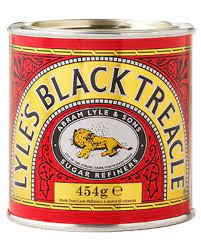
Treacle is a type of syrup, but in the fourteenth century was a salve or antidote.
Truncheon is a policeman's club today, originally it was a 'fragment' or something.
Tunnels today are routes underground, but originally they were long tubular nets narrowing at one end, used for catching birds.
Tyres are found covering wheels, thus we can see the origin as in the same root as 'attire' for that was what the word originally meant.
Tall has only been used in the modern sense since the sixteenth century. It's original uses include 'brave', 'elegant' and 'handsome'.
Tamper or 'meddle' was first used to mean 'work in clay'.
Team, the group of people working together, was originally used to describe the young as in 'brood, litter'.
Temperament or 'mood', originally referred to body heat.
Terse or concise, was originally used to mean 'polished' or 'smoothed'.
Thews are 'muscles', but when first seen in English would be used to mean 'conduct, usage, custom'.
Thrift or economy, first meant simply 'thrive'.
Thrill is 'excite' today, but at first meant 'pierce'. I wouldn't want to be thrilled by a knife.
Tidy or 'neat' began in English as a synonym for 'plump'.
Tippler was not original one who drank the alcohol, but the one who served it.
Toil is to work today, especially to work hard or laboriously, originally it referred to an argument.
Toilet originally meant 'cloth', it coming from the French toile.
Tonic is today seen as a medicine which peps a person up. Originally? It referred to music.
Toy is a plaything today, but in the fourteenth century was the equivalent of 'flirting'.
Travel is to journey, originally it came from the French travailler 'to work'.
Treacle is a type of syrup, but in the fourteenth century was a salve or antidote.
Truncheon is a policeman's club today, originally it was a 'fragment' or something.
Tunnels today are routes underground, but originally they were long tubular nets narrowing at one end, used for catching birds.
Tyres are found covering wheels, thus we can see the origin as in the same root as 'attire' for that was what the word originally meant.
Saturday, 12 September 2020
Etymologies of Homonyms and Homographs
Whilst I am always interested in learning new words, it is never so much the meaning as the origins which intrigue me. A couple of years ago I looked at words with different usages, despite sounding the same or having identical spellings. Were there two completely different origins and the identical spelling is pure coincidence or has the word simply been used to mean two different things?
Here are another selection and, having done A to H before, now continue with a selection of others:
Iron is a very old word with common roots for this noun in Celtic isarnon, Sanskrit isirah, and Proto-Indo-European isero. All this mean such as 'vigorous, strong, holy, powerful, etc., this showing iron was stronger than the earlier bronze metal. As a verb, meaning to remove the creases from clothes, it is unknown before 1670 and (rather predictably) because the heated implement was made from that metal. Science gives us the ion, a word from the Greek and originally meaning 'to go'.
Jam, when used as a verb, likely comes from the same root as Middle English cham meaning to 'bite or gnash' and seen in the modern word 'chomp'. Asa noun, used for the fruit preserve, not seen written until 1730 and comes from the verb for jam could be seen as crushed fruit. Jamb, the side of a door or window, comes from old French jambe meaning 'a leg shank', presumably likening the shape of the latter to the former.
Journey again is used as a verb and as a noun. The original fourteenth century use of the verb would have the modern synonym 'commute', for this came from Old French and simply meant 'a day's work or travel'. As a noun, which is how it is most commonly used today, refers to the act of travelling.
Key in the most common usage refers to that which opens a lock, comes from a Proto-Germanic meaning 'to cleave, split', which is exactly what unlocking could be said to represent. In a musical sense it came from the French and Latin, and shares a root with another musical term 'clef'. Quay comes from Old French where the landing place was simply a chai or 'sandbank'.
Kind as an adjective comes from a Germanic root which has also given us 'kin', thus the sense was originally suggesting kindness began with one's family. Using it to mean 'variety, type' has the same origin, for the sense 'nature, race' suggests cynn or 'family'.
Know, as in 'to perceive, be aware', comes from Proto-Indo-European and has hardly changed since gno. No, every child's favourite word, is predictably one of our oldest words. Less predictable is how the English root is in 'not', hence the opposite was once 'to be' rather than 'affirmative'.
Here are another selection and, having done A to H before, now continue with a selection of others:
Iron is a very old word with common roots for this noun in Celtic isarnon, Sanskrit isirah, and Proto-Indo-European isero. All this mean such as 'vigorous, strong, holy, powerful, etc., this showing iron was stronger than the earlier bronze metal. As a verb, meaning to remove the creases from clothes, it is unknown before 1670 and (rather predictably) because the heated implement was made from that metal. Science gives us the ion, a word from the Greek and originally meaning 'to go'.
Jam, when used as a verb, likely comes from the same root as Middle English cham meaning to 'bite or gnash' and seen in the modern word 'chomp'. Asa noun, used for the fruit preserve, not seen written until 1730 and comes from the verb for jam could be seen as crushed fruit. Jamb, the side of a door or window, comes from old French jambe meaning 'a leg shank', presumably likening the shape of the latter to the former.
Journey again is used as a verb and as a noun. The original fourteenth century use of the verb would have the modern synonym 'commute', for this came from Old French and simply meant 'a day's work or travel'. As a noun, which is how it is most commonly used today, refers to the act of travelling.
Key in the most common usage refers to that which opens a lock, comes from a Proto-Germanic meaning 'to cleave, split', which is exactly what unlocking could be said to represent. In a musical sense it came from the French and Latin, and shares a root with another musical term 'clef'. Quay comes from Old French where the landing place was simply a chai or 'sandbank'.
Kind as an adjective comes from a Germanic root which has also given us 'kin', thus the sense was originally suggesting kindness began with one's family. Using it to mean 'variety, type' has the same origin, for the sense 'nature, race' suggests cynn or 'family'.
Know, as in 'to perceive, be aware', comes from Proto-Indo-European and has hardly changed since gno. No, every child's favourite word, is predictably one of our oldest words. Less predictable is how the English root is in 'not', hence the opposite was once 'to be' rather than 'affirmative'.
Subscribe to:
Posts (Atom)