Several words have found themselves used in a number of phrases. We looked at 'leg' last time and this time it's 'water'.
Salt water is first described as such in Old English and thus around since the 6th or 7th century. Whilst an American term, it is worth noting the term salt water taffy is seen only since 1886 and was only known as such as it was sold at seaside resorts, particularly Atlantic City.
Waterpipe is not recorded until 1400, and then applied to a conduit (thus not necessarily an enclosed pipe).
Water closet, more often abbreviated to simply WC, described a privy with a waste pipe where the privy was emptied by a flush of water. The term is first recorded in 1755.
Water ice, is a reference to the (usually) flavoured water in a frozen state – first recorded in 1818.
Waterlilies have only been described as such since the 1540s,
Waterski first appeared as a noun in 1931, not used as a verb for another 22 years.
Watertable, this used to describe the level of saturated ground, is first seen in 1879.
Water moccasin, a snake indigenous to the Southern United States, is first described as such in a document dated 1821.
Waterwheels have been recorded since the early 15th century, although the technology is much older.
Rosewater, a tincture or perfume, came to English from the Dutch in the late 14th century.
Watermarks, used to identify paper as genuine, first appears in 1708. Not until 1866 was it used as a term to say the paperwork had been spoiled.
Watergate began as a channel to carry water, principally for irrigation. Of course the Wategate scandal of 1972, it the name of the building housing the Democrats during the presidential election, has given the suffix ‘–gate’ to every scandal in the modern era.
Showing posts with label wheel. Show all posts
Sunday, 10 December 2023
Saturday, 6 August 2022
Synonym Etymologies R
Continuing the look at synonyms through the eyes of the etymologist, this time it is the letter R and round. It can be traced through Old French to Latin and rotundus 'like a wheel', which is where the trail ends. Also of interest is how the word came to English from the French roont and Anglo-French rounde as a surname.
Circular is clearly from 'circle', which is another from the Latin group of languages and where Latin circulus 'small ring, hoop'.
Bulbous is derived from bulb, itself from the French bulbe meaning 'onion'. This can be traced to the Greek bolbos 'plant with round swelling on an underground stem'.
Curved, from curve, can be traced to Latin curvus 'crooked, bent' and ultimately Proto-Indo-European sker 'to turn, bend'.
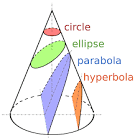
Elliptical is derived from ellipse, and the first of two words which are not strictly 'round' in the correct sense. Ellipse comes from the Old French ellipse and further back to Latin ellipsis which not only meant 'ellipse' but also 'a falling short, a deficit' and clearly as in the sense of 'not a circle'. These both come from the Greek elleipsis and first coined by Apollonius of Pergia in the 3rd century BCE, to describe the section of the acute-angled cone which is smaller at the base than the side.
Oval is another 'not round' words, comes from Latin ovalis or 'egg-shaped'. Note the term 'Oval Office' to refer to the Presidency of the USA is first seen in 1942.
Spherical is the first of two words which are three dimensional and thus not 'round' in the usual sense. Derived from 'sphere', the word comes from Old French espereand Latin sphaera 'globe, ball, celestial sphere'.
Cylindrical, from cylinder, came to English from Old French cylindre and Latin cylindrus 'roller, cylinder, roll'.
Around has been increasingly ignored in favour of round and, unsurprisingly, shares the same root.
Round is also used in a number of phrases: round the clock is first recorded in 1715; round the world appears in 1600; round the corner in 1743; nobody took a round trip until 1844; a round number (multiples of ten, hundred, thousand, etc) from 1640; to make the rounds as recently as 1967; and nobody bought a round of drinks until 1880 and interestingly it was banned from July 1916 until June 1919.
Circular is clearly from 'circle', which is another from the Latin group of languages and where Latin circulus 'small ring, hoop'.
Bulbous is derived from bulb, itself from the French bulbe meaning 'onion'. This can be traced to the Greek bolbos 'plant with round swelling on an underground stem'.
Curved, from curve, can be traced to Latin curvus 'crooked, bent' and ultimately Proto-Indo-European sker 'to turn, bend'.
Elliptical is derived from ellipse, and the first of two words which are not strictly 'round' in the correct sense. Ellipse comes from the Old French ellipse and further back to Latin ellipsis which not only meant 'ellipse' but also 'a falling short, a deficit' and clearly as in the sense of 'not a circle'. These both come from the Greek elleipsis and first coined by Apollonius of Pergia in the 3rd century BCE, to describe the section of the acute-angled cone which is smaller at the base than the side.
Oval is another 'not round' words, comes from Latin ovalis or 'egg-shaped'. Note the term 'Oval Office' to refer to the Presidency of the USA is first seen in 1942.
Spherical is the first of two words which are three dimensional and thus not 'round' in the usual sense. Derived from 'sphere', the word comes from Old French espereand Latin sphaera 'globe, ball, celestial sphere'.
Cylindrical, from cylinder, came to English from Old French cylindre and Latin cylindrus 'roller, cylinder, roll'.
Around has been increasingly ignored in favour of round and, unsurprisingly, shares the same root.
Round is also used in a number of phrases: round the clock is first recorded in 1715; round the world appears in 1600; round the corner in 1743; nobody took a round trip until 1844; a round number (multiples of ten, hundred, thousand, etc) from 1640; to make the rounds as recently as 1967; and nobody bought a round of drinks until 1880 and interestingly it was banned from July 1916 until June 1919.
Sunday, 5 November 2017
Health and Safety
On Tuesday 23rd November 1858, Eli Meakin had been working on his father's farm at Whitgreave. Employed as a waggoner's boy, whilst driving the horses he is thought to have stepped over the horizontal shaft between them and the threshing machine. His action caused him to slip and he fell between the cog wheels. Subsequently found by a passer-by who, seeing the horses stopped and unsupervised, investigated and found the lad held quite firmly. The man released him but his chest injuries were appalling and he died shortly afterwards. Eli Meakin was just twelve years of age.
At the subsequent inquest the threshing machine was deemed to be dangerous for any driver, for the rods were secured in an improper position and the wheels unprotected. The owner of the farm promised the equipment would not be used again until the improvements had been made. Too late for young Eli whose demise was recorded as Accidental Death.
It seems unlikely the same verdict would be reached today. Further stories like this can be found in myBloody British Histories: Stafford .
At the subsequent inquest the threshing machine was deemed to be dangerous for any driver, for the rods were secured in an improper position and the wheels unprotected. The owner of the farm promised the equipment would not be used again until the improvements had been made. Too late for young Eli whose demise was recorded as Accidental Death.
It seems unlikely the same verdict would be reached today. Further stories like this can be found in my
Subscribe to:
Posts (Atom)