Sunday, 14 August 2022

Synonym Etymologies T

Continuing the look at synonyms through the eyes of the etymologist, this time it is the letter T and top. Top was the Old English version almost 1,500 years ago, and few words are as generic as this word from the Germanic family which it always has the same meaning, albeit with slightly different usages. The Proto-Germanic root of toppa has also given us Old Norse toppr 'tuft of hair', Old Frisian top 'tuft', and Old Dutch topp Dutch top, and Old High German zopf all meaning 'end, tuft of hair'. Hence the use is for the upper part or surface and has been since well before recorded history some four thousand or more years ago.

Summit came to English from Old French somete, itself related to Latin summum and that connected to Latin super meaning 'over'.

Peak is a variation on 'pike', itself meaning ;sharp point' and traceable back to Vulgar Latin piccare 'to pick, pierce'.


Pinnacle also came from Old French and Latin, with pinacle and pinnaculum respectively. This is derived from the same root as 'pin', the Germanic family root being penn 'jutting point or peak'.

Crest came to English, where it was first used to refer to the highest part of the helmet, from Old French creste 'the tuft-like plume'. It can be traed back to Proto-Indo-European sker 'to bend'.

Crown another with an Old French corone and Latin corona history, where the original use of the Latin was to mean 'wreath, garland'. All are related to the Greek korone 'kind of crown', and traceable to Proto-Indo-European sker 'to bend'.


Brow had always been the eyebrow, with the occasional use of 'forehead' from 1400, since the Proto-Indo-European bhru.


Head is another ancient word, with similar forms in all Germanic languages, and all traceable to Proto-Indo-European kaput 'head'.

Brink is most often used to mean 'edge' and that was the meaning of the Proto-Indo-European root bhreng.

Apex is a Latin word and comes from another Latin word apere 'to fasten, fix' and coming from Proto-Indo-European ap 'to take, reach'.

Acme is a Greek word derived from the Proto-Indo-European ak 'be sharp, to rise to a point'.


Highest is from 'high' and, along with almost all similar Germanic words, comes from Proto-Indo-European kouko 'hill'.

Lid is another sense, and seen in many Germanic tongues with the same meaning, all coming from Proto-Indo-European klito 'to lean'.

Top is also used to mean other things: the best part is unknown before 1660; the highest place first seen in 1620; the phrase 'over the top' is used in World War I to refer to an attack, and the same phrase seen in the sense of 'beyond reasonable limits' from as recently as 1968. The name of the toy has a very different etymology, and comes from the Old French topet and is derived from a type of seashell. The spinning top as a toy is first seen in 1680s.

Sunday, 7 August 2022

Bank Holiday

This year, when we had an extra bank holiday in June to mark the Platinum Jubilee of her Majesty, we in England have an extra day added to the eight we normally get, Scotland get nine annually, and Northrn Ireland ten each year. It is no coincidence that I mention Bank Holidays, for it was 150 years this year that the first bank holiday was celebrated in the UK.


As Christmas Day and Good Friday had been common law holidays for hundreds of years, the idea of a Bank Holiday gave nominated days in the calendar the same status - that no payments or perform any task could be forced upon anyone that could not be forced on them on Christmas Day or Good Friday. Introduced by Liberal politican Sir John Lubbock, the Act dated December 1871 gave Easter Monday, Whit Monday, Boxing Day and the First Monday in August as holidays in England, Wales and Ireland; while Scotland had New Year's Day, Good Friday, First Monday in May, First Monday in August, and Christmas Day.


Since then St Patrick's Day was added in Ireland in 1903, New Year's Day in England in 1974; and Boxing Day in Scotland also added in 1974. From 1965, and initially as an experiment, the August Bank Holiday was moved to the last Monday in August in order to shorten the gap between August Bank Holiday and Christmas. For those first few years, Parliament would announce the date of August Bank Holiday each year. Yet the date would be based on the last Saturday in August, which resulted in August Bank Holiday in the years 1968 and 1969 falling in September. Eventually England, Wales and ireland had the August Bank Holiday moved permanently to the end of August, although Scotland retains the original first Monday to this day.


St Andrews Day has been a bank holiday in Scotland since 2007, and there is currently talk of doing the same for St George's Day in England and St David's Day in Wales. Correctly these, and the other days, are no longer bank holidays, for the Bank Holidays Act of 1871 was repealed in 1971 and superseded by the Banking and Financial Dealings Act of 1971. No surprise that title never caught on.

Synonym Etymologies S

Continuing the look at synonyms through the eyes of the etymologist, this time it is the letter S and stop. All versions suggest a Germanic origin, but with nothing earlier than Vulgar Latin stuppare it seems this is probably an example of a Germanic load word from Latin. The Latin stuppare is used in the sense 'to plug, to stop up', which explains why the modern sense of 'halt' is not seen until the middle of the 15th century, and even then it referred to a bung in a hole.


Cease comes from the Old French cesser and Latin cessare>, each with the same meaning. These can be traced to the Proto-Indo-European root ked 'to go, yield'.

End, here as a verb, comes from the noun and itself from Proto-Germanic andiaz 'the opposite side'. It comes from Proto-Indo-European antjo 'end, boundary' and its root ant 'front, forehead'.


Done is the past participle of 'do', itself traceable through the Germanic line to Proto-Indo-European dhe 'to set, put, place'.

Over is from the Old English uffera, with the same meaning. It is derived ultimately from the Proto-Indo-European root uper 'over' in the sense of 'above'.

Conclude can be traced back to the Latin claudere 'to shut'.

Terminate is another or Latin derivation, here terminare describes 'the end of the boundary'.


Pause is easy to trace through Old French pausee, Latin pausa, and Greek pausis, all with the same meaning.

Finish has only been used in the sense of 'the end' since 1790, the earlier meaning of 'that which gives completion' (as in paint or polish) is still in use. Coming to English from Old French finiss and Latin finire are as far as this can be traced, although it may have a link to the word 'fix'.


Halt is related to 'hold' and traceable to the Proto-Indo-European root keld 'to strike, cut'.

Saturday, 6 August 2022

Synonym Etymologies R

Continuing the look at synonyms through the eyes of the etymologist, this time it is the letter R and round. It can be traced through Old French to Latin and rotundus 'like a wheel', which is where the trail ends. Also of interest is how the word came to English from the French roont and Anglo-French rounde as a surname.

Circular is clearly from 'circle', which is another from the Latin group of languages and where Latin circulus 'small ring, hoop'.

Bulbous is derived from bulb, itself from the French bulbe meaning 'onion'. This can be traced to the Greek bolbos 'plant with round swelling on an underground stem'.

Curved, from curve, can be traced to Latin curvus 'crooked, bent' and ultimately Proto-Indo-European sker 'to turn, bend'.

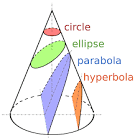
Elliptical is derived from ellipse, and the first of two words which are not strictly 'round' in the correct sense. Ellipse comes from the Old French ellipse and further back to Latin ellipsis which not only meant 'ellipse' but also 'a falling short, a deficit' and clearly as in the sense of 'not a circle'. These both come from the Greek elleipsis and first coined by Apollonius of Pergia in the 3rd century BCE, to describe the section of the acute-angled cone which is smaller at the base than the side.


Oval is another 'not round' words, comes from Latin ovalis or 'egg-shaped'. Note the term 'Oval Office' to refer to the Presidency of the USA is first seen in 1942.

Spherical is the first of two words which are three dimensional and thus not 'round' in the usual sense. Derived from 'sphere', the word comes from Old French espereand Latin sphaera 'globe, ball, celestial sphere'.

Cylindrical, from cylinder, came to English from Old French cylindre and Latin cylindrus 'roller, cylinder, roll'.


Around has been increasingly ignored in favour of round and, unsurprisingly, shares the same root.

Round is also used in a number of phrases: round the clock is first recorded in 1715; round the world appears in 1600; round the corner in 1743; nobody took a round trip until 1844; a round number (multiples of ten, hundred, thousand, etc) from 1640; to make the rounds as recently as 1967; and nobody bought a round of drinks until 1880 and interestingly it was banned from July 1916 until June 1919.

Sunday, 17 July 2022

Synonym Etymologies Q

Continuing the look at synonyms through the eyes of the etymologist, this time it is the letter Q and quiet. Coming to English from Old French quiete, itself from Latin quies, and Proto-Indo-European kweie and all with the same meaning as the modern word.

Silent is from the Latin silentem>, but both originally meant 'still, calm, quiet', and not used in the sense of 'without a sound' until around 1580.


Hush is first seen as Middle English huisht with the same meaning. Difficult to know just how this word developed, if it could indeed be considered a word in earliest times, for it seems to have developed as being the sound most easily produced with a minimum of effort. Interesting to note the original hush-puppy is found in 1899 and was a deep fried ball of cornmeal batter.


Mute is from Old French muet 'dumb, mute' and from Latin mutus with the same meaning and related to Greek myein 'to be shut' (as on the mouth).


Dumb is from Proto-Germanic dumbaz 'dumb, dull' and ultimately from Proto-Indo-European dheu 'dust, mist, vapour, smoke'. Note the final 'b' has probably been silent since the 13th century.

Low has been used in this sense since around 1300, it comes from the Proto-Indo-European root legh 'to lie down'.

Muffle in the sense of deadening sound is first recorded in 1761, probably because it referred to muffling the sound of oars using a similar material to that used in the Old French moufle 'thick glove, mitten'.

Faint is used in the sense of 'weak', and comes from the Proto-Indo-European dheigh 'to form, build'.

Confidential is from 'confidence', where the prefix com- precedes the Lain fidere 'to trust', itself from Proto-Indo-European bheidh 'to trust'.

Secret takes two Latin elements: se 'without, apart' and cernere 'to separate' - thus not to tell or impart.


Discreet is very similar to 'secret', with dis 'off, away' preceding cernere.

Sunday, 10 July 2022

Synonym Etymologies P

Continuing the look at synonyms through the eyes of the etymologist, this time it is the letter P and pen. Pen has two senses, the place where animals are kept, and the writing implement. We will deal with them in this order. Sadly the Old English penn is as far back as the word can be traced, it having the same meaning, although there are some who think it might be related to Old English pinn which means 'pin' and also 'peg'. The idea here being it refers to the peg which kept the lock-up closed. And before we look at the synonyms, the other meaning, that of writing implement, which is much easier to trace back. This sense comes from the Latin penna 'a feather' - which is just what was used for writing for almost all of history.


Enclosure, from enclose, and the Old French enclos 'surround, confine'. Clearly this shares a root with 'close', which also came to English from French, and all derived from the root in Proto-Indo-European where klau meant 'hook, peg, nail, pin'. This is another clue to the possible origin of pen in pinn.

Fold is a word which was only seen in Old English and related languages. It seems this can only have come from a general Germanic word which is seen in East Frisian folt and Dutch vaalt both of which mean 'dunghill', and thus a place where both could be found.

Pound is from a late Old English kenning pundfald or 'penfold'. Here the animal was held in both a 'pen' and a 'fold'.


Sty is from Proto Germanic stijan, itself producing Old English stig, Old Norse stia, Old High German stiga, Danish sti, and Swedish stia, all being used to mean a place for pigs, and also used as a place where dogs, sheep, goats, and cattle were housed.

Coop is another word of Germanic origins, with similar words in related languages. To understand this we need to understand the original coop was not a wooden shed-like construction but a large wicker enclosed basket. This then makes the link to Latin cupa 'tub, cask' more easy to see. We can trace it back further to Proto-Indo-European keup 'hollow mound', which has also given us the word 'cup'.

Cage naturally follows, and this came to English from Old French where cage referred to a 'cage, prison, retreat, hideout'. Unsurprisingly it shares a root with 'cave'.


Confine comes from the French verb confiner 'to border, shut up, enclose'. This comes from the noun 'confines', itself from the prefix 'con-' meaning 'together' and the root of 'finish'.

Surround once only referred to a watery scene - Middle English surrounden 'to flood, overflow' - and came through the Latin line from Proto-Indo-European wed- meaning 'water, wet'.

Trap and 'tread' have nearly identical developments. Indeed 'trap' and 'tread' both come from the Proto-Indo-European root dreb meaning 'run, walk, step'. The sense for 'trap' clearly being when the target steps into the snare.


Quill is also a writing implement, but historically only referred to the hollow stem of the feather (and also to 'a stalk, a reed'). As a writing implement the word is unknown before 1550, and in referring to the porcupine quill not until 1600. The word came from Low German quiele, with the same meaning, although its roots are unknown.


Nib is another reference to the writing implement, is seen since 1590, and is identical to 'neb' meaning 'the bill or beak of a bird'.

Biro began as a proprietary name for the ball-point pen, and is named after its inventor, Hungarian Laszlo Biro. Note the rights to produce a ball-point pen was sold to a French company, who were allowed to name it after their founder, Marcel Bich. Although his surname is pronounced 'Bic', the dropping of the final letter ensured there was no mispronunciation by English speakers.

Sunday, 3 July 2022

Synonym Etymologies O

Continuing the look at synonyms through the eyes of the etymologist, this time it is the letter O and old. While it is easy to see this as being used in the sense of 'mature', indeed the word has been used to mean just that for at least a millennium, the Proto-Indo-European root of al was used in the sense of 'grow, nourish' - effectively 'to make old'. Note the Scottish version of auld is a preservation of the Old English ald.


Mature also began in the same sense as the root of 'old' above. It came to English from Latin maturus meaning 'ripe, timely, early', the earliest root being Proto-Indo-European meh-tu 'ripeness'.


Aged, clearly from 'age' and first used as a noun. Here, rather than being related to nurturing crops, the Proto-Indo-European root aiw certainly is used in the same sense for it means 'vital force, life, eternity' depending upon the context.

Senior can be traced to the Proto-Indo-European sen meaning simply 'old'. Not used in English in the sense of 'higher rank' until the early 16th century, prior to that it was only used to denote which of two relatives (nearly always male) having the same name.


Past began as an adjective, and used in the sense of 'done with, no longer existing', not until five centuries ago was it ever used in the modern sense. The word came from 'pass', itself derived from Latin passus 'pace, step' and earlier Proto-Indo-European pete 'to spread'.

Gone is from 'go', itself a simplistic and very ancient word coming from Proto-Indo-European ghe 'to be released'.

Previous has two elements, both Latin where praevius had the same meaning and was comprised of prae 'before' and via 'road'.

Ancient is first used in English around the early 15th century. Prior to that it is seen in the Latin anteanus 'from before', and earlier still in Proto-Indo-European anti 'against' and ant 'front, forehead'.


Historic, clearly from 'historical' and thus 'history', came to English from Old French estoire 'story, chronicle'. Earlier the trail can be seen in Greek historia 'a learning' and ultimately from Proto-Indo-European weid 'to see' and also 'to know'.