Showing posts with label undertaker. Show all posts

Sunday, 2 January 2022

That's not what I meant (U)

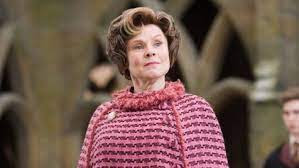
Delores Umbrage, of Harry Potter fame, may be interested to see where her surname was originally going.

Umbrage or resentment, once referred to the dappled shade offered by trees.


Uncanny or 'weird' started out as meaning 'malicious'.

Uncouth or 'boorish' was used to mean 'not known' in the thirteenth century.

Undertaker is today a funeral director, for most of English history it simply meant one who did something, a helper.

Unwieldly or 'awkward' started out describing someone 'feeble'.

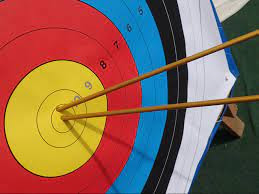
Upshot or 'consequence' began as a term referring to the final shot in an archery contest.

Sunday, 12 September 2021

That was not what I meant. (E)

Meanings of words don't change as much as usage, hence the reason the following list of words have apparently changed in meaning.

Eccentric may be used to mean 'strange, unusual' today, but began meaning 'not concentric', as in overlapping circles with different centres.

Emus are fast-running flightless birds from Australia, a continent famously explored by Captain James Cook from 1770. So how come the 'emu' is recorded over a century earlier? The answer is in the name being applied to other large flightless birds - in 1653 it was the cassowary and in the first part of the eighteenth century applied to the rhea.


Encroach may man 'trespass' today, but from the fourteenth century meant 'seize unlawfully',

Engine has but one use today, be it steam, petrol, electrical, etc, but historically used to mean 'plot, snare'.

Engross or occupy, earlier was used to mean 'buy wholesale'.

Entail or 'involve' today, but from the fourteenth century it was used as a legal term 'to settle an estate for the benefit of the heirs alone'.

Enthral may mean 'captivate' today, but three or four centuries ago was used in the sense of 'capture, hold in slavery'.

Entrepreneurs are associated with business undertakings today, but historically (the word came to English from the French for 'undertaker') it was used to describe an entertainment or musical undertaking.

Envisage, today a mental image, comes from the French and translates as 'look in the face', which is why it started as 'look straight at' in English.

Epicure, a reference to the finer things when wining and dining today, was first used in English in the sixteenth century to describe a 'womaniser' or 'glutton', depending on the context.


Equator, first used in the seventeenth century, then described the great circle around the heavens, not the earth. The image deminstrates this perfectly.


Excursion has come to refer to a journey for pleasure, but started out in English meaning 'escape'.

Exhibition is an odd word, which has come to mean a public showing, but first used in English to mean 'maintenance, allowance' and in the financial sense.

Expletive or swear word first came to English meaning 'filled out'.

Explode surely can't mean anything but 'detonate', but when it first appeared in English it was used to mean 'reject'.


Extinct came from Latin and meant 'to quench' before being used in the modern sense of 'died out'.

Extravagant, today used to mean 'overly proper', came from the Latin and was initially used to mean 'wandering about'.
Sunday, 30 June 2013

Cambridgeshire Place Names

With the release of my volume looking at the origins of the place names of Cambridgeshire I thought a brief extract would be appropriate. I have chosen the entry which looks at the Undertakers and Adventurers, field names found all over the fenland and not for the reasons one might expect.

Cottenham

Found in 948 as Cotenham and as Coteham in 1086, here is a name from a Saxon personal name and Old English ham and referring to ‘Cotta’s homestead’.

Twenty Pence Road ran alongside a place known for its ‘twenty pens or folds’ in 1596. Alboro Close is from ald burh or ‘the old fortification’. Chear Fenn comes from Old English cear, meaning literally ‘turn’ and describing this twisting way through the fenland. The Lots tells us this was an allocation of land, one of several areas shared amongst a number of locals.

Setchel Fen was known as ‘the enclosure where sedge grows; Smithey Fen tells of the ‘smooth, low-lying land’; while early records of Top Moor show this was known as ‘Taeppa’s marsh’. Individuals who are remembered in the landscape include Jabez Ablett, after whom Ablett’s Row is named, Edward Mason gave his name to Mason’s Pastures both here in 1840, William Taylor was associated with Taylor’s Lodge in 1780, and Lamb’s Cross home to Henry Lamb in 1279.

Time and again in the fenlands of Cambridgeshire we find the field name of the Undertakers. This is not, as we might think, a sign of a burial ground or those who made their living by disposing of corpses. This always refers to fenland which has been drained, the very name tells us those who undertook to dig the drains and ditches did so on the basis they would receive a share of the reclaimed land in return, thereafter turning to farming. Of course the Undertakers were far more numerous than the Adventurers, a name also seen around reclaimed land for they too received land in return for investing money supporting the Undertakers while they were working.

The Hop Bind is a pub name which is derived from the hop, the fruit which is used in brewing. The name is not quite correct, for the true description is a hop bine where the plant grows in a helix around a supporting frame or another plant. The Jolly Millers suggests an association with those in the trade and would be particularly content to be there, the addition of ‘Jolly’ being a common invitation. The Waggon and Horses reminds us of the only way of transporting large quantities of goods until the building of the canals, public houses often acting as agents and distributors.

The local church has a strange narrative told regarding its construction. It made sense to build the church as close to the centre of the community as possible, collectively this makes everyone’s journey as short as possible. The church of All Saints had stood at one point of the village and, when it was agreed to move it, began to remove the blocks of stone and transport them to the new site. However next morning it was discovered every stone had been returned to the original site. On hearing the news the parishioners were so troubled they decided it would be better to leave their church where it stood.

I would welcome any suggestions for themes or subjects, or even specific words to examine the origins, meanings and etymologies. I’d be delighted to hear from you.