Thursday, 19 August 2021

Conspiracy Theories

Daffodils share 35% of their genetic makeup with humans. I would point out that I have relatives where that figure must be closer to 95%, but that would mean having to listen to the numerous complaints (from the daffodils, of course), so I shall keep quiet.

It was one of the daffodils, I mean relatives, who voiced their belief that mankind had never made it to the Moon, the whole thing was faked. When I asked what evidence they had to substantiate this claim, I was told "Well, one in six people don't believe it!"

If the validity of such theories simply requires a small minority to believe them to be true, then perhaps this is all we need for the following to be true:

Contrails left by high-flying aircraft are deliberately laden with chemicals and biological agents to make us ill is believed by one in six.


Coca-Cola changed their recipe for their most successful product in 1985 - known as New Coke - to make it more addictive, at the same time using cheaper and inferior ingredients.

Paul McCartney died in a car accident in 1966. His replacement, Scottish orphan William Shears Cambell, has been fooling the world ever since.

Elvis Presley, Lord Lucan, and Shergar are alive and well and living beneath the main stand of Leinster Rugby Club. Elvis may also be alive and well and living on the Moon with Adolf Hitler. Although if the idea that Hitler is living in Antarctica or South America is true, Elvis may have difficulty finding him, even though even Elvis might be able to run faster as Hitler would now be 132 years of age.


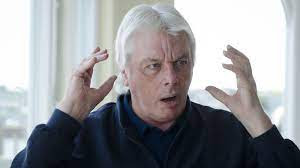
Many theories surround the New World Order - the idea takes too long to explain, but basically involves a select elite taking over after having destroyed civilization as we know it - one being their headquarters is a massive futuristic city buried beneath Denver International Airport. Among those who are convinced this is true are Beyonce, Whitney Houston, and perennial nutcase David Icke (yes, he was the one who suggested he was the second coming).

Israelis have enlisted some animals to conduct espionage and eliminate people. Apparently Israeli-trained sharks have been eating people off Egypt, Hezbollah has trained spying eagles as aerial spies, and in 2011 an eagle was captured and found to be carrying a satellite tracking device.

An astonishing number accept the idea that former US President Bill Clinton and his wife Hilary Clinton have conspired to assassinate more than fifty of their associates.

Fluoride in water to help with dental problems has been seen as a communist plot to weaken the decadent west and also a way to dispose of industrial waste.

Vaccination causes autism, this claimed by discredited former doctor Andrew Wakefield. Such luminaries as Rob Schneider, Jim Carrey, and Donald Trump have expressed their belief in this theory.

Flat Earth Theory suggests the idea that the planet is anything other than flat is faked. This includes rigging pilots GPS devices to make them think they are flying around the globe.

Sunday, 8 August 2021

That was not what I meant. (A)

Recently asked when 'cool' stopped meaning 'not warm' and started to be used in the modern vernacular and, me being me, I started wondering what other words have changed meanings.

Research showed an astonishing number of changes and, being the wordsmith I am, I thought a look at a few each week would prove interesting. As there are so many examples, I shall split these by initial letters over the next few weeks

Abode came from the same source as 'abide', and thus originally used to meant 'remain' or even 'delay'. Shakespeare uses it in this sense in The Merchant of Venice with "Sweet friends, your patience for my long abode; not I, but my affairs have made you wait." Not long after this use of 'abode' became obsolete, and almost instantly switched to the modern meaning, this happening at the end of the 16th century.

Adamant would first describe a hard rock or mineral - lodestone or diamond, for example. It is easy to see why the modern use would develop from such, yet that is not recorded until the end of the 17th century.

Aftermath originally referred to the second crop of grass in autumn, the first cut taken in summer. That was certainly still in use until at least 1860.

Algebra comes from Arabic where al-jabr means 'the reunion', particularly of broken parts. In Spanish it still refers to the setting of bones, and also used in the mathematical sense.

Ambulance shares an origin with 'ambulatory' as in 'walking' and originally referred to a 'walking hospital' - a movable hospital which moved about treating the wounded as it followed the fighting. Not until the middle of the 19th century did they begin using a wagon or cart to move the patients, while modern usage is post World War I.

Ammunition before the 17th century this referred to all military supplies, not just weapons and armaments.

Amuse first appeared in the 15th century as was used to mean 'delude, decieve'. By the middle of the 18th century usage changed to 'distract, divert'. The modern meaning of 'entertain' appears from the end of the 17th century.

Angina now refers to disease of the heart, originally the problem was whatis referred to as 'quinsy' today, a throat problem.

Animal / Beast / Deer - three words which we will examine in reverse order. Deer, is derived from a word deor, a Germanic term meaning, predictably, 'deer'. Examining the evolution of the word, it was earlier to to describe any large prey mammal; earlier still used simply to mean 'breath' or even more simply 'life'.

Animosity had a more positive meaning in the 15th century, used for either 'high spirit' or 'courage'.

Anthology is derived from the Greek anthos 'flowers' and the word literally means 'study of flowers'. Although the Greeks would have used it to refer to 'literary flowers' and a collection of poems.

Antic was originally used to mean 'fantastic figure', especially one of grotesque appearance. It was later used to refer to a theatrical performance of grotesque appearance.

Arrive the Latin ripa meaning 'shore' is the origin here. The original Old English usage being 'come to shore'.

Arsenal is borrowed from Arabic, where it meant 'house of art'. When it first came to English it was used to mean 'naval dock', this down to a misunderstanding of the Arabic meaning. While English has moved on, Spanish and Portuguese still use it to refer to a naval dockyard.

Atlas is, as many know, named from the mythological god who supported the world on his shoulders. For this reason the word came to be used for 'supporter' and even 'mainstay' before the current usage describing a book of maps.


Attire used to mean 'equip', and when that was a war horse or a knight in armour, subsequent usage is easy to see.

Authentic meant 'authoritative' in the 14th century, then also as 'duly qualified' and much later the modern understanding.

Avenue is from the French avenir 'to arrive, approach', and this was the same in English until the early 17th century.

Awful is a word which Shakespeare used in the sense 'full of awe', and the modern negative sense only seen since the 19th century.


Awkward came to English from Old Norse, where it was used to indicate 'turning the wrong way' and also did in English, initially. Later usage saw it used to mean 'perverse', cantankerous, and finally 'clumsy'.

Tuesday, 3 August 2021

Left, Right, Left, Right

If you have ever tried to explain the concept of left and right to a child, you will understand just how difficult the concept can be. Invariably we make the mistake of facing them, then they have to learn the mirror image problem.

Now try to explain it to an adult, for example an alien who wants directions to Proxima Centauri (yes I know left and right would not enter into it), or perhaps a better way to look at it is explaining left and right on the telephone. Is it possible? One solution offered is to face north and then the sun rises on the right and sets on the left. However if the aliens are telephoning from their spaceship in orbit, that explanation will never work. There is no perfect answer, and neither is there an answer to clockwise and anticlockwise if you don't know what a clock face is and pointing (or whirling hands around) is not an option.


Etymologically right and left are easy enough to explain. Right, from Old English riht, simply tells us it is the correct hand to use, although this use is unrecorded before the 12th century. The same Old English origin for left, this time lyft originally used to mean 'weak, foolish' before being the opposite of right. Historically lefthandedness has been frowned upon - many will be aware of the Latin sinister meaning 'left' and with it the negativity of being lefthand dominant.

If the left is so undesirable, why does marching in the military go left, right, left right - should it not be right foot first? It has nothing to do with marching, but fighting. When engaging another in combat the natural stance for most, being righthanded, is to defend with the shield in the left hand, thus when pressing an attack the left foot leads and did for over a thousand years.

I thought it might be nice to look at left and right in other languages, to see if this right and wrong message is the same there. See for yourself as we start with 'right':

French adroit also used to mean 'properly'.

German recht also used to mean 'justice, law'

Spanish derecha 'straight'

Italian destra simply 'the right'

Japanese tadashi 'lucky, correct, auspicious'

Swahili haki 'justice'

Maori tika 'right, correct'

And now the left:

French gauche also used to mean 'awkward'.

German links only used for 'the left'.

Spanish izquierda 'inflexible, hard'

Italian sinistra as with the Latin mentioned above.

Japanese hidari also used to mean 'butterfly, band, illustrator'

Swahili kushoto 'left side'

Maori maui 'valley'

Yes, for Indo-European groups the idea of good right and bad left is very much the case. Elsewhere, not so.

Sunday, 1 August 2021

Suicide

Not until 1822 when the Church of England changed its mind were suicides allowed burial in consecrated ground. Even then it was only agreed as from the following year.

While burial was permitted, they were denied any ritual until 1880, and not allowed a Christian burial until February 2015 when the Church of England Synod voted, and by 262 to 5, in favour of lifting the restrictions - and mostly because most of the clergy had already chosen to ignore the ban anyway, this mostly due to a better understanding of mental health problems.

Originally the Church of England simply adopted the view of the earlier Catholic Church in England, where suicide was considered a sin. Prior to the development of Christianity, suicide was a common way to die. Personal suicide avoided shame or suffering, institutional suicide gave a way out for royal servants, convicted criminals, distraught widows, and as a form of euthanasia for the elderly or infirm.

Wednesday, 21 July 2021

What on Earth (or Neptune)?

Or not on Earth as the case may be. I was looking at the names of our planet in languages other than English. It came as something of a disappointment to discover they were mostly translations of 'earth' in the sense of 'soil, dirt'.

So I decided to look elsewhere in the heavens and see what names other languages had given to the remaining seven planets in orbit around our sun. Below is the language, its name and, where possible, the translation. Many nations simply use the same name, albeit with the phonetic spelling reflecting local pronunciation. As these clearly come from the same source as the English names, I have concentrated on the alternatives and finally the planet Neptune

As this is one of the planets discovered in the age of astronomy and thus unknown to the ancients (it is not visible to the naked eye), many languages simply use the name 'Neptune' - these have been omitted.

Greek - Poseidon - the Greek personification of Neptune, the god of the sea.

Korean - Haewangseong - 'Star of the king of the sea'.

Mandarin Chinese - 'the ocean-king planet' and borrowed from Japanese.

Mongolia - dailain van - the same meaning and origin as Mandarin Chinese.

Note the spellings and characters used are English, so don't write to me pointing missing umlauts, accents, etc. or how I should have used a different alphabet.

Sunday, 11 July 2021

What on Earth (or Uranus)?

Or not on Earth as the case may be. I was looking at the names of our planet in languages other than English. It came as something of a disappointment to discover they were mostly translations of 'earth' in the sense of 'soil, dirt'.

I decided to look elsewhere in the heavens and see what names other languages had given to the remaining seven planets in orbit around our sun. Below is the language, its name and, where possible, the translation. Many nations simply use the same name, albeit with the phonetic spelling reflecting local pronunciation. As these clearly come from the same source as the English names, I have concentrated on the alternatives and this time the planet Uranus.


As this is one of the planets discovered in the age of astronomy and thus unknown to the ancients (it is not visible to the naked eye), many languages simply use the name 'Uranus' - these have been omitted.

Korean - Cheonwangseong - 'Star of the king of heaven'.

Mandarin Chinese - 'the heavenly king planet'

Mongolia - Tengerijn van - in Hungarian this means 'there is a sea', which is a little confusing as it is Neptune who is the Roman god of the sea.

Note the spellings and characters used are English, so don't write to me pointing to missing umlauts, accents, etc. or how I should have used a different alphabet.

Tuesday, 6 July 2021

What on Earth (or Saturn)?

Or not on Earth as the case may be. I was looking at the names of our planet in languages other than English. It came as something of a disappointment to discover they were mostly translations of 'earth' in the sense of 'soil, dirt'.

So, I decided to look elsewhere in the heavens and see what names other languages had given to the remaining seven planets in orbit around our sun. Below is the language, its name and, where possible, the translation. Many nations simply use the same name, albeit with the phonetic spelling reflecting local pronunciation. As these clearly come from the same source as the English names, I have concentrated on the alternatives and this time the planet Saturn.

SATURN

Bengali - Sani - is from the Sanskrit and means 'slow moving'.

Farsi - Kayvon - means 'lofty', although how the planet appeared any higher in the sky than others is unclear.

Greek - Kronos - is from the Greek for 'time'.

Hebrew - fabtaj - 'seventh / Saturday / resting star'

Japan - Saniscara - another from the Sanskrit for 'slow moving'.

Kazakhstan - Qonyrqai - has its root in common with the Greek and thus shares its meaning of 'time'.

Korean - Toseong - 'Star of soil'.

Malayalam - Shani - again the Sanskrit 'slow moving'.

Mandarin Chinese - 'the soil planet'

Mongolia - sancir - as with the Japanese name 'slow moving'.

Sumerian - Ninurta - the god of war and hunting

Uzbek - Zuhal - 'one that lingers' and another 'slow' reference.

Note the spellings and characters used are English, so don't write to me pointing missing umlauts, accents, etc. or how I should have used a different alphabet.