Whilst reading this, contemplate how someone in Saxon England would never have been described as being unable to read, for 'read' had a quite different meaning.
Rabbit, that long-eared lagomorph that isn't a hare, is a comparatively recent term for all rabbits. As recently as the eighteenth century it referred to the young only, the adults were known as 'coneys' (pronounced to rhyme with 'money').

Race was not always a reference to a contest of speed, for in the thirteenth century it simply described any forward movement.
Raid is a synonym for 'attack' and particularly a military action. In the fifteenth century it referred specifically to an attack by mounted cavalry.
Random has undergone a very big change in meaning, for while we use it today to mean 'arbitrary, haphazard', in the fourteenth century it described 'great speed'.
Rank in the modern sense of 'foul, offensive' had two different uses in the twelfth century, either meaning 'proud' or 'fully grown'.
Ransack is to search untidily today, but its original meaning in the thirteenth century was simply 'to seek', with no suggestion of anything criminal.
Rascal or 'rogue' first came to English in the fourteenth century as a mass noun describing 'a rabble, encampment'.
Read is something you're doing right this minute, but in the days of Saxon England it meant 'think' or 'guess'.
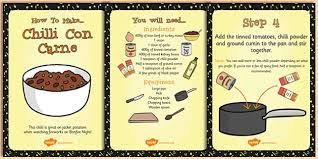
Recipe is a Latin word meaning 'take' which is how it was first used in English when giving instructions or directions. This was used not only in the kitchens of fourteenth century England, but also in what passed for operating theatres.
Reduce or 'diminish' today but, in fourteenth century England, the original Latin meaning of 'to lead back' was still used.
Refund or 'repay' today, but in the fourteenth century it specifically meant 'pour back'.
Regular or 'steadily to a plan' today, but originally was only used in a religious sense as the opposite of 'secular'.
Relent is a synonym for 'forgive' or 'more often 'less strict' in the modern dictionary, but in the fourteenth century it was used to mean 'melt' or 'dissolve'.
Repertory is today only used for a theatre company, they typically have one company producing different plays. Very different se in the sixteenth century, when the word could be used to mean 'index, list, storehouse'.
Reprieve is something a prisoner will hope to hear, for it delays or relaxes punishment. Sixteenth century prisoners would have dreaded hearing they were reprieved, as it then referred to them being sent back to prison.
Restive, as in 'fidgety, restless', is another with the original meaning being quite the opposite, for in the sixteenth century it described someone who couldn't bring themselves to move.
Reverie is probably best described today as 'a daydream, wistful', but when it first came to England in the fourteenth century, was used to describe wild delight, raucous celebrations - something rather different from the modern idea.
Ribald is to be coarse or lewd. In the sixteenth century it was a noun, a retainer of a minor nobleman who was a general dogsbody.
Romance, when it first came to English, referred to a tale of adventure told in verse form.
Rota, or 'list of duties', is from the Latin word rota meaning 'wheel' and was used as such from 1659 when the name of a London club. Not until the nineteenth century was 'rota' used to mean the same as 'roster'.
Showing posts with label prisoner. Show all posts
Sunday, 12 December 2021
Sunday, 19 September 2021
That was not what I meant. (F)
I'm often asked why dictionaries change the meaning of words. Note, lexicographers never change the meaning of anything, dictionaries simply reflect current usage and therefore it is the people that change the meaning, not those producing the dictionary. Having reached the letter F, here are some more you've changed.
Fang is a long, often pointed, tooth. Yet it began in English meaning 'capture, catch', and is related to the German Gefangener 'prisoner'.
Farce or light comedy, those of a certain age will still associate this with Brian Rix, is derived from the Latin farsa meaning 'stuffed' or 'padded'. Isn't language fascinating?
Fare is, for once, a little easier to see, for while it means the cost of a journey today, it began as a reference to the journey itself.
Farm, something which can hardly of changed since we stopped being hunter gathers, surely? Wrong, while the farmers worked the land, they didn't work farms for 'farm' initially referred to the rent paid for the right to work the land, not that worked.
Fascinate began in the sixteenth century to mean 'bewitch, cast a spell upon', and only in the nineteenth century was it used to mean 'intrigue'.
Fast may mean 'speedy' today, but earlier, as in Chaucer, was used to mean 'firm'.
Fathom is used to mean either 'understand' or a measurement of depth of water equal to six feet. Yet when the word first came to English it was used to mean 'bosom, breast', but not in the modern sense but as in the area covered by the breastplate in a suit of armour - which is why men also had a breast and why everyone has a breastbone today. The change to the measurement is easy enough to explain, for that was said to be the measurement of an adult male from fingertip to fingertip with arms outstretched. Six feet might not be an exact measurement in reality, but it was a near enough approximation.
Fearful - if asked to define this word we would probably say something like 'worrisome, troubling', and yet statistically the send of 'dreadful' (as in 'what a fearful racket') is by far the more common use. I include this simply to wonder whether the original use will die out completely and, if so, how quickly?
Fellow is used to mean a 'colleague', a 'lecturer', or simply 'man'. Originally it was used to mean 'fee layer', that is someone who puts the money behind a joint venture.
Fiasco has changed less than many words, for while today it refers to any great failure, historically it referred solely to a disastrous performance in the theatre or musically.
Filter, that found on cigarettes or in coffee makers, is used to separate a finer particle from the coarser. It comes from the same source as 'felt', the material created by pressing small pieces of wool together. It can only refer to usage of felt as a filter, as indeed it was from the sixteenth century.
Fizzle, as in 'to fizzle out', a failure, is an American contribution to English, appearing in the nineteenth century. When it first came to English the word was used as a synonym for 'fart'.
Flagrant today means 'outrageous, deliberate', but historically was used to refer to 'flame, burning'.
Flaw today is only used in a negative sense, but historically was used to mean the same as 'flake' does today - as in snowflake, or flake of fire.
Flighty is first seen in the sixteenth century and used to mean 'swift, rapid' - rather different from the modern 'skittish'.
Flippant has meant 'glib, inappropriately lighthearted' for most of its existence. However, when it first came to English in the seventeenth century it was also used to mean 'nimble'.
Flirt, like the previous word, has had a long term meaning and a historical one. It has always had the modern meaning of 'amorous tease' but in the sixteenth century was also used in the sense of 'smart stroke, quick jerk'.
Fond of or have a liking for, meant 'foolish, silly' in the fourteenth century.
Forfeit, a minor punishment or penalty today, came to English from Old French and shared the meaning of 'to commit a crime'.
Founder used in the sense of 'to go lame, to sink', first came to English in the thirteenth century when it was used in the sense of 'to smash in'.
Franchise is a business term today, but came to English from French originally and meant 'freedom'.
Fray to become tatty, as in material, is first recorded in the sixteenth century to mean 'rub'.
Freak might be something rather unusual today, but if you were around in the sixteenth century you would have used it in the sense of 'sudden change'.
Freelance, as in an independent employee, is not difficult to see as two words, and from there to be seen as a soldier for hire, thus a synonym for the modern 'mercenary'.
Frequent or 'happening regularly' today, but in the sixteenth century had a number of uses - including 'crowded', 'well-known', and 'addicted'.
Fret, in the sense of 'worry' and not the metal ridge on a guitar, came from a word meaning 'to eat' and later 'chafe, irritate'.
Friend in the modern era is a casual association with an another, but historically, and including in the writings of Shakespeare, a friend was a 'lover'.
Frippery today might refer to gaudy clothing and rather tacky ornamentation, for most of its use in the English language it referred to quite the opposite and meant 'old clothing, cast-offs'.
Frump is an old fashioned person today, but as recently as the seventeenth century it could be used to mean 'hoax' or 'jeer' depending on the context.
Fun, like the previous word, was used to mean 'hoax' in the seventeenth century - and also 'practical joke' - while todayit's simply any amusement.
Fuzzy is today used to mean 'indistinct', but historically used in the sense of 'spongy' and particularly applied to land covered with grass or moss.
Sunday, 30 May 2021
Christina Collins
If you have not heard the story of Christina Collins, find a copy of my Bloody British Histories: Stafford and read the story of the woman who never made it to the rendezvous with her husband, but was murdered on the canal en route.
Four were on that boat - two were hanged, the cabin boy was never charged, but one, William Ellis, was found guilty and sentenced to be hanged. However, he was saved by a last-minute reprieve which saw his death sentence commuted to transportation. What happened to him?
We know he departed our shores on 6th April 1841 - sentenced to be transported for 10 years. He travelled aboard the Layton. This was Layton's last voyage of the five it made when transporting convicts to Australia, all but one to Van Diemen's Land. Departing on 13th June 1827, 17th June 1829 (to New South Wales), 26th August 1835, 9th July 1839, and 6th April 1841, the vessel took 1,131 prisoners halfway around the world, 235 of whom were sentenced to life.
Layton arrived in Australia on 1st September 1841 at Van Diemen's Land (Tasmania) with 249 other convicts. What happened to him then is unknown, which is revealing in itself as we would expect to find some record had he died in Australia or been released.
If well behaved, the convict could be given a ticket of leave, granting some freedom. At the end of the convict's sentence, seven years in most cases, the convict was issued with a Certificate of Freedom. He was then free to become a settler or to return to England. Convicts who misbehaved, however, were often sent to a place of secondary punishment like Port Arthur, Tasmania or Norfolk Island, where they would suffer additional punishment and solitary confinement.
Subscribe to:
Posts (Atom)


